



Meet Shukrayaan: India's Next Cosmic Leap
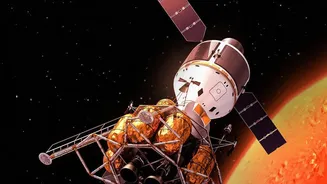
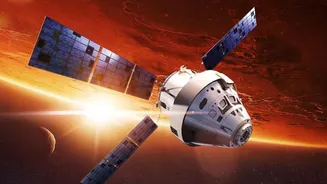
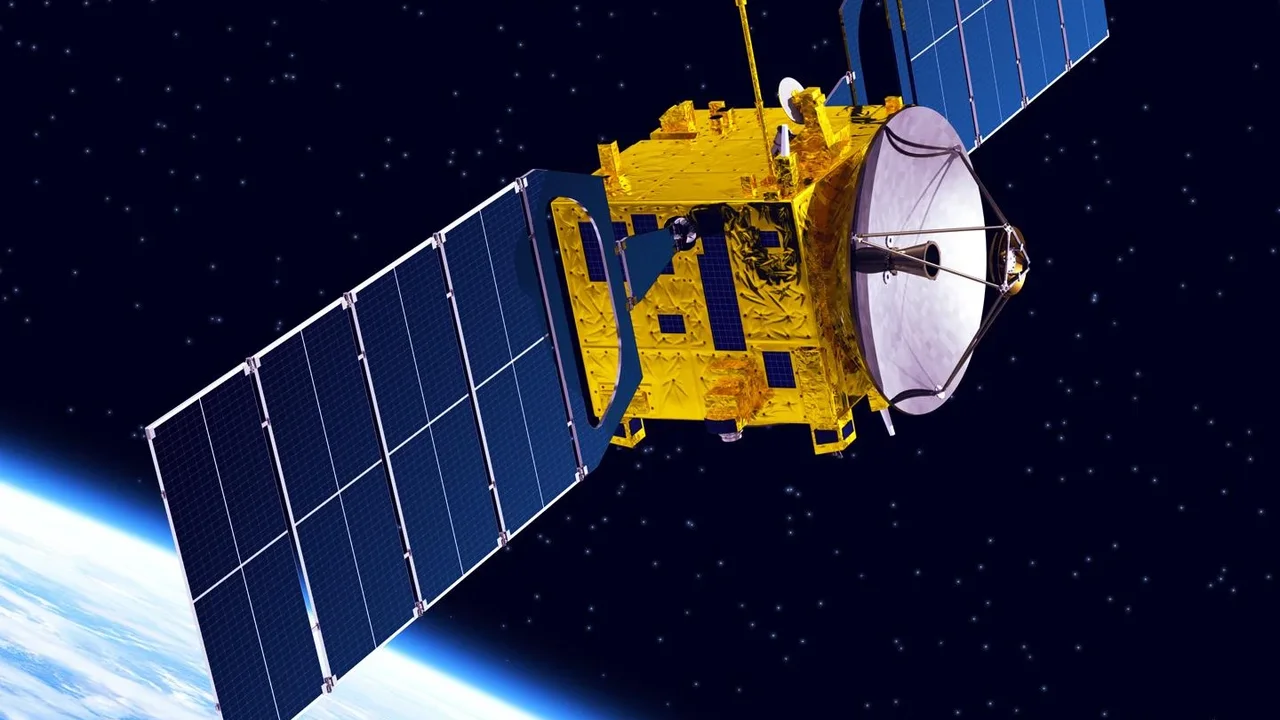
Following the monumental successes of the Chandrayaan missions to the Moon and the Mangalyaan mission to Mars, the Indian Space Research Organisation (ISRO) is setting its sights on our other planetary neighbour: Venus. The Venus Orbiter Mission, unofficially
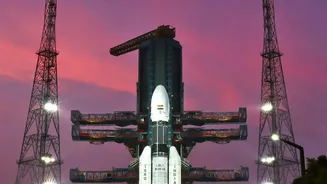
named Shukrayaan, is India's first-ever mission to the scorching planet. Formally approved in late 2024, the mission is currently scheduled to launch in 2028. The orbiter will carry a sophisticated suite of scientific instruments designed to perform a comprehensive investigation of Venus, peeling back the layers of its thick, acidic clouds to study its surface, its interior, and its turbulent atmosphere. This mission places ISRO at the forefront of planetary science, continuing its legacy of cost-effective, high-impact exploration.
Why Venus? Earth's Twisted Sister
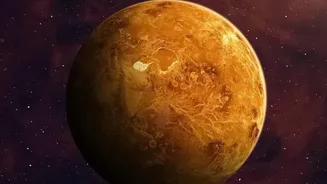
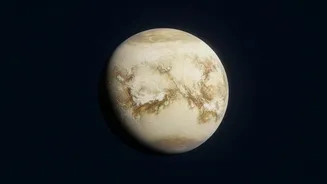
Venus and Earth are similar in size, mass, and composition, yet they couldn't be more different. While Earth is a cradle for life, Venus is a hellscape. Its surface temperature is a staggering 467°C, hot enough to melt lead, and the atmospheric pressure is over 90 times that of Earth's at sea level. Its atmosphere is a toxic cocktail of over 96% carbon dioxide with clouds made of sulfuric acid. Scientists believe Venus may have once been more like Earth, with liquid water oceans. Understanding what caused its runaway greenhouse effect is critical not just for planetary science, but for understanding climate dynamics on our own world. A key part of Venus's story is its geological activity, and the biggest unanswered question is whether the planet is still geologically alive.
The Smoking Gun: Sulfur Dioxide
On Earth, volcanoes spew gases into the atmosphere, with sulfur dioxide (SO2) being a prominent one. On Venus, the situation is more complex. The planet's atmosphere has a significant amount of SO2. In the upper atmosphere, above the thick cloud deck, solar radiation should rapidly break this gas down. Yet, previous missions have detected a surprising amount of SO2 high up, suggesting something is constantly replenishing it. The most likely culprit is active volcanism, spewing fresh gas from the planet's interior. This makes sulfur dioxide a crucial 'tracer gas.' If scientists can find where it's coming from, they can pinpoint the location of active volcanoes.
How ISRO Will Play Detective
This is where ISRO's Shukrayaan mission becomes a game-changer. Recent analyses of decades-old radar data from NASA's Magellan mission have provided compelling evidence of lava flows, suggesting Venus may be as volcanically active as Earth. However, some debate remains about the interpretation of this old data. Shukrayaan will provide a fresh, independent line of evidence by going after the atmospheric clues. Using advanced spectroscopic instruments, the orbiter will create detailed maps of the sulfur dioxide concentrations in Venus's atmosphere over time. The goal is to hunt for localised, temporary spikes in SO2. Finding such a plume would be the equivalent of seeing smoke rise from a chimney—the most definitive proof yet of an active volcanic eruption happening in real-time.
Unlocking Broader Cosmic Mysteries
Confirming active volcanism on Venus would be a monumental discovery. It would prove that Earth is not the only geologically active terrestrial planet in our solar system. It would also provide a crucial data point for understanding how planets evolve. Volcanism is the primary way a planet's interior releases heat and gases, fundamentally shaping its surface and atmosphere. By studying this process on Venus, scientists can better model why Earth became habitable and Venus turned into an inferno. The insights gained from Shukrayaan will not just be about one planet; they will inform our search for habitable worlds beyond our solar system, helping us understand the fine line between a living planet and a dead one.