





What the New Study Reveals
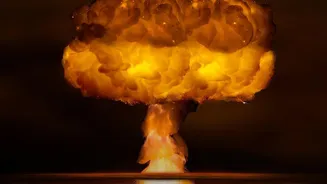
A recent paper by researchers at the University of Wisconsin-Madison and Princeton University presents a chilling scenario. Using sophisticated computer models, the study simulates the effects of a one-megaton nuclear detonation at an altitude of 500
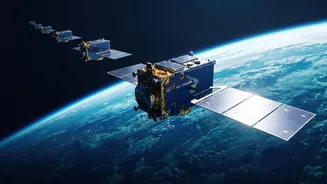
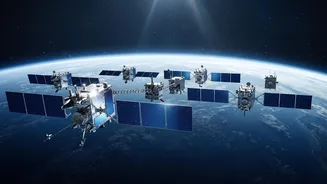
kilometers over the South Atlantic. The findings are stark: such an event could disable approximately 98% of all satellites in low Earth orbit (LEO) within a single week. The model, which has been published on the preprint server arXiv, tracks a fleet of over 13,000 LEO satellites. The failures would happen in stages, with about a quarter of the satellites failing in the first day, rising to 78% after three days, and culminating in the near-total loss of the LEO infrastructure.
The Real Killer: A Lingering Belt of Radiation
Counterintuitively, the initial blast and its flash of X-rays are not the primary cause of the widespread destruction. The model shows this 'prompt burst' would be responsible for disabling only about 3% of the satellite fleet. The far greater danger comes from what is left behind: an artificial radiation belt. Electrons released by the bomb's radioactive fission products become trapped by Earth’s magnetic field, creating a deadly hazard that lingers for years. Satellites in LEO, travelling at thousands of kilometres per hour, would repeatedly pass through this belt, with each pass delivering a cumulative dose of radiation that fries their sensitive electronics. The study found that even tripling the radiation shielding on satellites would only delay the inevitable, with 97% still failing within two weeks.
Echoes of the Cold War
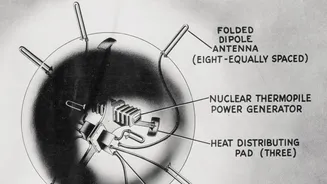
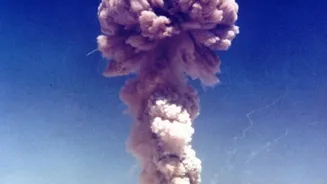
This is not a purely theoretical threat. In July 1962, the United States conducted the 'Starfish Prime' test, detonating a 1.4-megaton warhead 400 kilometers above the Pacific Ocean. The resulting electromagnetic pulse (EMP) was far stronger than expected, knocking out streetlights in Hawaii nearly 1,500 kilometers away. More significantly, it created its own artificial radiation belt that damaged or destroyed at least six satellites in the following months, including the pioneering Telstar 1 communications satellite. At the time, there were only a few dozen satellites in orbit. Today, there are tens of thousands, making the orbital environment vastly more crowded and vulnerable.
A Cascade of Collisions and a World Disrupted
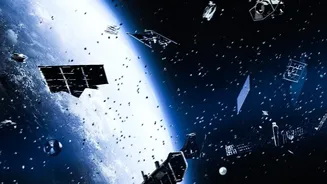
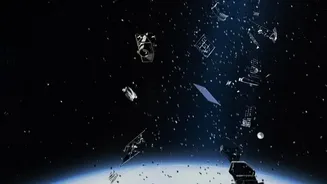
The loss of satellites is just the beginning. As thousands of spacecraft lose their ability to maneuver, the risk of collisions skyrockets. The study predicts around 20 collisions within the first two years, which would create thousands of new pieces of high-velocity space debris. This could trigger a cascading chain reaction of further collisions, a scenario known as the 'Kessler Syndrome', rendering entire orbital bands unusable for decades or even centuries. The impact on Earth would be systemic. The loss of GPS and other navigation systems would disrupt aviation, shipping, and logistics. Financial networks that rely on satellite timing would falter. Weather forecasting, climate monitoring, and disaster response would be severely hampered. Essentially, a single detonation could cripple the technological infrastructure that underpins the global economy and daily life.
Why This Matters Now
The study arrives amidst growing international concern over the militarisation of space. While the 1967 Outer Space Treaty bans placing nuclear weapons in orbit, recent geopolitical tensions have renewed old fears. In early 2024, the United States raised concerns that Russia was developing a space-based anti-satellite nuclear capability. Russia later vetoed a UN Security Council resolution that sought to reaffirm the ban on orbital nuclear weapons. The new research underscores that such a weapon would be indiscriminate, threatening the civilian and military satellites of all nations. Because space is a shared global commons, an attack on one nation's assets would inevitably become a crisis for the entire world.