





The Old Compromise: Risky and Unreliable
For decades, ‘space-saving’ furniture in India was often a synonym for compromise. It meant clunky, heavy sofa-beds with intimidating mechanisms, or wobbly folding tables that felt temporary. These pieces were often seen as a last resort, chosen out of necessity
rather than desire. The ‘risk’ wasn't just aesthetic; it involved questionable durability and sometimes, genuine safety concerns. Early designs often prioritised function over form and feel, leading to furniture that was awkward to use and rarely blended with a home's overall decor. They solved one problem—a lack of space—but often created another: a living environment that felt cheapened and impermanent.
The New Necessity: Urban Realities
The demand for smarter furniture is no longer a niche trend; it's a direct response to the economic and social realities of urban India. With real estate prices soaring, the average apartment size in cities like Mumbai, Bengaluru, and Delhi has shrunk. This, combined with the rise of nuclear families and single-person households, means our homes have to work harder than ever. The living room is now also a home office, the dining table a study area, and the bedroom a quiet retreat. This multifunctionality of life requires furniture that can adapt, transforming a space to suit the needs of the moment. It's no longer just about storing things, but about creating flexible, liveable zones within a limited footprint.
Innovation in Design: The Utility Revolution
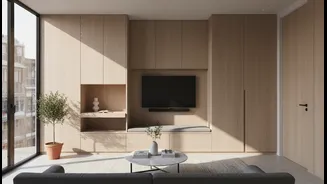
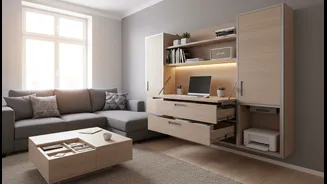
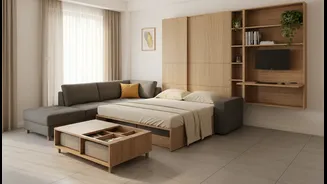
Today’s storage-efficient furniture is a world away from its clunky predecessors. The market is now filled with innovative designs that are both stylish and highly functional. Think hydraulic beds that lift effortlessly to reveal vast storage cavities, replacing the need for an extra cupboard. Consider modular wardrobes that can be customized to the inch, and sleek wall-mounted desks that fold away to nothing. Even the humble coffee table has been reimagined, with designs that lift and expand into dining tables or workstations. This evolution is driven by better engineering, higher quality materials, and a design-led approach that ensures utility doesn't come at the cost of style. The focus has shifted from merely hiding clutter to intelligently integrating storage into the very fabric of the furniture.
The Bigger Story: A Lifestyle Shift
The rise of storage-efficient furniture is more than just a reaction to small spaces; it represents a larger cultural shift. Influenced by global trends like minimalism and a growing awareness of sustainability, many urban Indians are consciously choosing to live with less, but better. This is not about deprivation, but about intentionality—curating a home that feels open, calm, and clutter-free. Owning multifunctional furniture supports this lifestyle by promoting organization and reducing the need for excessive consumption. When one piece of furniture can serve two or three purposes, it frees up not just physical space, but mental space too. It’s a move towards a more flexible, adaptable, and mindful way of living in the modern city.
Choosing Smartly: What to Look For
As these solutions become mainstream, it’s important for consumers to choose wisely. The first consideration should always be the quality of the mechanism. If a sofa-bed is difficult to open, or a hydraulic lift feels stiff, its utility is lost. Look for durable materials and solid construction that can withstand daily use. Prioritise safety features, especially in homes with children. Finally, consider the long-term adaptability of the piece. The best multifunctional furniture doesn't just solve a problem for today; it offers the flexibility to evolve with your changing lifestyle, proving its worth as a true utility for years to come.