





The Pre-Trip Vehicle Inspection
Before you even think of starting the engine, a thorough vehicle check is non-negotiable. Your tyres are the single most important safety component on wet roads. Ensure they have a tread depth of at least 3mm for adequate grip and to reduce the risk of hydroplaning.
Check the tyre pressure, including the spare. Next, inspect your wiper blades. If they leave streaks or make juddering noises, replace them. Top up the windshield washer fluid with a proper cleaning solution, not just water, to effectively clear road grime. Finally, perform a complete lights check: headlights (low and high beam), tail-lights, brake lights, and fog lamps. Clean headlamp lenses can significantly improve visibility on dark, rainy nights.
Plan Your Journey and Its Alternatives
Driving in the ghats during the monsoon, especially at night, requires careful planning. Avoid starting your journey if a heavy downpour is forecast. Always aim to cover the most challenging ghat sections during daylight hours if possible, as visibility drops dramatically after dark. Before leaving, check for news on road closures, landslides, or heavy traffic warnings for your intended route. Have a backup route in mind. Mobile connectivity can be patchy in mountainous areas, so download offline maps for your primary and alternative routes. Inform a family member or friend of your travel plan and estimated time of arrival.
Mastering the Art of Ghat Driving in Rain
Wet roads significantly increase your car's stopping distance. The golden rule is to slow down and maintain a greater distance from the vehicle ahead. Be gentle and smooth with your steering, braking, and acceleration to avoid skids. When descending steep slopes, use engine braking by shifting to a lower gear instead of constantly riding the brakes, which can cause them to overheat and fail. On blind curves, a common feature in ghats, honk to announce your presence to oncoming traffic. As a rule of thumb, always give way to traffic moving uphill.
Navigating Poor Visibility and Waterlogging
In heavy rain or fog, turn on your low-beam headlights to make yourself visible to others; high beams reflect off fog and rain, worsening your own visibility. If you encounter a waterlogged patch, avoid driving through it if you cannot gauge its depth. Deep water can stall your engine or cause you to lose control. If you must cross a shallow, flooded area, do so in a low gear with a steady, high RPM to prevent water from entering the exhaust. After crossing, tap your brakes gently a few times to dry the brake components and ensure they are working effectively.
The Overnight Challenge: Fatigue and Focus
Night driving is inherently more dangerous, and monsoon conditions amplify the risk. Ensure you are well-rested before you begin. Plan for regular breaks to stretch and refresh your mind, as driving on winding roads requires intense focus. Avoid distractions like using your mobile phone or engaging in intense conversations. Keep your windscreen clean from the inside to prevent fogging, which is common due to humidity. Use your car's air conditioning and defogger to maintain clear visibility.
Your Monsoon Emergency Kit
Being prepared can turn a crisis into a manageable inconvenience. Your emergency kit should go beyond the basics. Include a powerful, waterproof torch with extra batteries, a reflective warning triangle, and a high-visibility jacket. A well-stocked first-aid kit is essential. Pack jumper cables, a tow rope, and a basic toolkit. Given the unpredictability, also carry drinking water and non-perishable snacks like glucose biscuits or nuts. A fully charged power bank for your phone is a modern-day necessity for communication and navigation.
In Case of a Breakdown or Landslide
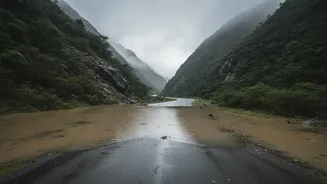
If your car breaks down, pull over to a safe spot, well away from the road and any potential landslide paths if possible. Turn on your hazard lights. If you are caught in a landslide, stay inside your vehicle; it offers a protective cage against debris. Do not attempt to drive through moving debris. If you are in a landslide-prone area, stay alert for unusual sounds like cracking trees or rolling rocks. If you are stranded for a long time, having a full tank of fuel will be crucial for keeping the engine running for warmth and power.