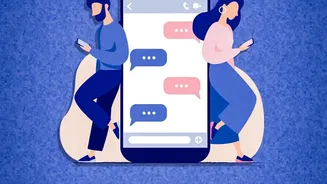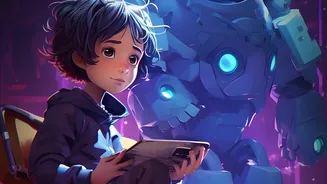





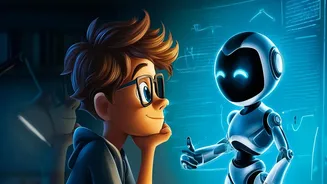

Your child is talking to someone, but there’s no one else in the room. It’s a chatbot, and for a growing number of kids, it’s more than a toy—it's a friend. As families confront this new reality, many are learning to navigate these novel digital bonds.
The Pull of the Perfect Friend
For children and teenagers, the appeal of an AI companion is immense. These chatbots offer a private, judgment-free space available 24/7. They listen patiently, never get bored, and often agree with and praise the user. This can be incredibly comforting for a child feeling lonely, misunderstood, or grappling with the social pressures of growing up. Unlike human friends, AI companions offer 'frictionless' relationships without the arguments, bad days, or disagreements that are a normal part of life. For a teen forming their identity, this unconditional validation can be powerfully appealing. Some even use them to role-play difficult conversations or interact with favourite fictional characters. This isn't just about homework help anymore; it's about connection.
More Than a Toy, Less Than a Friend
While the bond can feel real, it's crucial to understand what it is: a simulation. Children, especially younger ones, may not fully grasp that the chatbot has no real feelings, empathy, or consciousness. Experts call these one-sided connections 'parasocial relationships'. While children have always formed attachments to toys or imaginary friends, AI introduces a new element: reciprocal interaction. The bot remembers past chats, asks questions, and adapts its responses, creating a powerful illusion of a genuine, two-way relationship. This blurs the line between a tool and a true companion, which can be confusing for a developing mind still learning the rules of social engagement.
Navigating the Hidden Risks
Parents' concerns are not unfounded. Heavy reliance on AI companions can lead to children pulling back from real-world friendships, potentially hindering the development of crucial social skills like empathy, compromise, and conflict resolution. If a child gets used to a 'friend' who always agrees with them, navigating the complexities of human relationships can seem more difficult. There are also significant safety and privacy issues. Many companion apps are not designed for children and lack robust age verification. They can expose kids to inappropriate content, offer dangerous advice, or reinforce negative thinking patterns. Furthermore, sensitive personal information shared with a bot is not guaranteed to remain private.
A Guide for the Modern Parent
Banning the technology entirely is often impractical. Instead, experts suggest a proactive and open approach. The first step is to get curious. Talk to your children about which AI tools they use and why, without judgment. Try exploring an AI tool together to open up a dialogue. It's vital to explain what a chatbot is—a computer program that predicts words—and what it is not: a real friend or therapist. Establishing clear family rules is also key. These might include using AI only in shared spaces, not sharing personal information, and setting time limits, especially for chats focused on emotional support. Also, watch for warning signs like social withdrawal, distress when unable to access the bot, or hiding their device use, which may indicate an unhealthy dependency.
Fostering Real-World Connection
Ultimately, the most powerful tool parents have is reinforcing their role as the go-to person in their child’s life. The appeal of a chatbot often diminishes when a child feels seen, heard, and supported at home. Encouraging real-world hobbies, in-person friendships, and family activities helps build the resilience and social confidence that AI cannot provide. While some studies show potential benefits, like practicing social scripts for anxious children, the consensus is that AI should be a tool, not a substitute for human connection. The goal isn't to eliminate technology, but to teach children how to use it as one part of a balanced and fulfilling life.