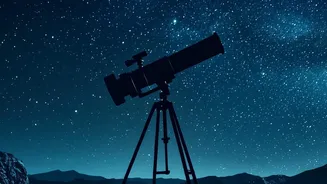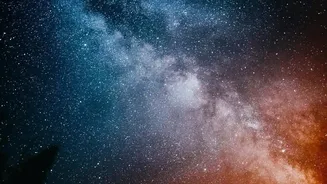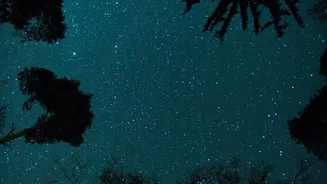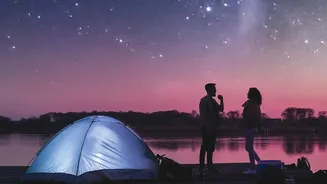







The magic of a truly dark night sky, glittering with thousands of stars and the faint brushstroke of the Milky Way, is an experience many city dwellers miss. This guide will help you escape the urban glow and find your perfect stargazing spot in India.
Understanding the Enemy: Light Pollution
The primary obstacle between you and a celestial spectacle is light pollution. The collective glow from streetlights, buildings, and vehicles creates a bright haze that washes out all but the brightest stars and planets. To quantify this, astronomers use the Bortle Scale, a nine-level system where Class 1 represents a pristine, ink-black sky, and Class 9 is an inner-city sky where seeing stars is a challenge. For truly memorable stargazing, where the Milky Way is visible, you need to find a location rated Bortle Class 4 or lower. This typically means travelling far from urban centres, to areas with low population density and minimal artificial light. In a Class 4 sky, clouds appear as dark patches against a starry background, not the illuminated grey smudges seen from a city.
Key Factors for a Perfect Stargazing Spot
Beyond just darkness, several other factors contribute to a great stargazing experience. High altitude is a major advantage. At higher elevations, the air is thinner, drier, and contains less dust and atmospheric haze to interfere with starlight. This is why locations in Ladakh and Spiti are world-renowned. Weather is another critical component; clear, cloudless nights are a must. The best seasons for stargazing across most of India are the dry winter months (November to February) and the post-monsoon period (October to November), when the rain has scrubbed the atmosphere clean of dust and particulates. Finally, consider accessibility. The darkest skies are often in the most remote places, so balance your desire for pristine conditions with the practicalities of travel.
India's Premier Dark Sky Destinations
India is home to several regions offering exceptional night skies. Ladakh is the undisputed champion, with Hanle being designated India's first official Dark Sky Reserve. At an altitude of 4,500 meters, its thin, dry air and near-zero light pollution provide observatory-grade conditions. Even more accessible spots in Ladakh like Pangong Tso and Nubra Valley offer spectacular views. Spiti Valley in Himachal Pradesh is another high-altitude cold desert with minimal light and reliably clear skies. For those avoiding extreme altitudes, the Rann of Kutch in Gujarat offers a unique experience, with its vast, flat salt flats providing an unobstructed 360-degree view of the sky. In the south, parts of Coorg in Karnataka and the higher reaches of the Western Ghats also offer good opportunities during the right season.
Essential Tools and Trip Planning
You don't need expensive equipment to start. Your most important tools are a weather forecast and a moon calendar. Plan your trip around the new moon, as a full moon is bright enough to wash out the Milky Way and fainter stars. Several smartphone apps like Stellarium or Star Walk can help you identify constellations, planets, and find the moon phase. When you head out, allow your eyes at least 20–30 minutes to fully adapt to the darkness; avoid looking at your phone or any white light during this time. Use a red flashlight to see, as red light has a minimal impact on your night vision. Finally, dress warmly in layers, even in desert locations, as temperatures can drop significantly on clear nights. A comfortable chair or blanket, along with some snacks and a warm drink, will make your cosmic viewing session far more enjoyable.