

The Tale of Two Pickles
Walk down any supermarket aisle and you'll find jars of pickles, uniform and shelf-stable. These are what most of us grew up with. But there is another kind, one that’s often found in the refrigerated section or at a local farmer’s market. This is the traditional
fermented pickle. The difference between them is not just about taste, but about a living ecosystem of microorganisms. One is a sterile, preserved vegetable, while the other is a live, probiotic-rich food. For those focused on gut health, this distinction is everything.
The Living Magic of Fermentation
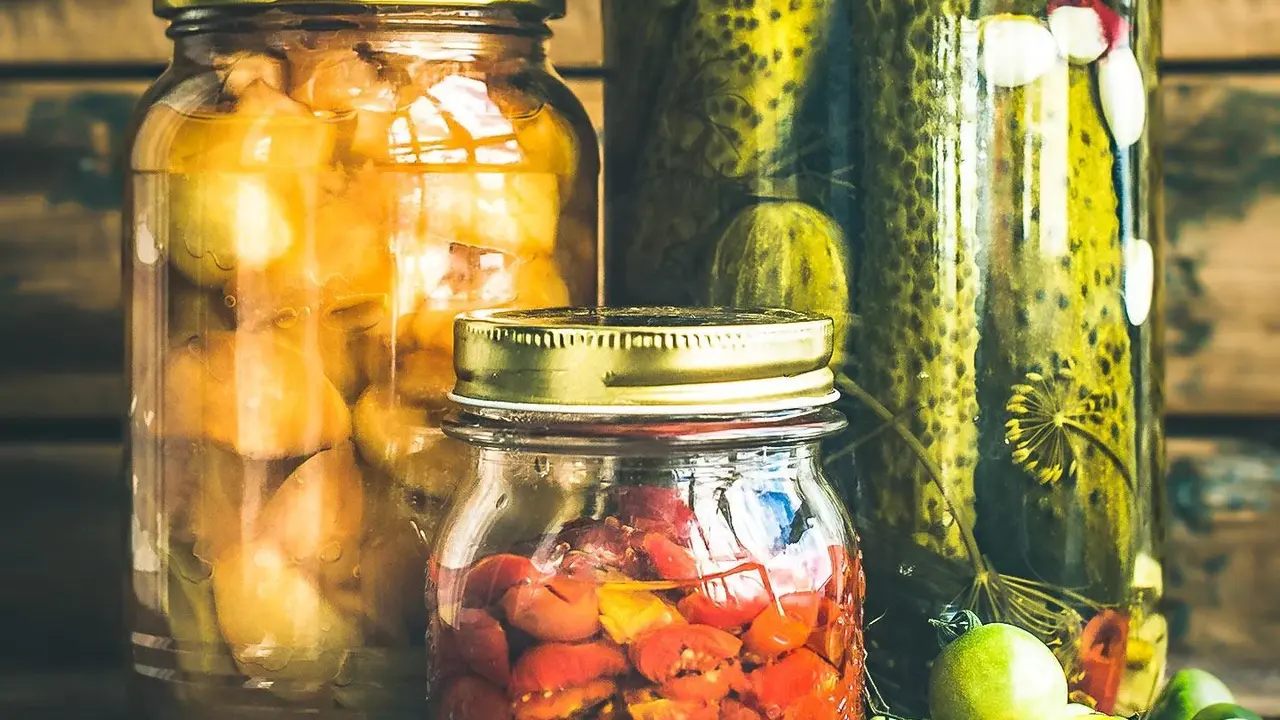
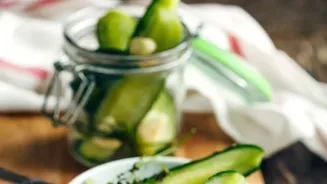
Traditional pickles are made through a process called lacto-fermentation. Vegetables are submerged in a simple brine of salt and water and left at room temperature for several days or weeks. This environment invites naturally occurring beneficial bacteria, primarily from the Lactobacillus family, to get to work. These microbes consume the natural sugars in the vegetable, converting them into lactic acid. This acid not only gives the pickle its characteristic tangy flavour but also acts as a natural preservative, warding off harmful bacteria. The result is a pickle teeming with live, beneficial probiotics. In India, this technique is seen in preparations like Kanji, a fermented drink made with carrots, beetroot and mustard seeds, or oil-free green chilli pickles that ferment in brine.
The Sterile World of Modern Jars
Most modern, mass-produced pickles found on unrefrigerated shelves are made differently. Instead of a slow fermentation, they are preserved quickly using vinegar (acetic acid). While this method effectively creates a tangy, preserved vegetable, it does not involve any microbial activity. To make them shelf-stable for months or even years, these pickles are then pasteurised—a process of heating to high temperatures. This heat treatment kills all bacteria, both good and bad. So, while you get the crunch and the sour taste, you lose out entirely on the probiotic life that defines a fermented food.
The All-Important Gut Health Connection
So why does this matter? Your gut is home to trillions of microorganisms, collectively known as the microbiome. A diverse and balanced microbiome is crucial for good digestion, a strong immune system, and even mental well-being. Probiotics, the 'good' bacteria found in fermented foods, help to support and replenish this internal ecosystem. By consuming traditionally fermented pickles, you are delivering these live cultures directly to your gut, where they can contribute to a healthier environment. Modern vinegar pickles, being sterile, offer no such benefit. They are simply a preserved vegetable snack, not a functional food for your microbiome.
Why Oil-Free Is the New Focus
Many traditional Indian pickles (achaar) use copious amounts of oil as a primary preservative. While delicious, they can be heavy and high in calories. The current wellness trend leans towards brine-fermented pickles that are oil-free. These pickles, like the aforementioned Kanji, rely solely on lactic acid from fermentation for preservation. This puts the focus squarely on the gut-health benefits of the probiotics and the nutrients of the vegetables themselves, without the added density of oil, making them a preferred choice for the health-conscious consumer.
How to Find the Right Jar
Navigating the pickle aisle can be tricky, but a few tips can help. First, check the location. True fermented pickles are live foods and almost always need to be refrigerated to slow down the fermentation process. Next, read the ingredient list. Look for simple ingredients like vegetables, water, and salt. If vinegar is high on the list, it's likely not a fermented product. Finally, look for key phrases like "naturally fermented," "unpasteurised," or "contains live cultures." These are all good indicators that you're holding a jar of gut-friendly goodness.