





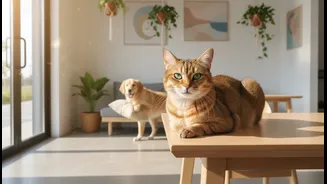


The Unspoken Bond: How Pets Help Us
It’s a truth for many households across India: coming home to a pet is a reliable source of comfort. Whether it's a dog's enthusiastic greeting or a cat's quiet presence, animals have a way of melting our stress away. This isn't just a feeling; it's backed
by science. Studies have shown that interacting with animals can improve our mood and even have physiological benefits. One study from Washington State University found that just ten minutes of petting dogs or cats led to a significant reduction in cortisol, a major stress hormone, in students. This confirms what pet owners have long suspected: our animal friends are good for our health. But as science digs deeper, it's revealing that the way they help isn't a one-size-fits-all phenomenon. The path to a better mood might look very different depending on who is curled up at your feet.
The Canine Connection: Active and Engaged
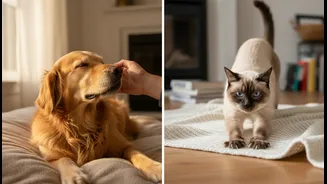
Dogs often demand a more active and engaged form of companionship. Their need for walks, playtime, and training creates a structured routine for owners, promoting physical activity and time outdoors—both proven mood-boosters. Beyond the exercise, the social nature of dogs plays a key role. Research has shown that interaction with dogs, especially making eye contact, can lead to a significant release of oxytocin in both humans and dogs. Often called the 'love hormone', oxytocin is crucial for social bonding and creates feelings of calm and connection. One study measured this effect, finding that dog owners experienced a much larger spike in oxytocin after a play session compared to cat owners. This active, mutual engagement seems to provide a powerful, direct boost to our emotional well-being, fostering a strong sense of purpose and combating feelings of loneliness.
The Feline Factor: A Calming Presence
Cats, on the other hand, offer a different brand of comfort. Their support is often more subtle and passive. A cat’s quiet companionship encourages a state of mindfulness, a gentle reminder to slow down and be present. Simply petting a cat in your lap can be a meditative act, triggering the release of mood-improving chemicals like serotonin and dopamine. While cats also trigger an oxytocin response, it may be more conditional on the cat's personality; affectionate cats show an increase, while more anxious ones might not. Interestingly, some research even suggests that the low-frequency vibration of a cat's purr can have therapeutic effects, potentially lowering blood pressure and easing tension. For those seeking stress relief without the high-energy demands of a dog, a cat's serene presence can be the perfect antidote to a hectic day.
A Surprising Twist in Stressful Moments
While both pets generally improve our mood, a recent study from June 2026 uncovered a curious difference in how they affect us during stressful events. The research found that while interacting with pets generally leads to more positive feelings, it doesn't necessarily 'buffer' or cancel out stress in the moment. For dog owners, interacting with their pet during a stressful time didn't make things worse, but it didn't erase the negative feelings either. Surprisingly, for cat owners, increased interaction with their cat after a stressful event was linked to stronger negative feelings. Researchers speculate this could be because a cat's more passive nature might not match our need for active support in a moment of crisis, perhaps leaving us more focused on what's bothering us. However, the scientists caution that this finding was not consistently observed and requires more research.
It's Not a Competition, It's a Connection
So, does this mean one pet is better than the other? Researchers say no. The main conclusion from recent studies is that interacting with both dogs and cats provides similar overall emotional benefits. The differences in how they help us likely come down to their distinct interaction styles and, importantly, our own personalities and preferences. A person who thrives on activity and social engagement might find a dog's companionship more rewarding. Someone who values quiet and calm might bond more deeply with an independent cat. The concept of an owner-pet 'match' seems to be a key factor. It's not about which animal is superior, but about finding the companion whose style of affection and support best complements your own lifestyle and emotional needs.