

The Unbreakable Code
First, let's talk about what makes quantum communication so special. Today's encryption relies on complex math problems that are incredibly hard for normal computers to solve. But future quantum computers could potentially crack them, rendering much of
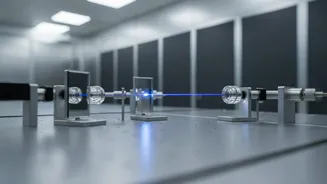
our secure data vulnerable. Quantum Key Distribution, or QKD, changes the game entirely. Instead of math, it uses physics. Imagine sending a secret key encoded on single particles of light, or photons. The laws of quantum mechanics state that if anyone tries to intercept and measure these photons, their state will instantly change. This disturbance acts like a cosmic tripwire, immediately alerting the sender and receiver that an eavesdropper is on the line. The key is compromised, and they simply generate a new one. The result is a communication channel that is, in theory, unhackable.
Why Take It to Space?
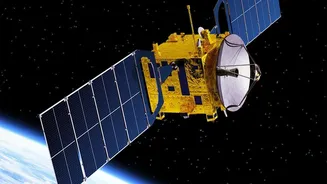
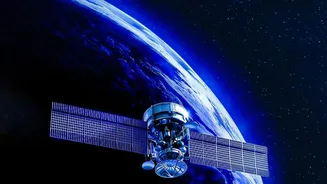
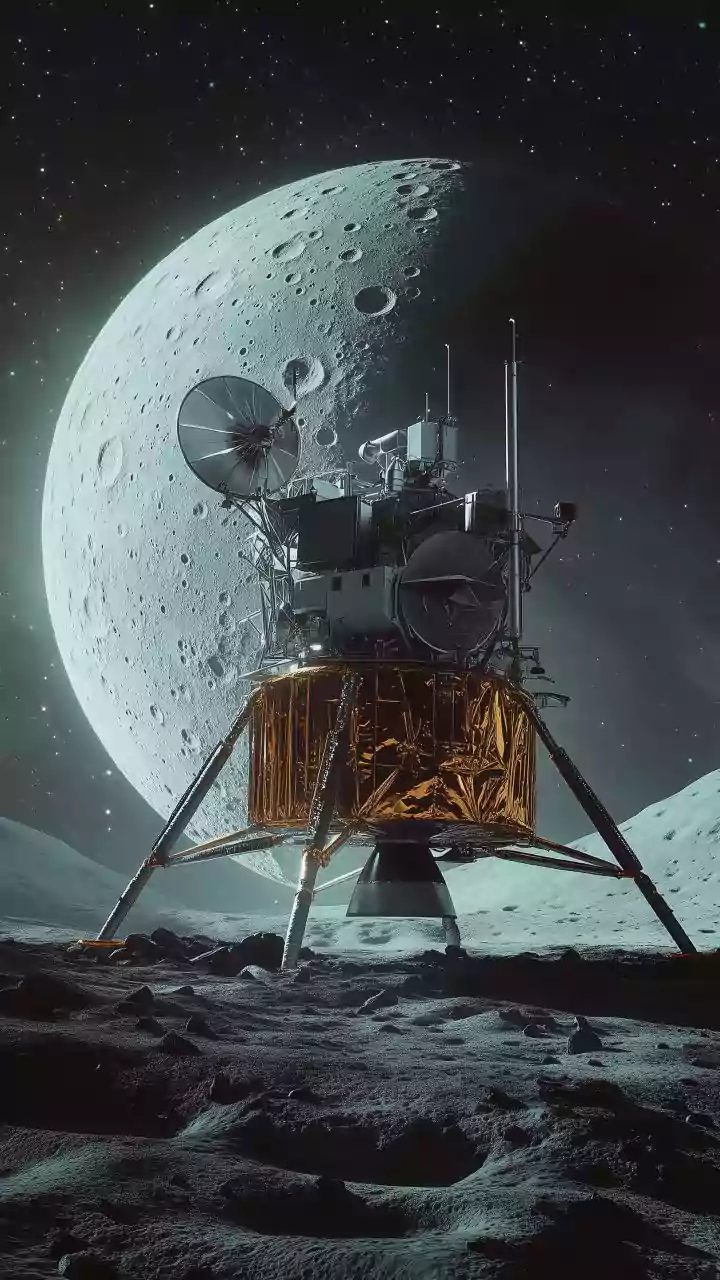
While QKD works well over dedicated fiber optic cables on the ground, it has a major distance problem. The fragile quantum signal degrades over long distances, currently maxing out at a few hundred miles. This makes it impossible to create a secure link across an ocean or continent using fiber alone. Satellites are the answer. By beaming quantum keys from space down to ground stations, you can bypass the distance limitations of terrestrial networks. A satellite in orbit can connect two points thousands of miles apart, acting as a trusted relay in the sky. This opens the door to a truly global, ultra-secure communication network for everything from financial transactions and critical infrastructure to top-secret government and military operations.
India's Quantum Leap
India has firmly entered this high-stakes arena. In April 2023, the government launched the National Quantum Mission (NQM), a massive, eight-year initiative backed by over $700 million. A key goal of the mission is to develop satellite-based secure communication between ground stations up to 2,000 kilometers apart. The Indian Space Research Organisation (ISRO) is leading the charge. Scientists there have already successfully demonstrated free-space QKD on the ground, transmitting encrypted data, images, and even conducting a video conference over a 300-meter distance. These experiments served as crucial proofs-of-concept, developing homegrown technologies needed for the much bigger challenge of space. Now, ISRO is actively working towards launching its own QKD satellite.
A New Kind of Space Race
India's efforts are part of a broader global competition. China grabbed headlines by launching its "Micius" satellite back in 2016, the world's first quantum communication satellite, which has already facilitated intercontinental quantum-encrypted video calls. Europe is not far behind, with its Eagle-1 satellite expected to launch soon to establish its own sovereign quantum network. The United States, while also investing in space-based quantum links, is simultaneously pushing for a different approach called post-quantum cryptography (PQC), which relies on new, quantum-resistant mathematical algorithms. This global race is not just for scientific prestige; it's a strategic competition for information supremacy. The nations that master quantum communication will hold a significant advantage in intelligence, defense, and economic security for decades to come.