



The Sadya: A Grand Starting Point
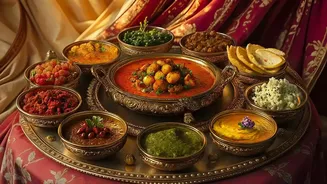
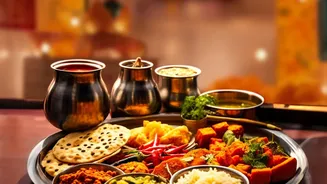
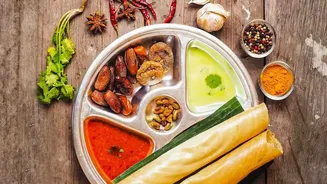
The Sadya is an icon of Malayali culture for a reason. Served on a banana leaf, this elaborate vegetarian feast can feature anywhere from 20 to over 30 dishes, each with its designated spot. It’s a symphony of flavours, from the mixed-vegetable delight
of Avial and tangy Pachadi to the comforting embrace of Sambar and sweet Payasam. This grand meal, central to festivals like Onam and Vishu, showcases the state's bounty of vegetables and coconut in spectacular fashion. Yet, for all its grandeur, the Sadya represents just one facet of Kerala’s culinary identity. To truly understand the soul of Kerala’s food, one must look past the festival grounds and into the everyday kitchens where tradition is both preserved and alive with personal touches.
A Tale of Three Regions
Kerala’s cuisine is not monolithic; it changes dramatically as you travel from north to south. Historically, the state was broadly divided into Malabar in the north, and the princely states of Kochi and Travancore in the south, each with a distinct culinary footprint. The south, or Travancore region, is often associated with lighter, coconut-based vegetarian curries and a wealth of fish preparations. Central Kerala, meanwhile, is home to the Syrian Christian community, whose cuisine is a fascinating blend of local ingredients and foreign influences. To the north lies Malabar, where the food is heavily influenced by centuries of Arab trade, resulting in a rich tradition of meat dishes, complex biryanis, and unique breads. These regional differences mean that a dish common in a Kozhikode home might be a novelty in a Thiruvananthapuram kitchen.
The Syrian Christian Contribution
The culinary heritage of the Syrian Christians, or Nasranis, is one of Kerala’s most distinctive. Their food tells a story of cultural fusion, blending local Kerala spices with Western cooking styles. A classic example is the famous stew, or 'ishtew', a fragrant, mildly spiced coconut milk-based curry often paired with spongy, lace-like Appams. This dish is believed to have been adapted from British stews. Other household staples include Meen Moilee, a delicate fish curry also made with coconut milk, and hearty one-pot meals like Kozhi Pidi, where chicken curry is cooked with soft rice flour dumplings. Non-vegetarian dishes, especially those featuring beef, duck, and pork, are central to their feasts, offering a rich counterpoint to the more widely known vegetarian fare of the state.
Malabar’s Mappila Feasts
In the north, the Mappila cuisine of the Malabar Muslims offers another layer of culinary depth, shaped by Arab traders who settled on the coast centuries ago. This influence is evident in the famous Thalassery Biryani, which uses a short-grain khaima rice instead of the more common basmati, and in an array of snacks and breads. Home kitchens in this region are masters of dishes like Pathiri, a paper-thin rice flour flatbread, and Irachi Pathiri, a stuffed version fried to perfection. Mappila wedding feasts are legendary, often featuring showstoppers like whole stuffed mutton, slow-cooked with a complex blend of spices grown in Kerala’s own hills. For a long time, these recipes were guarded family secrets, passed down through generations before authors and home cooks began to share them more widely.
The New Era of the Home Chef
Today, these once-hidden culinary traditions are more accessible than ever, thanks to the rise of home chefs. Across Kerala, home cooks, many of them women, are turning their passion and generational knowledge into small businesses. Using social media and delivery platforms, they offer authentic, region-specific food that is often impossible to find in commercial restaurants. This movement not only provides a source of income and empowerment but also serves a crucial cultural role. It caters to a growing demand for food that tastes like home—trusted, hygienic, and made with care. These home entrepreneurs are ensuring that the specific flavours of a Travancore fish curry or a Malabar chicken fry are celebrated and preserved for a new generation of eaters.