
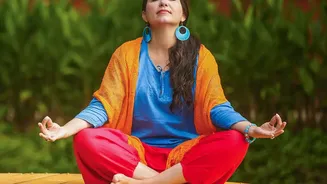


Ancient Origins of a Spiritual Quest
The story of yoga begins not in a fitness studio, but in the heart of ancient India over 5,000 years ago. Its earliest mentions can be traced to the Rig Veda, one of the oldest sacred Hindu texts, which contains hymns and mantras related to spiritual
discipline. For centuries, yoga was not about physical postures but was a comprehensive spiritual practice aimed at uniting the mind, body, and spirit to achieve enlightenment. This classical form was systemised around 200 BCE by the sage Patanjali in the Yoga Sutras, which outlined an 'eight-limbed path' covering everything from ethical conduct to deep meditation. This was a practice passed down from teacher (guru) to student (shishya) for generations, focused entirely on inner transformation.
First Steps into the Western World
For millennia, yoga remained largely within India. Its journey to the West began in the late 19th century, primarily as a philosophy rather than a physical exercise. In 1893, Swami Vivekananda made a historic address at the Parliament of the World's Religions in Chicago, introducing the concepts of Vedanta and Raja Yoga to a captivated Western audience. His lectures sparked a significant interest in Eastern spirituality among intellectuals and seekers of alternative paths. Following in his footsteps, other gurus like Paramahansa Yogananda arrived in the 1920s, further spreading the message of Kriya Yoga through his widely read book 'Autobiography of a Yogi'. These early pioneers laid the intellectual groundwork for what was to come.
The Counter-Culture Embrace
The mid-20th century marked a pivotal shift. While early introductions focused on philosophy, teachers like Tirumalai Krishnamacharya, often called the 'father of modern yoga', began to emphasize physical postures (asanas). His disciples would become some of the most influential figures in popularising yoga globally. One student, Indra Devi, moved to Hollywood in 1947 and began teaching yoga to celebrities, giving the practice a touch of glamour. By the 1960s and 70s, the Western counter-culture movement, disillusioned with mainstream values, embraced yoga as part of its search for spiritual freedom and inner peace. This period saw the rise of gurus like B.K.S. Iyengar, whose focus on precision, alignment, and the use of props made the physical practice more accessible.
From Niche Practice to Mainstream Wellness
The perception of yoga began to change dramatically in the 1980s and 90s. The focus shifted from a purely spiritual or counter-cultural pursuit to one centred on physical fitness, stress reduction, and overall well-being. This new framing made yoga appealing to a much broader audience that may not have been interested in its spiritual origins but was seeking practical solutions for modern-day stressors. Different styles, from powerful Ashtanga and Vinyasa flows developed by K. Pattabhi Jois to the controversial, heated rooms of Bikram Yoga, offered something for everyone. Yoga was no longer just for ascetics or hippies; it was becoming a mainstream tool for health and wellness.
The Birth of a Global Lifestyle Brand
In the 21st century, yoga completed its transformation into a full-fledged lifestyle movement and a massive global industry. The global yoga market was valued at over USD 125 billion in 2025 and continues to grow, encompassing everything from studio memberships and teacher training to apparel, mats, and international yoga retreats. Companies have built billion-dollar empires on yoga-centric branding. With over 300 million practitioners worldwide, the practice is now accessible through countless apps, online classes, and social media influencers. This commercialisation has made yoga more available than ever but has also sparked debate about the dilution of its authentic spiritual essence and cultural roots.