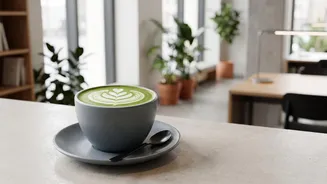







The Jolt vs. The Lift
The primary reason for the afternoon beverage is energy. Coffee delivers this with a powerful, fast-acting jolt. The caffeine is absorbed quickly, which is great for an immediate wake-up call but often comes with downsides like jitters, anxiety, and a racing
heart for some. Matcha, on the other hand, provides a different kind of energy—often described as a gentle lift. While it also contains caffeine, sometimes in amounts comparable to a cup of coffee, its delivery system is fundamentally different. The energy from matcha feels smoother and more sustained, making it a popular choice for long work sessions where steady focus is more valuable than a short-lived spike in alertness.
The Science of Calm Alertness
The secret to matcha's unique effect lies in an amino acid called L-theanine. Coffee lacks this compound. L-theanine works in synergy with caffeine, promoting a state of relaxed alertness. It encourages the production of alpha waves in the brain, the same brainwaves associated with meditation and deep focus. This powerful combination is why many matcha drinkers report feeling focused and productive without the edgy, anxious feeling that an afternoon coffee can sometimes provoke. The L-theanine effectively smooths out caffeine's sharp edges, offering mental clarity without the overstimulation.
Beating the Inevitable Crash
What goes up must come down, and this is especially true for the energy boost from coffee. The rapid spike in alertness is often followed by an equally dramatic afternoon crash, leaving you feeling more tired than before. This happens because coffee's caffeine is absorbed and metabolized quickly. Matcha avoids this rollercoaster. Due to L-theanine and other compounds, the caffeine in matcha is absorbed by the body more slowly. This provides a sustained energy release that can last for four to six hours, tapering off gently without the sudden drop-off, helping you stay productive through the end of the workday.
The Sleep Disruption Factor
An afternoon coffee can have consequences that last long after you’ve left the office. Caffeine has a half-life of about five hours, meaning a 4 PM coffee can still be significantly affecting your system when you try to go to sleep. Studies show that caffeine consumed even six hours before bedtime can significantly disrupt sleep quality, reducing restorative deep sleep and REM sleep. While matcha is not caffeine-free, its combination with L-theanine can mitigate some of caffeine's negative effects. Many people find that an early afternoon matcha provides the focus they need without interfering with their ability to wind down in the evening.
A Growing Trend in India
This shift is not just happening globally; it’s a fast-growing trend in India. Once a niche product, matcha is now a staple in third-wave cafes across metro cities like Bangalore, Mumbai, and Delhi. The Indian matcha market is expanding at nearly double the pace of the traditional tea market, driven by health-conscious millennials and Gen Z professionals. Search trends show a massive surge in interest, with Indian consumers looking up everything from “matcha health benefits” to “how to make matcha at home.” This suggests the move towards matcha is more than a fad; it’s a deliberate wellness choice for a new generation of Indian workers.