
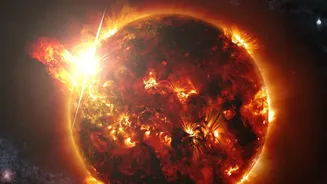
The Sun’s Unseen Threat
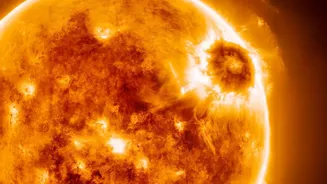
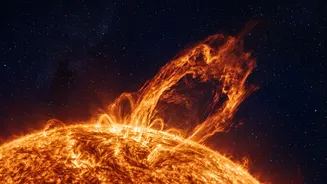
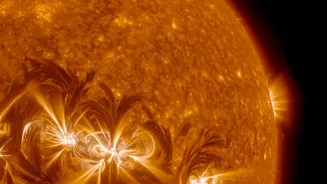
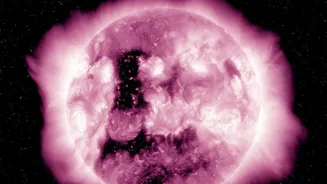
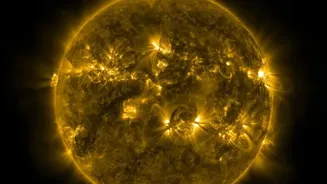
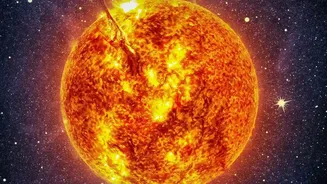
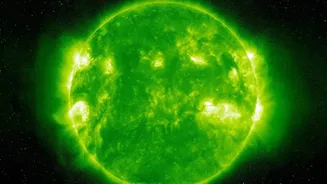
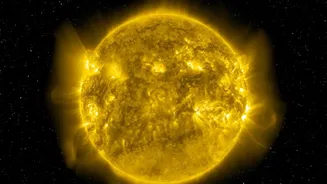
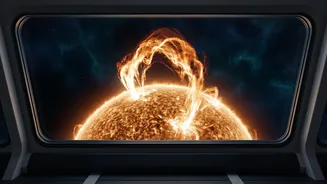
Space weather might sound distant, but its effects can be felt right here on Earth. The primary culprits are solar storms, which are massive eruptions of energy and particles from the Sun. These events, like solar flares and coronal mass ejections (CMEs),
send charged particles hurtling through space. If Earth is in the path of one of these storms, our planet’s magnetic field can be disturbed, leading to what is known as a geomagnetic storm. While these storms are responsible for the beautiful auroras, they also pose a significant risk to our modern, technology-dependent society, threatening everything from satellite operations to the stability of our electrical grids.
A Lesson from History
The most powerful geomagnetic storm in recorded history, the Carrington Event of 1859, provides a stark warning. It caused telegraph systems worldwide to fail, shocking operators and even setting paper in telegraph offices on fire from sparks. At the time, the technological impact was limited to this nascent communication network. However, if a storm of that magnitude were to strike today, the consequences would be catastrophic. Experts warn of widespread and long-lasting blackouts, damage to satellites that power GPS and communications, and major disruptions to the global economy. With our society more reliant than ever on technology, the need for accurate and timely warnings has become critical.
Enter DAGGER: The AI Forecaster
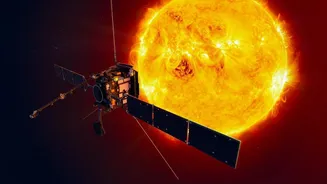
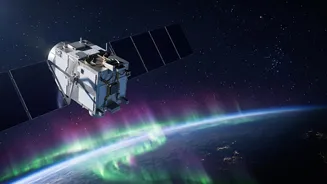
To meet this challenge, an international team of researchers working with NASA has developed a new artificial intelligence model called DAGGER (Deep Learning Geomagnetic Perturbation). This system uses AI to analyze real-time data from a fleet of spacecraft that monitor the solar wind—the stream of particles constantly flowing from the Sun. By training on historical data of past solar storms and their effects on Earth, DAGGER has learned to identify the complex patterns that precede a geomagnetic disturbance. This makes it the first model to combine the speed of AI with global data to produce forecasts that are both fast and specific.
Why 30 Minutes Is a Game-Changer
DAGGER can predict the specific location and intensity of a geomagnetic storm on Earth with about 30 minutes of advance warning. While half an hour might not sound like much, it can be a crucial window for action. This lead time allows power grid operators to take protective measures to prevent overloads that could cause blackouts or damage expensive transformers. Satellite operators can put their spacecraft into a safe mode to protect sensitive electronics, and airlines can reroute flights to avoid communication blackouts and radiation risks at high latitudes. According to the developers, the model can generate a worldwide prediction in less than a second and updates its forecast every minute, providing a continuous stream of information.
A Shield for Our Connected Future
The development of DAGGER, led by researchers including Vishal Upendran from India's Inter-University Center for Astronomy and Astrophysics, marks a significant step forward in space weather forecasting. As we approach the next solar maximum—the peak of the Sun's 11-year activity cycle expected around 2025—the risk of powerful storms increases. The open-source nature of the DAGGER code means that power companies, telecommunication firms, and satellite operators around the world can potentially adopt and adapt this technology for their own needs. By providing a practical tool to anticipate and mitigate the effects of solar storms, this AI is helping to build a more resilient infrastructure for our increasingly interconnected planet.