



What is the New Format?
Gone is the classic 32-team, eight-group format we've known since 1998. The 2026 World Cup, hosted by the USA, Canada, and Mexico, will feature 48 nations. These teams will be split into 12 groups of four. The top two teams from each group, along with
the eight best-ranked third-place teams, will advance to a newly created Round of 32. This means the tournament will swell from 64 matches to a mammoth 104 matches, extending its duration. It’s the biggest shake-up to the World Cup in a generation, and the reasons for it are as much about politics and money as they are about football.
The Argument For: A More Global Game
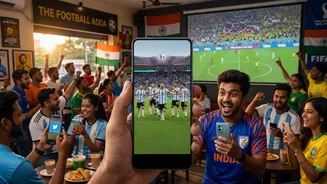
FIFA’s main pitch is inclusivity. With 16 extra spots, more nations have a realistic chance of qualifying for the first time. For countries with passionate football cultures but who often fall just short—like many in Africa, Asia, and North America—this is a game-changer. Proponents argue this will spark massive investment in football infrastructure and youth development globally. More teams on the world stage means more dreams realised and a more diverse, representative tournament. For Indian fans, this is the biggest hook: the expansion of Asia’s slot allocation from 4.5 to 8.5 spots dramatically increases India’s chances of finally making its World Cup debut. The dream has never felt closer.
The Argument Against: Diluting the Magic
Critics, including many players, coaches, and purists, are horrified. Their primary fear is a significant drop in quality. The 32-team format was seen as the perfect balance of elite competition and global representation. A 48-team tournament, they argue, will lead to more one-sided, uninspiring group-stage matches where powerhouse nations thrash minnows. There is also the issue of player welfare. The new format means more games and a longer tournament, putting even more strain on a packed football calendar and increasing the risk of player burnout and injury. Many feel the prestige of merely qualifying will be diminished, turning the World Cup from an elite spectacle into a bloated festival.
Follow the Money
It’s impossible to ignore the financial incentives. FIFA projects the 2026 tournament will generate over $11 billion in revenue, a staggering increase from the roughly $7.5 billion from Qatar 2022. More matches mean more television rights to sell, more tickets to be bought, and more sponsorship opportunities. This additional revenue, FIFA claims, will be reinvested into football development projects across its 211 member associations. However, sceptics see this as a cash grab that prioritises financial growth over the integrity of the competition, using the romantic notion of 'inclusivity' as a convenient cover for commercial expansion.
The Verdict on the Pitch
So, is it a good or bad idea? The answer depends entirely on what you believe the World Cup should be. If you see it as the absolute pinnacle of footballing excellence, a showcase of only the very best, then the 48-team format is likely a step in the wrong direction. The competitive balance will almost certainly suffer, at least in the early stages. But if you view the World Cup as a global celebration of the sport, an engine for development, and a vehicle for bringing joy to more corners of the globe, then the expansion is a logical, even noble, evolution. It sacrifices some elite purity for the sake of greater democratic participation.