



A Realm of Icy Remnants
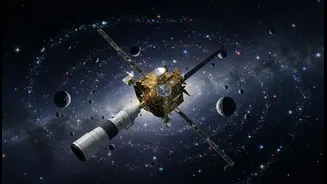
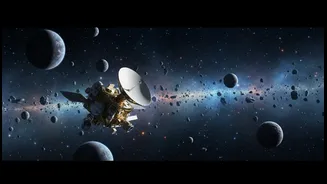
Beyond the orbit of the farthest planets lies the Kuiper Belt, a vast, doughnut-shaped region of space teeming with icy bodies. Think of it not as an empty void, but as a cosmic junkyard of leftovers from the formation of the solar system, more than 4.5
billion years ago. This region is home to dwarf planets like Pluto, as well as countless smaller objects. Studying the Kuiper Belt is like archaeological digging; its contents hold clues to the ancient history and evolution of our planetary neighborhood.
The Long Sleep of a Spacecraft
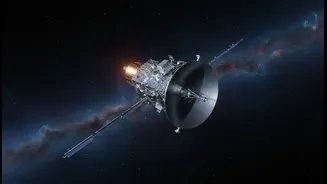
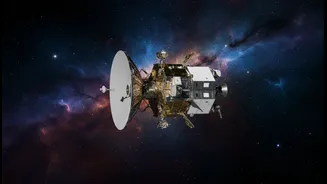
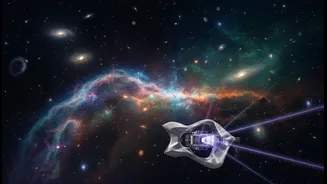
Journeys to these distant frontiers are incredibly long. Probes like NASA's New Horizons, which launched in 2006, spend years cruising through space. To conserve precious power from their nuclear batteries and extend their operational life, mission managers place these spacecraft into a state of hibernation. During this mode, most systems are powered down, similar to a computer's sleep mode. However, some essential instruments remain active, quietly gathering data. New Horizons has entered hibernation 23 times since 2007, a crucial strategy for managing its multi-decade mission.
The Cosmic Wake-Up Call
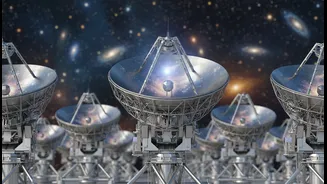
Waking a spacecraft that is billions of kilometres away is a delicate process. On June 23, 2026, mission controllers confirmed New Horizons had awakened from a 321-day hibernation period, its longest ever. The probe woke itself up based on pre-programmed commands sent nearly a year earlier. Radio signals confirming the probe was healthy took almost nine hours to travel from the spacecraft back to Earth. Once awake, the probe begins by sending back health and safety data before starting the long process of transmitting the scientific information it collected even while 'asleep'.
Reading the Dust
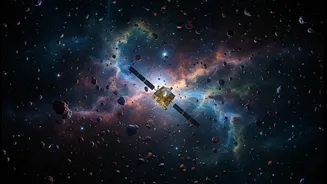
This is where the magic happens. As New Horizons travels, even in hibernation, its specialised instruments are constantly working. The Venetia Burney Student Dust Counter (SDC), for instance, measures and counts the tiny dust particles that impact the detector. When the probe wakes up and phones home, it sends back this invaluable data. These particles are the frozen remnants of collisions between larger Kuiper Belt Objects (KBOs). By counting them, scientists can create a map of dust density, which tells them where these collisions are happening and how populated the region is.
Why This Dust Matters
Mapping these dust fields is about much more than avoiding hazards for future spacecraft. The distribution and density of dust provide profound insights. For years, scientists thought the Kuiper Belt ended around 50 times the distance from Earth to the Sun. However, data from New Horizons shows higher-than-expected dust levels far beyond this boundary, suggesting the Belt is much larger than previously thought, or that there may even be a second belt. This dust is a fossil record; analyzing it tells us about the composition of objects that formed in the solar system's infancy, the dynamics of how they interact, and even reveals clues about the potential for hidden planets shaping the region through their gravity.