





An Ocean in the Heavens
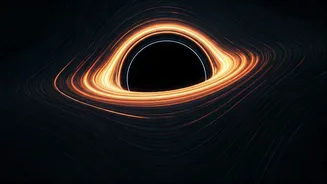
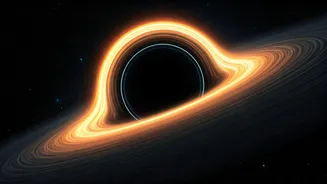
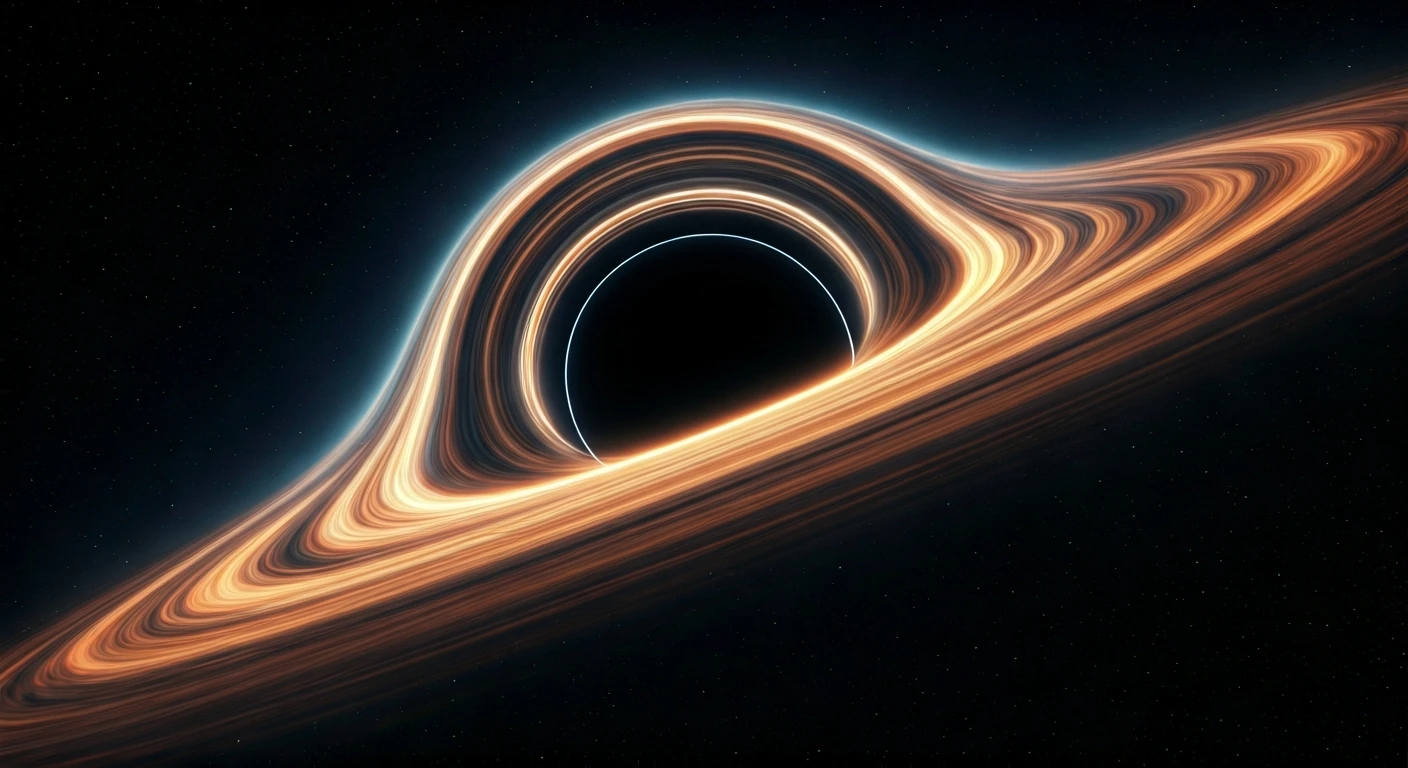
Astronomers have discovered the largest and most distant reservoir of water ever detected in the universe. [2, 9] This isn't an ocean as we know it, but a colossal cloud of water vapor surrounding a supermassive black hole. This structure is located at the heart
of a quasar—an incredibly bright and energetic object—known as APM 08279+5255. [3, 4] The sheer scale of the discovery is difficult to comprehend: the cloud contains at least 140 trillion times the amount of water found in all of our planet's oceans combined. [2] To put it another way, the amount of water is about 100,000 times the mass of our sun. [3] It’s a staggering finding that provides a unique window into the conditions of the very early universe.
A Glimpse into the Past
The light from this quasar has travelled for more than 12 billion years to reach us, meaning we are observing the cloud as it existed when the universe was only about 1.6 billion years old. [2] This makes it not only the largest but also the oldest significant mass of water ever found. [2] Finding water at such an early stage of cosmic history is a monumental discovery. It demonstrates that water, a key ingredient for life as we know it, has been pervasive throughout the universe for nearly its entire existence. [5] The discovery pushes our confirmed detection of water about a billion years closer to the Big Bang than any previous find. [2]
How to Find Water Billions of Light-Years Away
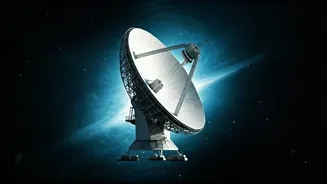
Detecting water from such an immense distance is a remarkable feat of astronomical detective work. Two independent teams of astronomers confirmed the discovery. One team used an instrument called Z-Spec at the Caltech Submillimeter Observatory in Hawaii, while another used the Plateau de Bure Interferometer in the French Alps. [5, 9] These powerful instruments can detect the specific spectral signatures, or wavelengths of light, emitted by water molecules. The light from the quasar passes through the surrounding gas cloud, and by analyzing this light, astronomers can identify the chemical composition of the gas. The water isn't a dense liquid but a vapor, spread across a region hundreds of light-years wide. [3, 5] While it is 300 trillion times less dense than Earth's atmosphere, it is still much denser and warmer than is typical for most galaxies like our own Milky Way, thanks to the intense radiation from the quasar. [15]
What It Says About the Universe
While finding water in space isn't a complete surprise to astronomers, the sheer quantity and the early timeframe are hugely significant. The cloud of vapor reveals crucial information about the quasar itself. [2] The presence of water and other molecules like carbon monoxide suggests there is an enormous amount of gas available to feed the central black hole, allowing it to grow to its immense size—about 20 billion times the mass of our sun. [5] This cosmic water also serves as a valuable tool for studying the physical conditions of the early universe. The discovery supports the idea that the basic components needed to form life were present not long after the universe began. While this water cloud is far too distant and diffuse to support life itself, its existence shows that the universe has been a water-rich place for a very long time, increasing the possibility that life could have arisen elsewhere.