




For millions of Indians, the fear of rising healthcare costs is a constant reality. But what if that trend was about to reverse? Renowned cardiac surgeon and Narayana Health founder Dr. Devi Shetty has made a bold prediction for the next 5 to 7 years.
The Core of the Prediction
Dr. Devi Shetty forecasts that healthcare costs in India could decrease by as much as 40-50% within the next five to seven years. This isn't just wishful thinking; it's a projection based on a fundamental shift in how healthcare is delivered and financed. His central thesis is that India is on the verge of becoming the first country to successfully separate the quality of healthcare from a person's wealth. This prediction stands in stark contrast to the current situation, where out-of-pocket medical expenses still push millions of families into poverty. Shetty argues that a combination of technological disruption, insurance penetration, and operational efficiency will make quality care radically more affordable.
Technology as a Cost-Cutter
A major pillar of this forecast is the role of technology. Dr. Shetty believes that tools like artificial intelligence (AI), robotics, and streamlined digital workflows can attack the core drivers of high hospital bills: inefficiency, manpower costs, and long hospital stays. AI can serve as a productivity and safety tool, helping to prevent medical errors and optimize treatment planning, particularly in data-heavy fields like cardiology. By redesigning processes and leveraging technology, hospitals can increase their throughput—treating more patients more efficiently—which in turn lowers the cost per procedure. Robotics in surgery and advancements in telemedicine are also key components that can reduce procedure times and extend the reach of specialist care to remote areas.
The Insurance Revolution
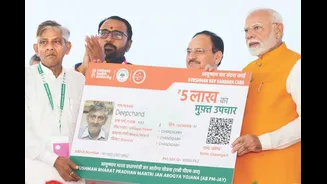
The second critical driver is the expansion of health insurance. Dr. Shetty has long argued that the missing link for affordable healthcare in India is not a lack of beds or doctors, but the fact that a majority of the population lacks the means to pay for services. He sees universal health insurance—not taxpayer-funded free healthcare—as the only viable solution for a large country like India. Government schemes like Ayushman Bharat, which aims to cover over 12 crore families, are already opening the doors of private hospitals to the nation's poorest citizens. Shetty also champions innovative models like Health Savings Accounts and hospital-led insurance products, which he believes can build trust and make premiums affordable for the 'missing middle class'. The goal is to ensure that within 5-7 years, everyone has adequate coverage to access care without facing financial ruin.
Learning from the 'Henry Ford of Heart Surgery'
Dr. Shetty's forecast is grounded in his own proven model at Narayana Health, which has earned him the nickname 'the Henry Ford of heart surgery'. The hospital network's philosophy is built on achieving massive economies of scale. By performing a high volume of surgeries, the hospital drives down the unit cost of each procedure. This allows for bulk purchasing of supplies, creates hyper-specialised and efficient surgical teams, and ensures that expensive operating theatres are used to their maximum capacity. This model, which combines high volume with cross-subsidies to treat the poor, has demonstrated that it is possible to deliver world-class care at a fraction of the cost seen in Western countries. Shetty's national forecast is essentially a projection of this model being adopted on a wider scale, powered by technology and insurance.
Challenges on the Horizon
While the vision is optimistic, it is not without its hurdles. For this dramatic cost reduction to be realised system-wide, the gains seen in leading hospitals must be replicated across the country, in both urban and rural settings. This requires significant investment in infrastructure, widespread training for healthcare professionals on new technologies, and regulatory acceptance. Furthermore, persistent issues like general inflation, the high cost of imported medical equipment, and the ongoing shortage of skilled doctors and nurses could slow progress. The success of this prediction depends not just on technological innovation, but on a concerted effort from policymakers, hospitals, and insurance providers to build a more efficient and trusted healthcare ecosystem.