
A Historic Handshake in Space
In early August 2026, during a meeting of the India-U.S. Civil Space Joint Working Group, NASA officially invited ISRO to be part of its plan to build a sustainable human presence on the Moon. This isn't just a courtesy call; it's a strategic next step
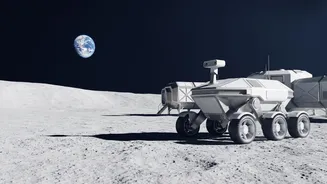
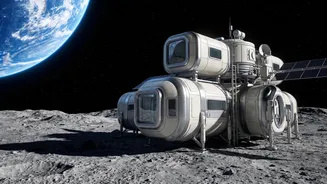
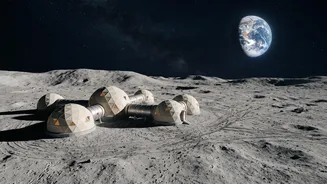
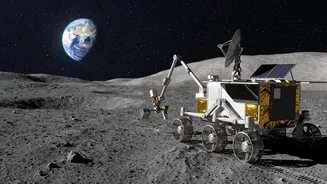
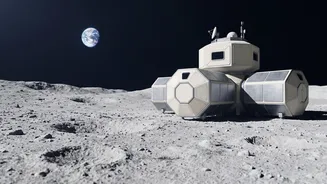
after India signed the Artemis Accords in 2023, a set of principles for safe and responsible space exploration. The program, often called the Artemis Base Camp, aims to establish a permanent outpost near the Moon's south pole where astronauts will live, work, and conduct scientific research. For ISRO, which has its own goals of a space station by 2035 and a crewed lunar mission by 2040, this partnership offers a chance to gain invaluable experience and accelerate its own timeline.
Beyond Astronauts: A Universe of Jobs
When people think of space careers, they picture astronauts. But building and sustaining a lunar base requires a vast and diverse workforce right here on Earth. The Artemis program is a multi-decade engineering and scientific challenge that will need experts in countless fields. This collaboration opens the door for Indian talent in areas like robotics, material science, and life support systems. Engineers will be needed to design habitats that can withstand extreme temperatures and radiation, while scientists will be crucial for analysing lunar samples and studying the effects of low gravity. There will also be a massive demand for software developers, data scientists, and AI specialists to manage complex mission operations and analyse the torrent of data sent back from the Moon.
The New Skill Frontier for Indians
Participation in a project of this magnitude will create demand for highly specialized skills. One of the key challenges is In-Situ Resource Utilisation (ISRU)—using local lunar resources like regolith (Moon dust) for construction and to produce water or oxygen. This will require Indian geologists, mining engineers, and chemical engineers to develop new technologies for excavation and resource extraction in a low-gravity environment. Furthermore, establishing a lunar base involves creating infrastructure for power generation (like fission surface power), waste disposal, and communications. This translates to opportunities for nuclear engineers, environmental scientists, and telecommunications experts. These are the high-tech, high-value jobs of the future, and this program places India at the forefront of their development.
Fueling India's Private Space Boom
This top-level collaboration is expected to supercharge India's burgeoning private space sector. Since opening up to private companies in 2020, India's space ecosystem has exploded, growing to over 400 startups by 2026. The Indian space economy is already projected to grow from around $8.4 billion in 2023 to as much as $45 billion by 2030. A partnership with NASA on the Artemis program will create a ripple effect, generating contracts and sub-contracts for these private firms. Indian startups working on launch vehicles, satellite components, Earth observation, and propulsion systems will find themselves part of a global supply chain for one of humanity's greatest endeavors. This will attract more investment, create thousands of ancillary jobs, and solidify India's position as a commercially driven space power.