

Sailing on Beams of Light
The concept of a solar sail is both elegant and simple. Instead of relying on heavy, combustible rocket fuel, a solar sail is propelled by the constant pressure of sunlight itself. Light is made of particles called photons, which have no mass but carry
momentum. When these photons bounce off a large, reflective sail, they transfer their momentum, giving the spacecraft a gentle but continuous push. Think of it like the wind pushing a sailboat, except the 'wind' is the endless stream of photons from the sun. While the initial thrust is tiny—about the weight of a feather on your palm—over weeks and months in the frictionless vacuum of space, this constant acceleration allows a spacecraft to achieve incredibly high speeds without ever worrying about a fuel gauge.
The Breakthrough in Materials and Design
While the idea has been around for decades, recent breakthroughs are turning it into a practical reality for a new generation of missions. The key lies in developing materials that are incredibly lightweight, durable, and highly reflective, deployed by novel boom structures. NASA’s Advanced Composite Solar Sail System (ACS3), for example, is testing booms made of advanced composite materials that are 75% lighter than previous metal designs. In April 2026, a company named Opterus received a major NASA contract to build a solar sail deployment system for a sail twenty times larger than ACS3, using stiff, lightweight composite booms. These new systems allow massive sails, some the size of a small apartment or even a hockey rink, to be packed into a space as small as a microwave oven for launch, a critical factor for keeping launch costs down.
The Perfect Targets: Near-Earth Asteroids
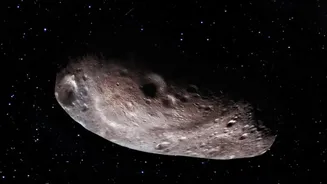
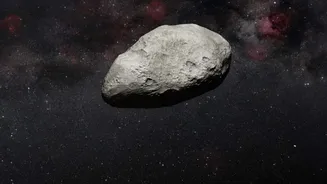
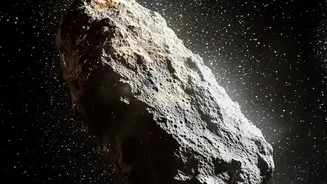
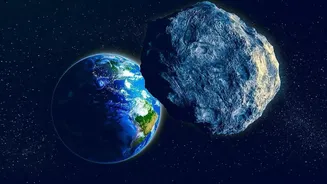
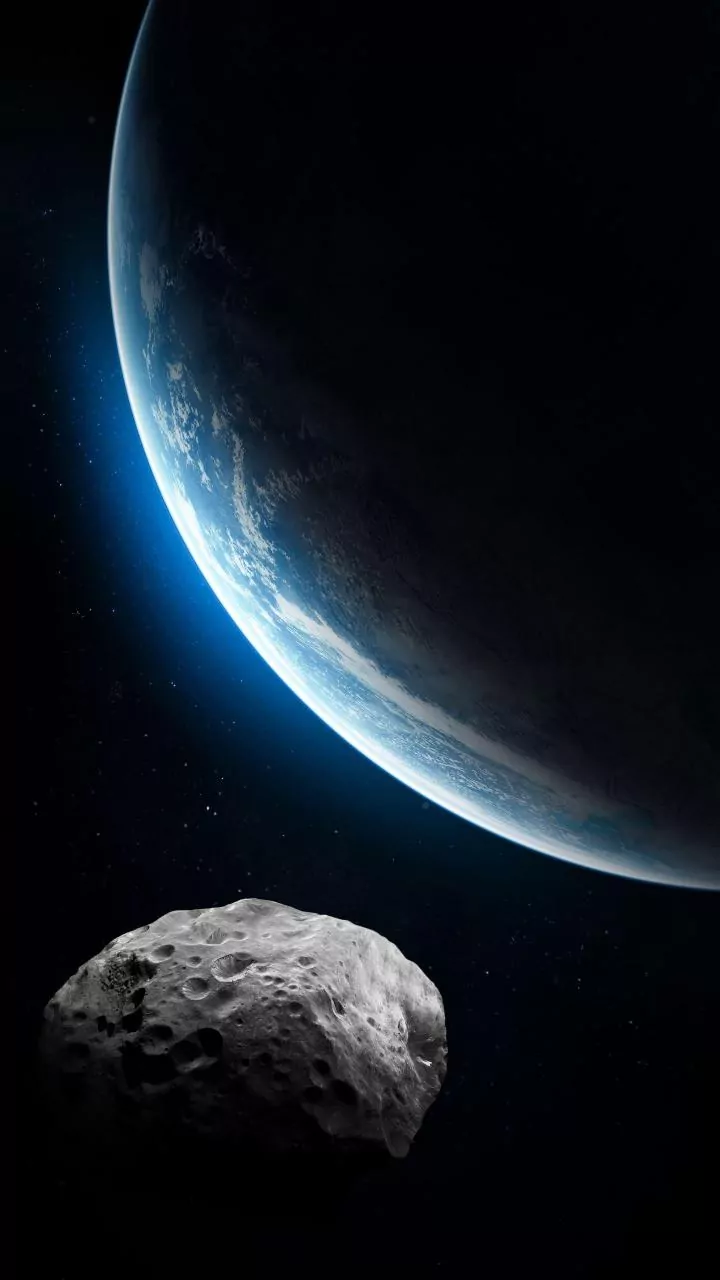
This fuel-free, lightweight technology is perfectly suited for exploring one of the most intriguing and challenging destinations: near-Earth asteroids (NEAs). These are remnants from the formation of our solar system, and studying them up close can reveal secrets about our cosmic origins. They are also a major focus for planetary defense. Missions like NASA's NEA Scout, which flew on the Artemis I test flight, were designed specifically to use a solar sail to chase down and study some of the smallest asteroids ever visited. Because solar sails allow for continuous thrust and navigation by simply tilting the sail, they can perform complex maneuvers to rendezvous with these fast-moving objects in ways that would be prohibitively expensive or impossible with fuel-based probes.
A Revolution in Mission Economics
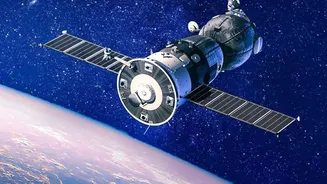
The 'zero fuel' aspect is more than just a technical marvel; it's a complete game-changer for the business of space exploration. Propellant is heavy, and the more weight you have to launch out of Earth's gravity, the more expensive the mission becomes. By eliminating fuel, solar sail probes can be significantly smaller and lighter, allowing them to be launched on smaller, cheaper rockets or even ride along as secondary payloads on larger missions. This dramatically lowers the cost barrier for science. It opens the door for swarms of tiny, 10-gram microprobes to explore the solar system, or for more ambitious missions like monitoring solar weather to protect our power grids and communication satellites with greater warning times.