





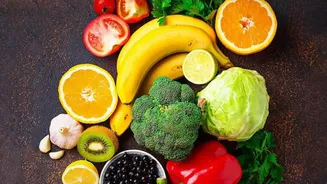

The Unsung Hero: Dietary Fiber
Think of dietary fiber as the built-in safety system for fruit. It's a type of carbohydrate that our bodies can't digest and absorb. Instead of breaking down into sugar molecules, fiber passes through our digestive system largely intact. This is crucial.
While the natural sugars in fruit provide energy, the fiber ensures this energy is released in a slow, controlled manner, preventing the sudden surge in blood glucose that we call a 'sugar spike'. It is the key difference between the gentle energy boost from an apple and the sharp jolt from a sugary sweet.
The Gel Effect: How Soluble Fiber Works
Dietary fiber comes in two main types: insoluble and soluble. For blood sugar control, soluble fiber is the star player. Found in fruits like apples, oranges, and berries, soluble fiber dissolves in water within your stomach to form a thick, gel-like substance. This gel physically slows down digestion. It creates a sort of traffic jam in your gut, trapping sugars and other nutrients and delaying their absorption into the bloodstream. This means the glucose from the fruit enters your system gradually over a longer period, resulting in a more stable and manageable blood sugar curve.
Whole Fruit vs. Juice: A Tale of Two Sugars
This is where the difference between eating an orange and drinking a glass of orange juice becomes crystal clear. When you eat a whole fruit, you get the complete package: sugar, vitamins, minerals, and, most importantly, fiber. The fiber in the fruit's pulp and skin does its job, slowing down sugar absorption. However, when you juice a fruit, you strip away most of this protective fiber. What's left is essentially sugar water. Without the fiber to act as a brake, this liquid sugar hits your bloodstream almost instantly, causing a rapid and sharp spike in blood glucose levels. Studies show that while whole fruit consumption is linked to a lower risk of type 2 diabetes, fruit juice can actually increase the risk.
Beyond Blood Sugar: Other Perks of Fiber
The benefits of the fiber in fruit don't stop at blood sugar management. This slow-digesting quality also helps you feel fuller for longer, which can aid in weight management by reducing overall calorie intake. A high-fiber diet is essential for digestive health, promoting regularity and preventing constipation. Furthermore, soluble fiber plays a role in heart health by binding with cholesterol particles and helping to flush them out of the body, which can contribute to lower 'bad' LDL cholesterol levels.
Making Smart, High-Fiber Fruit Choices
Most whole fruits are excellent choices due to their fiber content. Fruits with edible skins, like apples, pears, and guavas, are particularly great because the skin is a concentrated source of fiber. Berries such as strawberries and raspberries are fiber powerhouses. Even fruits that might be considered sweeter, like mangoes and bananas, still offer a good amount of fiber that helps moderate their sugar content, especially when eaten whole. The key is to prioritize whole, unprocessed fruits. Whether it's a juicy mango, a crisp apple, or a handful of berries, choosing the fruit in its natural form allows you to enjoy its sweetness while reaping all the protective benefits of its fiber.