



Earth's Toughest Inhabitants
They are called 'extremophiles', a name that literally means 'lover of extremes'. These are not complex animals or plants, but typically microscopic organisms like bacteria, archaea, and fungi that don't just tolerate, but actively thrive in conditions
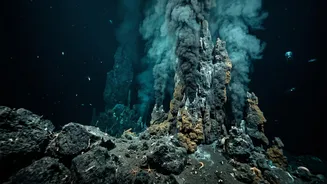
that would be instantly fatal to humans. Some, called thermophiles, flourish in the near-boiling water of geothermal hot springs and deep-sea hydrothermal vents at temperatures that would cook other organisms. Others, known as halophiles, live in water so salty it would pickle a cucumber, while acidophiles call fluids as corrosive as battery acid home. From the crushing pressure of the deepest oceans to the bone-dry deserts and the frozen lakes buried under Antarctic ice, these microbes have conquered every niche imaginable, completely redefining our understanding of where life can persist.
Cosmic Analogs on Our Planet
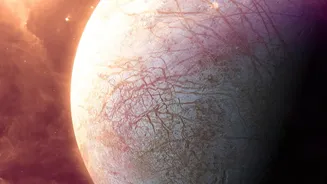
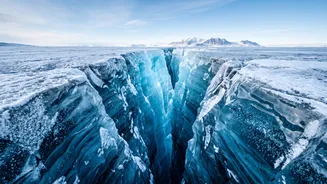
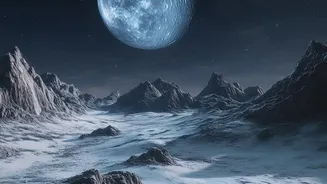
This remarkable resilience is what makes extremophiles so crucial to astrobiology. Scientists now see Earth's most punishing locations as 'analog environments'—places that mimic the conditions we expect to find on other planets and moons. The frigid, dark, subglacial lakes of Antarctica, for example, are considered a strong analog for the subsurface ocean believed to exist on Jupiter's moon, Europa, or Saturn's moon, Enceladus. If microbes can survive for millennia sealed beneath miles of ice on Earth, it stands to reason that similar life could exist in the icy oceans of distant moons. Likewise, the Atacama Desert in Chile, one of the driest places on Earth, provides a stand-in for the arid, radiation-bombarded surface of Mars. Finding hardy microbes clinging to life in these places gives scientists a tangible model for what Martian life, past or present, might look and act like.
The Ultimate Survivor: A Water Bear in Space
Perhaps the most famous extremophile is a microscopic creature that looks like a miniature, eight-legged bear: the tardigrade, or 'water bear'. These tiny animals are the ultimate survivors. They can withstand temperatures from just above absolute zero to well over 150°C, pressures many times that of the deepest ocean trench, and doses of radiation that would be lethal to humans. Their main trick is the ability to enter a state of suspended animation called cryptobiosis, where they replace the water in their cells with protective sugars, effectively turning into a lifeless-looking particle called a 'tun'. In this state, they can survive for decades. To test their limits, scientists have sent tardigrades into the vacuum of space. In 2007, they were flown on a European Space Agency mission, exposed to the vacuum and cosmic rays for 12 days, and returned to Earth, where many were successfully rehydrated and even reproduced. This proved that a complex animal could survive the unprotected harshness of space, bolstering the theory of panspermia—the idea that life could travel between planets on meteorites.
Guiding the Search for Alien Life
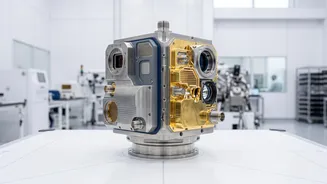
Studying these organisms does more than just give us hope; it provides a practical roadmap for the search for life. By understanding the unique biochemistry that allows a thermophile to function near boiling water or a tardigrade to repair its radiation-damaged DNA, scientists can design better life-detection instruments. They now know what kinds of 'biosignatures' to look for—the chemical fingerprints that these hardy life forms might leave behind in the soil of Mars or the plumes erupting from Enceladus. Extremophiles have forced us to think beyond a 'second Earth' and consider that life may be hiding in plain sight in environments we once dismissed as completely uninhabitable. They prove that life is tenacious, inventive, and far more stubborn than we ever imagined.