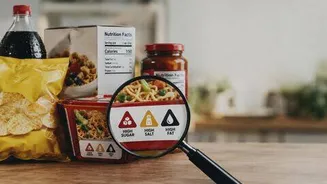








Decoding the Clutter on Your Groceries
Front-of-Pack Labelling, or FOPL, is a simple, visual system designed to cut through the noise. Instead of a complex table of numbers on the back, FOPL uses easy-to-understand symbols on the front of a food package to instantly show if a product is high
in nutrients of concern like salt, sugar, or saturated fat. This approach is recommended by the World Health Organization as a way to help consumers make quick and informed decisions. The Food Safety and Standards Authority of India (FSSAI) has recently proposed a specific design: a red hexagon on a white background that clearly states if a product is 'HIGH IN SUGAR', 'HIGH IN SODIUM', or 'HIGH IN SATURATED FAT'. The goal is to provide at-a-glance information that anyone can understand, regardless of their nutritional knowledge.
Why India Needs a New System
The push for clearer labels comes at a critical time for India, which is facing a significant rise in lifestyle-related, non-communicable diseases like obesity and diabetes. A major contributing factor is the increasing consumption of packaged and ultra-processed foods that are often high in unhealthy ingredients. Current nutrition labels, typically placed on the back of the pack, are often difficult to read and interpret during a busy shopping trip. Many consumers struggle to understand what terms like 'per 100g' or '% Daily Value' actually mean for their diet. Recognizing this, and following petitions from public health advocates, the Supreme Court of India has been scrutinizing the delay in implementing a more consumer-friendly system, pushing the FSSAI to finalize a clear roadmap.
Making Healthy Choices at a Glance
The primary power of front-pack warnings lies in their simplicity. Imagine you're choosing between two brands of instant noodles for your family. One has a red hexagon warning for 'HIGH IN SODIUM', while the other does not. Immediately, you have a clear basis for comparison without needing to find your reading glasses and analyze two different nutrition panels. This system empowers consumers to identify unhealthy products quickly and effectively. Studies have shown that warning labels are the most effective type of FOPL at helping people understand the high nutrient content in foods and discouraging the purchase of unhealthy items. The visual cue acts like a traffic signal, providing a straightforward 'stop and think' moment before a purchase is made, which can lead to healthier shopping carts overall.
Lessons from Around the World
India isn't the first country to consider this path. Over 40 nations have implemented some form of FOPL, with many making warning labels mandatory. Countries in Latin America have been pioneers. After Chile introduced its black stop-sign-style warnings in 2016, studies found a significant 24% decrease in purchases of unhealthy foods. The labels also prompted food manufacturers to reformulate their products to avoid the warning, leading to substantial reductions in sugar and sodium in the food supply. Similarly, Mexico, Peru, and Uruguay have adopted mandatory warning labels, which have been shown to help consumers make healthier choices and encourage companies to improve their products. This global evidence suggests that a well-designed FOPL system can have a positive dual impact on both consumer behaviour and industry practices.
The Debate Behind the Label
Despite the potential benefits, the road to implementation in India has been marked by debate. Some food industry bodies have raised concerns, arguing that the proposed thresholds for sugar, salt, and fat are too stringent compared to international standards and could unfairly penalize traditional Indian snacks. They worry that a stark red warning might 'demonize' products and negatively impact market growth. There have also been discussions about the best type of label, with some industry groups previously favouring a star-rating system over a direct warning. However, FSSAI has now proposed the red hexagonal warning system to the Supreme Court, moving towards a single-phase implementation. The regulator has requested about four months to finalize the draft regulations, which will then be opened for public comment before becoming law.