




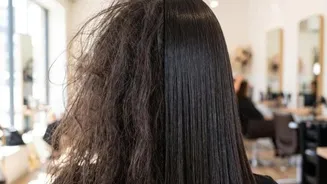
As winter arrives, so does the dreaded duo of static and frizz. But what if the secret to smoother, sleeker hair isn't a new product, but a button on your blow dryer you've likely ignored? Here's why cool air is your best friend.
The Science of Winter Static
First, let's understand
the enemy. Winter air, both outdoors and indoors thanks to heating, is significantly drier. This lack of humidity is the primary cause of static hair. Dry air can strip your hair of its natural moisture, leaving it dehydrated. At the same time, friction from hats, scarves, and even brushing creates an electrical charge in your hair. In humid summer air, this charge would naturally dissipate. But in dry winter conditions, the charge builds up, causing individual strands with similar charges to repel each other. The result is that frustrating halo of flyaways that refuse to be tamed.
A Look at Your Hair's Structure
To understand how blow drying fits in, you need to know a little about your hair's anatomy. Each hair strand is covered by an outer layer called the cuticle. You can picture it as overlapping shingles on a roof or scales on a fish. When these 'shingles' lie flat and smooth, they reflect light, giving hair a shiny appearance, and they lock in moisture, keeping hair strong and hydrated. However, external factors like heat, chemical treatments, and friction can cause these cuticles to lift and open, creating a rough, uneven surface that leads to frizz, tangles, and dullness.
How Heat Affects the Hair Cuticle
When you use a blow dryer on a high heat setting, that hot air causes the hair's cuticle to lift and open. This makes the hair shaft more pliable and easier to shape, which is why heat is effective for styling. However, an open cuticle is also vulnerable. It allows moisture to escape from the hair's core, leading to dryness and a greater susceptibility to frizz and static, especially in the already-dry winter air. Using excessive heat not only strips moisture but can also lead to long-term damage, brittleness, and breakage.
The Cool Shot Solution
This is where that often-neglected cool setting, or 'cool shot' button, comes in. Cold air has the opposite effect of hot air. A blast of cool air encourages the raised hair cuticles to close and lie flat. Sealing the cuticle is the crucial final step to any blowout. It locks in the moisture from your conditioning products, creates a smooth surface that reflects light for incredible shine, and significantly reduces frizz. By sealing the hair shaft, you're creating a barrier against the dry winter air, making your hair less likely to lose moisture and become charged with static.
The Right Technique for a Smooth Finish
Using the cool setting isn't about drying your hair from soaking wet with cold air, which would take forever. The professional technique is to use both heat and cold strategically. Start by applying a heat protectant to damp hair. Use a medium heat setting to dry your hair until it's about 80%90% dry, always pointing the nozzle downward along the hair shaft to encourage the cuticles to lie flat from the start. Once your hair is almost dry and you've styled a section with your brush, switch to the cool setting for a final pass. This 'sets' the style, locks the smooth cuticle in place, and ensures your sleek look lasts much longer.