






The Danger of a False Alarm
Announcing the discovery of extraterrestrial life would be the biggest headline in human history. That’s precisely why scientists are worried about getting it wrong. The history of astrobiology is littered with tantalizing hints that turned out to be ambiguous
or were later explained by non-biological processes. Remember the supposed microscopic fossils in a Martian meteorite in 1996, or the flurry of excitement over phosphine gas in the clouds of Venus? These moments generated massive public interest but ultimately led to years of debate rather than a clear answer. This is the nightmare scenario for scientists: a “false positive” that could erode public trust and muddy the waters for decades. A premature or uncertain claim risks turning a monumental discovery into a boy-who-cried-wolf story, making it harder for the public and the scientific community to believe the real thing when it finally arrives.
A New Rulebook for Finding Life
To avoid this chaos, NASA and the wider astrobiology community have been developing a new framework to standardize what counts as evidence. The most prominent of these is the “Confidence of Life Detection,” or CoLD, scale. Think of it less as a simple “yes or no” test and more like a seven-step ladder that scientists must climb to make a convincing case. It starts at Level 1, with the detection of a potentially interesting signal, and moves up through stages that require ruling out contamination, showing the local environment can support life, and finding multiple, independent lines of evidence. It’s similar in spirit to other scales used to communicate complex science, like the Torino scale for asteroid impact risks. The goal is to create a clear, transparent process for evaluating evidence, ensuring that any claim is built on a foundation of rigorous, repeatable science.
The Opportunity: Certainty Over Sensation
This is where the real opportunity lies. By creating a higher bar for proof, scientists aren't making it impossible to find life; they're making it possible to believe the discovery. A stricter framework forces researchers to build a case that is so strong it can withstand scrutiny from every possible angle. It pushes them to consider all possible non-biological explanations—geological, chemical, or atmospheric processes that can mimic life—before resorting to biology as the answer. This approach ensures that when a team finally reaches the top of the CoLD scale, the announcement won't be the start of an argument, but the beginning of a new chapter for humanity. It replaces the temptation for a sensational headline with the much more valuable prize of a credible, verifiable, and ultimately history-making discovery.
Putting It into Practice on Icy Moons
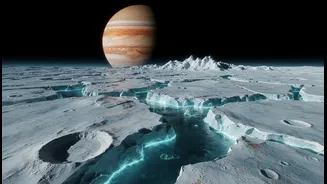
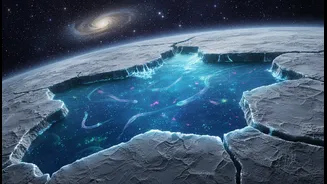
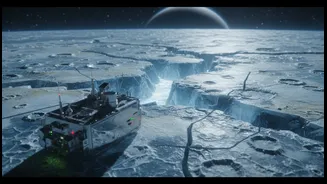
These new standards are directly shaping future missions to the most promising candidates for life in our solar system: the ocean worlds. Moons like Jupiter’s Europa and Saturn’s Enceladus are believed to harbor vast liquid water oceans beneath their icy shells. Upcoming missions like NASA’s Europa Clipper are being designed with this rigorous mindset. While Clipper is not designed to find life directly, it will characterize Europa’s environment to see if it’s habitable, laying the groundwork for a future mission that would hunt for biosignatures. Any such future lander would need to follow these strict protocols, using multiple instruments to search for different types of biosignatures and meticulously rule out false positives caused by the harsh radiation environment or chemical reactions in the ice. The lessons learned from the CoLD scale will dictate how the instruments are built, how data is analyzed, and how the results are finally reported back to a waiting world.