


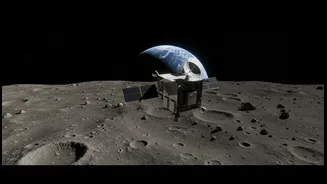



A Small Satellite with a Big Job
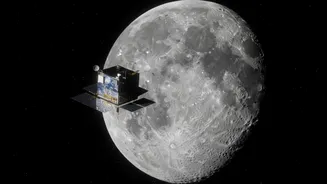
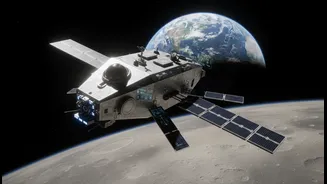
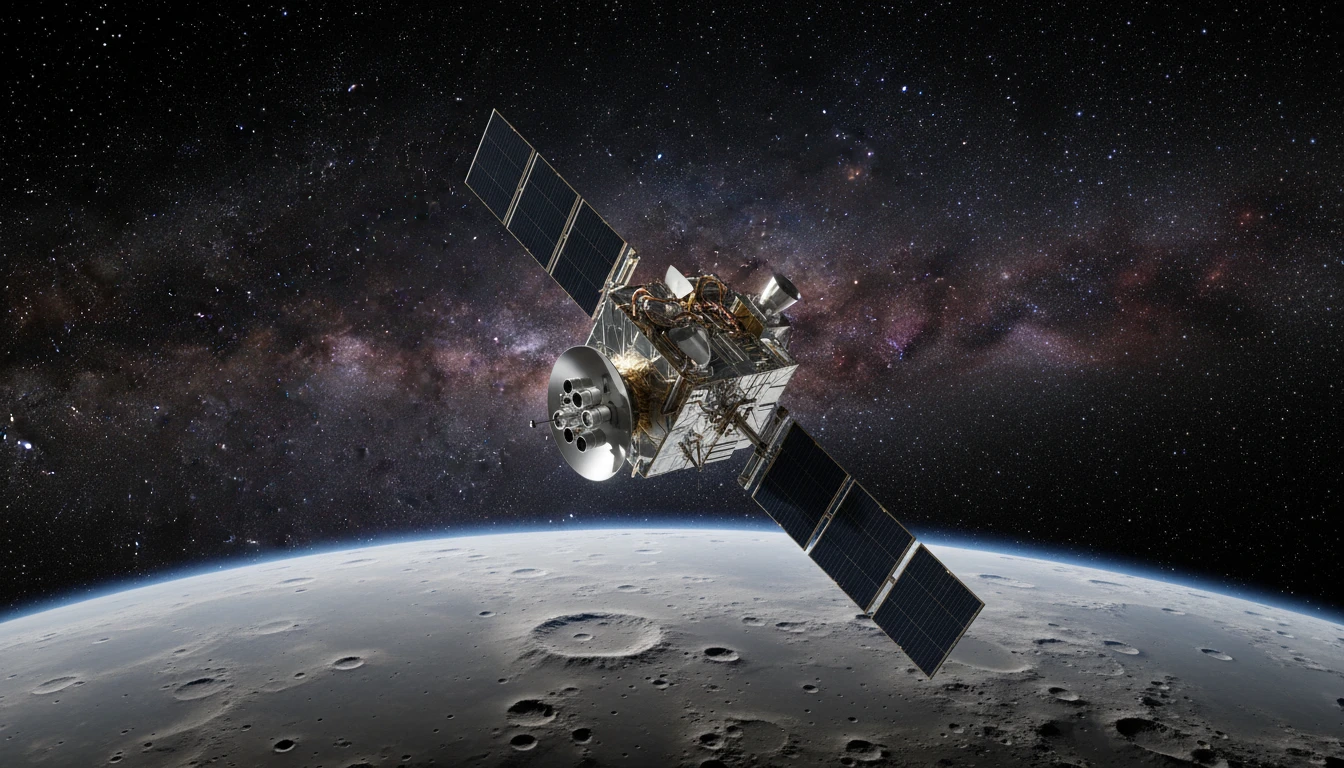
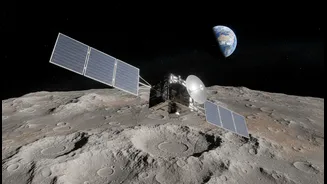
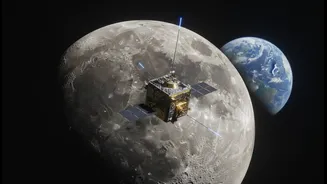
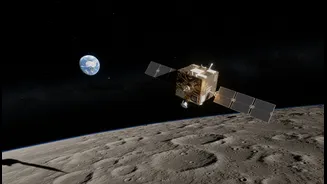
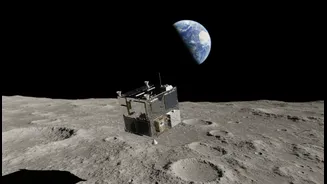
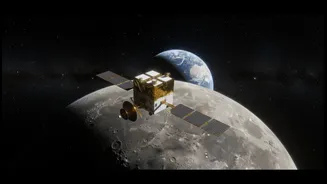
Launched in June 2022, the Cislunar Autonomous Positioning System Technology Operations and Navigation Experiment, or CAPSTONE, is a pathfinder mission with immense practical value. Weighing only 55 pounds, this CubeSat was the first spacecraft to test
a highly elliptical, fuel-efficient orbit around the Moon. This path, known as a near-rectilinear halo orbit (NRHO), is a gravitational sweet spot, balanced perfectly between the Earth and the Moon. The primary goal of the mission was to fly in this orbit, validating its stability and power requirements to reduce risks for future, more complex missions under the Artemis program. Owned and operated by Colorado-based Advanced Space, the mission represents a successful collaboration between NASA and industry to fast-track critical exploration technologies.
Mastering a New Kind of Lunar Orbit
The near-rectilinear halo orbit is unlike the low, circular orbits of the Apollo era. It is a highly elongated loop that brings the spacecraft within 1,600 kilometers of one lunar pole before swinging it out to 70,000 kilometers from the other pole over a seven-day cycle. The key advantage of this orbit is its stability. Its position at a gravitational balance point means spacecraft require minimal energy to stay there, making it ideal for a long-term outpost like the planned Lunar Gateway space station. Before CAPSTONE, the dynamics of the NRHO had only been modeled on computers. By successfully entering and maintaining this orbit for an extended period, CAPSTONE provided the first real-world data, confirming that the simulations were accurate and that the orbit is a viable and efficient choice for sustained lunar operations.
Paving the Way for the Gateway
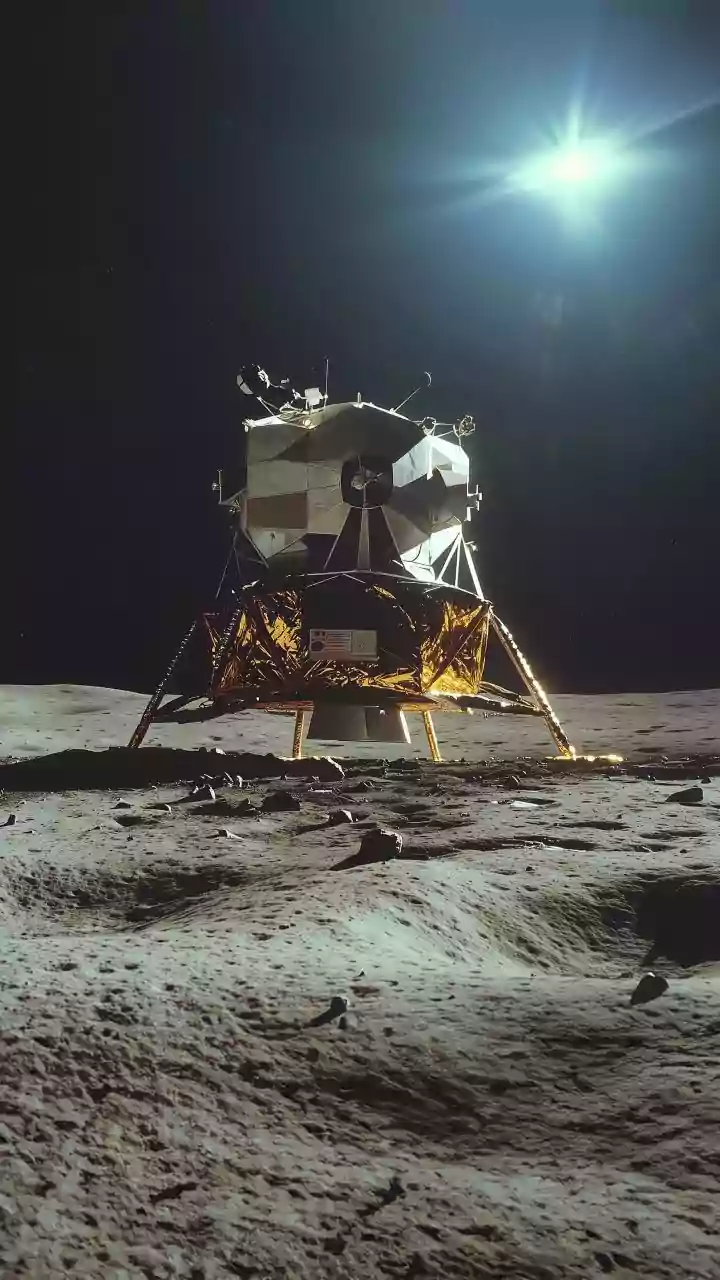
The data gathered by CAPSTONE is a direct feed into the development of the Lunar Gateway, a critical piece of NASA's Artemis architecture that will serve as a command center and staging point for missions to the lunar surface. The Gateway is planned to reside in the same NRHO that CAPSTONE has now proven to be stable and reliable. By acting as a scout, CAPSTONE demonstrated the precise station-keeping maneuvers needed, validating the propulsion and power models required for a much larger station. This pathfinding work significantly reduces the operational risk for the multi-billion-dollar Gateway, providing engineers with the confidence that the station can remain in its intended orbit for its planned 15-year lifespan with minimal fuel.
Smarter Navigation Without Earth's Help
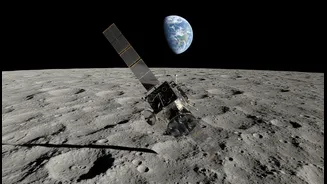
Beyond testing the orbit itself, CAPSTONE had a second major objective: to demonstrate autonomous navigation technology. As lunar traffic increases, the reliance on constant communication with Earth’s Deep Space Network becomes a bottleneck. To address this, CAPSTONE tested a spacecraft-to-spacecraft navigation system, communicating directly with NASA's Lunar Reconnaissance Orbiter (LRO) to determine its own position in space without input from ground control. This autonomous software, known as CAPS, proved that future missions can navigate independently, freeing up Earth-based antennas and enabling more resilient and efficient operations in the busy cislunar environment. The mission also tested advanced delay-tolerant networking, a system that stores data when communications are interrupted and automatically resumes transmission later, ensuring no information is lost.
A Resilient Platform for Future Tech
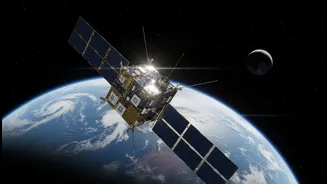
After completing its primary goals within six months, the CAPSTONE mission was extended, transforming the small satellite into a flexible in-orbit testbed. NASA used the spacecraft to test new software applications and technologies, proving that existing hardware can be repurposed for new experiments without the cost of launching a new mission. This 'software-defined satellite' approach demonstrated real-time image processing and autonomous maneuver planning. While NASA's official activities on the mission concluded in June 2026, the spacecraft remains a valuable asset. Its operator, Advanced Space, will continue using it as a technology demonstration platform, ensuring its practical use case extends well beyond its initial trailblazing journey.