
The Double-Edged Sword of Himalayan Rivers
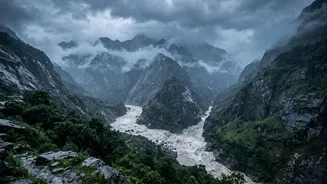
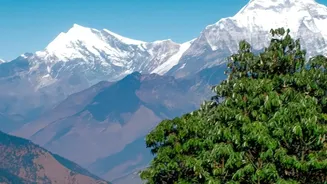
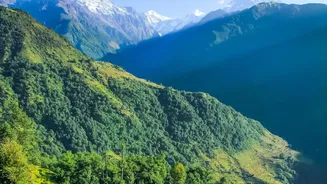
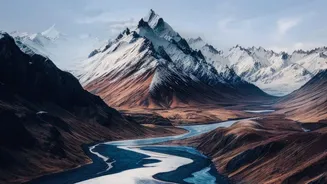
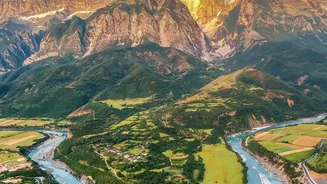
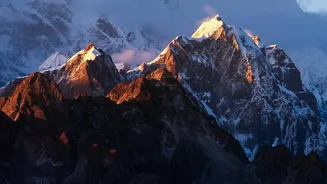
Nepal's geography is defined by its dramatic topography, with altitudes plunging from the world's highest peaks to the flat Terai plains in a short distance. This creates incredibly steep gradients for its rivers, which carry immense energy. This energy,
combined with fragile geology and active tectonic zones, makes the riverbanks and hillsides naturally prone to erosion. The rivers transport massive amounts of sediment—soil, silt, sand, and rock—scoured from the mountains and hills. While a natural process, this sediment load is at the heart of why river erosion is becoming a more significant threat, acting as a catalyst for both floods and landslides across the nation.
How Erosion Fuels More Destructive Floods
The link between erosion and flooding is a matter of simple physics. As rivers carry heavy sediment loads downstream from the hills, they lose energy upon reaching the flatter plains of the Terai. Unable to carry the sediment any further, the rivers deposit it onto their beds. This process, known as aggradation, slowly raises the riverbed. A shallower river channel has a significantly reduced capacity to hold water. Consequently, during the intense monsoon rains, these choked rivers spill over their banks far more easily, leading to widespread inundation of farmland and settlements. This phenomenon explains why many communities in the Terai are experiencing more frequent and severe flooding, even during normal monsoon seasons. The rivers, their beds raised by silt, simply have nowhere else to go but outwards.
Undercutting Hillsides and Triggering Landslides
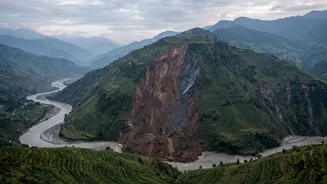
In the mountainous and hilly regions, river erosion poses a different but equally dangerous threat. Here, powerful rivers relentlessly carve away at the base of slopes, a process known as 'toe-cutting'. This undercutting destabilizes the entire hillside above. With their foundational support removed, these slopes become critically vulnerable to collapse. A heavy downpour or even a minor tremor can be the final trigger for a catastrophic landslide. Roads, bridges, and entire villages built along river valleys are at constant risk from this process. Recent years have seen numerous incidents where riverbank erosion has directly led to landslides, blocking highways and isolating communities for extended periods. This cascading hazard, where erosion by a river initiates a landslide, is a major contributor to Nepal's disaster profile.
The Human and Climate Factors
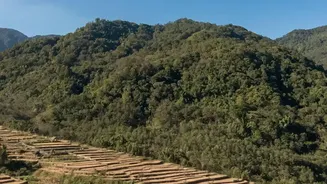
Natural processes alone don't tell the whole story. Human activities and climate change are significantly accelerating the problem. Deforestation, haphazard road construction without proper geological study, and unscientific farming practices on steep slopes all loosen the soil, making it more easily washed into rivers during rainfall. This dramatically increases the sediment load. At the same time, climate change is making Nepal's weather more extreme. Scientists observe that monsoon rainfall is becoming more erratic and concentrated into intense downpours, increasing erosion and flood peaks. Furthermore, rising temperatures are accelerating glacier melt, which not only increases river flows but can also lead to glacial lake outburst floods (GLOFs), releasing sudden, devastating torrents of water and debris. These factors combine to create a perfect storm, amplifying the destructive power of river erosion.
The Unseen Cost to Communities
For the people of Nepal, the consequences are tangible and devastating. In the Terai, families lose their homes and agricultural lands to both flooding and the shifting courses of rivers that eat away at valuable property. The deposition of sand and silt can render fertile fields barren for years. In the hills, the constant threat of landslides looms over communities, disrupting lives and livelihoods. The cost is not just economic; it is a persistent source of stress and uncertainty for millions who live along these dynamic river systems. Incidents like the floods in Bardiya, where the Babai river's erosion put five villages at high risk, are becoming increasingly common. More than 80% of Nepal's population is exposed to some form of natural hazard, with river-related disasters being a primary driver of this vulnerability.