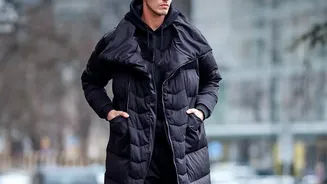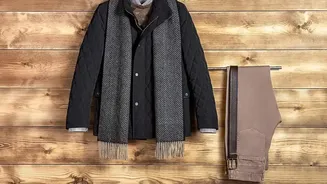







A down vest seems like a contradiction: a winter garment without sleeves. Yet, it's one of the most effective pieces of outerwear. It masters the balance between warmth and mobility by focusing on what matters most: keeping your core warm.
The Science of Core Warmth
Your body is
incredibly smart. When it gets cold, it instinctively protects your vital organs by reducing blood flow to your arms and legs, redirecting that warmth to your torso. A down vest focuses insulation right where this protection is needed most. By keeping your core warm, you trick your body into thinking its overall temperature is stable. This allows warm blood to continue flowing to your extremities, meaning a warm vest can actually help keep your hands and arms warmer than you'd expect. This principle of thermoregulation is why a vest is often all you need over a long-sleeve shirt to stay comfortable during vigorous activity in the cold.
The Magic of Down Insulation
The secret to a down vest's power lies in its filling. Down, the soft plumage found under the feathers of ducks and geese, is a marvel of natural engineering. Its unique, lofty structure creates thousands of tiny air pockets that trap your body heat, forming an incredibly efficient barrier against the cold. Ounce for ounce, down provides more warmth than almost any synthetic material, which is why down vests can feel so light yet be so effective. This amazing warmth-to-weight ratio means you get maximum insulation without feeling weighed down.
Freedom of Movement for Unrestricted Arms
The most obvious benefit of a sleeveless design is complete freedom of movement for your arms. Bulky jacket sleeves can feel restrictive during activities like driving, cycling, hiking with poles, or even just carrying shopping bags. A vest eliminates this problem entirely, allowing for a full range of motion. This is crucial for many activities where arm mobility is key to performance, balance, and energy conservation, from outdoor sports to everyday tasks. It provides the perfect solution when a full jacket is too cumbersome, but you still need protection from the chill.
The Ultimate Layering Piece
Perhaps the greatest strength of the down vest is its versatility as a layering tool. It is not designed to be the only thing you wear in harsh winter conditions. Instead, it’s a key component of a smart layering system. On a cool autumn day in the city, it can be the perfect outer layer over a sweater or flannel shirt. For a winter morning commute, it can be worn under a blazer or a larger coat for an extra dose of core warmth without adding bulky sleeves. This adaptability makes it useful in a wide range of temperatures and situations, from a chilly office to a weekend trek.
Choosing Your Vest: Down vs. Synthetic
While traditional vests use down, many now use synthetic insulation. Each has its advantages. Down is lighter, more compressible, and offers the best warmth for its weight, making it ideal for cold, dry conditions where packability matters. However, down loses its insulating ability when it gets wet and can be slow to dry. Synthetic insulation, typically made from polyester, performs much better in damp or wet conditions, retaining its warmth even when moist and drying faster. Synthetic-fill vests are also generally more affordable and hypoallergenic. Your choice depends on your climate and primary use: for ultimate lightweight warmth in dry cold, choose down; for versatility in mixed or wet weather, synthetic is a reliable option.