





Beyond Digital Whiteboards
For years, 'tech in the classroom' meant clunky computers or digital projectors. But the new frontier is far more intelligent. We're talking about Artificial Intelligence systems designed not just to present information, but to understand how each student
interacts with it. These platforms don't follow a rigid, one-size-fits-all curriculum. Instead, they function like a personal tutor for every child, observing their progress, identifying their unique strengths, and pinpointing the exact areas where they struggle. This moves beyond simple digitization of textbooks into a dynamic, responsive educational environment.
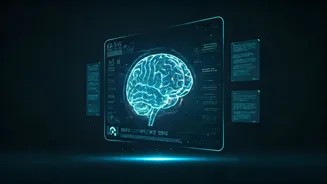
How AI Maps a Student's Brain
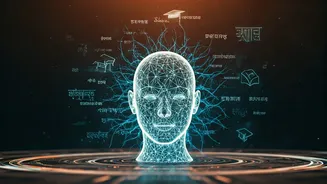
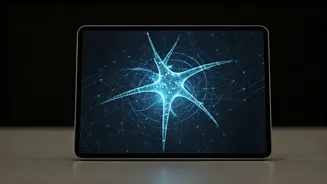
So, how does it 'map' learning? It's all about data. As a student answers questions, solves problems, or even watches a video lesson on an AI-powered platform, the system collects thousands of data points. It tracks which concepts they master quickly, where they hesitate, the type of mistakes they make, and how long it takes them to grasp a new idea. The AI algorithm then analyses these patterns to build a detailed 'learning map' for that individual. This map visually shows which 'territories' of a subject are conquered, which are being explored, and which are still uncharted. It essentially provides a real-time diagnostic of a student's knowledge.
The End of One-Size-Fits-All Homework
The real revolution for teachers is in the prep work. Traditionally, a teacher might spend hours creating a single lesson plan and worksheet for a class of 30 or 40 students, knowing it will be too easy for some and too hard for others. With AI, this process is automated and personalized. The system can instantly generate different sets of practice problems based on each student's learning map. Student A, who is struggling with fractions, gets more foundational exercises. Meanwhile, Student B, who has already mastered the topic, is given more challenging word problems to deepen their understanding. This frees teachers from monotonous grading and allows them to focus on high-impact activities like one-on-one coaching and creative group projects.
Potential Benefits for the Indian Classroom
In a country like India, with large class sizes and a vast range of student abilities, this technology holds immense promise. The National Education Policy (NEP) 2020 already emphasizes the need for technology-enabled, personalized learning. AI tools could help bridge the gap, providing scalable support for teachers who are often stretched thin. For students, it means learning is no longer a competition but a personal journey. The fear of being 'left behind' or the boredom of being 'held back' could be significantly reduced, leading to greater confidence and a genuine love for learning.
The Hurdles Are Real
Of course, this technological shift is not without challenges. The most significant is the digital divide. Access to reliable devices and internet connectivity is still a major issue in many parts of India. There are also concerns about data privacy and the security of student information. Furthermore, there's a risk of algorithmic bias, where the AI might inadvertently favour certain learning styles or backgrounds. A poorly designed system could create new forms of inequality. Finally, technology is a tool, not a replacement. The success of AI in education ultimately depends on the skill of the teacher using it.