



The Challenge: The Human Body in Space
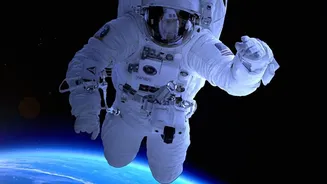
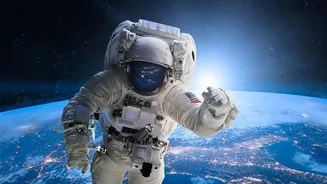
Space is an unforgiving environment for the human body. Without Earth's gravity, astronauts face a host of health challenges. Bones can lose density at a rate of 1-2% per month, muscles weaken, and the cardiovascular system undergoes significant changes
as fluids shift towards the head. This environment essentially causes a form of accelerated ageing. Beyond the physiological, there's the psychological toll of isolation and confinement. Ensuring the well-being of the 'Gaganyatris' is not just a medical necessity but a critical component for mission success, especially for future long-duration stays in space, such as on the planned Bharatiya Antariksh Station.
A Historic Partnership for National Goals
To tackle these challenges, India's top space and medical institutions have joined forces. The Indian Space Research Organisation (ISRO) and the All India Institute of Medical Sciences (AIIMS) in New Delhi signed a Memorandum of Understanding (MoU) to formalise their cooperation in space medicine. This agreement establishes a framework for extensive research, both on the ground and eventually in space, to understand and counteract the health effects of space travel. The collaboration brings ISRO's engineering and spaceflight expertise together with AIIMS' deep knowledge of human physiology and medical science, creating a powerhouse for this niche but vital field.
Core Areas of Joint Research
The ISRO-AIIMS collaboration is comprehensive, targeting several key areas. A primary focus is on human physiology, including cardiovascular regulation and musculoskeletal health in microgravity. The partnership will also delve into immunology, the gut microbiome, genomics, and behavioural health to get a complete picture of an astronaut's well-being. Researchers will work to develop countermeasures, specialised medical devices, and clear protocols for maintaining astronaut health and performance. This includes everything from nutrition and metabolic studies to creating training modules that help astronauts manage medical situations in a zero-gravity environment.
Simulating Space on Earth
Before applying these solutions in space, they must be tested rigorously on Earth. AIIMS will contribute by using advanced simulation technologies to mimic the effects of microgravity. This allows researchers to generate India-specific data on how space affects the body. Another example of ground-based research is ISRO's Mission MITRA in Ladakh. The high-altitude environment, with its low oxygen and temperatures, serves as a natural analogue for spaceflight, allowing ISRO to study crew dynamics and performance under stress. These ground-based studies are essential for developing effective and safe strategies for the Gaganyaan mission.
Benefits Beyond the Mission
The innovations from this space medicine research are expected to have significant benefits back on Earth. The study of accelerated ageing processes in astronauts, such as bone loss and muscle atrophy, provides valuable insights into managing similar conditions like osteoporosis in the elderly population. Technologies developed for remote health monitoring of astronauts can advance the field of telemedicine, improving healthcare access in remote areas. Furthermore, devices engineered for space, such as those to improve blood flow, could be adapted to treat patients with circulatory problems on the ground. This collaboration is not just about reaching for the stars; it's also about improving life on our own planet.