

The Science of a Perfect Crunch
Before we get into the air fryer, let’s talk about what makes fried food so irresistible. The magic lies in a combination of high heat and rapid moisture removal. When you drop a food item, like a potato for a french fry or a pocket of samosa, into hot
oil, two things happen almost instantly. First, the intense heat causes the water at the surface of the food to turn into steam. This process rapidly dehydrates the outer layer, creating a dry, porous structure that becomes crispy. Second, this high heat triggers the Maillard reaction, a chemical process between amino acids and reducing sugars. This reaction is responsible for the delicious browning and the complex, savoury flavours we associate with fried food. In essence, deep frying is an extremely efficient way to transfer heat to all surfaces of the food at once, cooking it quickly while building that signature crust.
How an Air Fryer Changes the Game
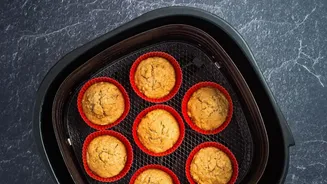
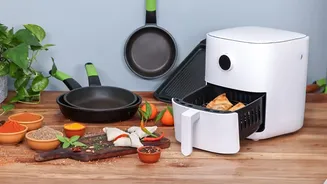
An air fryer isn't actually a fryer at all; it's a small, powerful countertop convection oven. Inside the appliance, a heating element generates very hot air, and a high-speed fan circulates this air rapidly and evenly around the food held in a perforated basket. This is what manufacturers call 'rapid air technology'. The key is the combination of intense, dry heat and constant airflow. The perforated basket allows the hot air to hit the food from every angle, top to bottom. This constant motion of super-heated air effectively strips moisture from the surface of the food, mimicking the dehydrating effect of hot oil. Because the cooking chamber is compact, the process is much faster and more intense than in a regular, larger convection oven.
Achieving Crispiness with Air, Not Oil
The air fryer’s genius is in how it uses this circulating hot air to achieve the Maillard reaction without needing a vat of oil. While deep frying uses hot liquid to transfer heat, air frying uses hot air. Air carries less heat than oil, so to compensate, the fan must move the air at an extremely high speed to achieve the same browning and crisping effect. This intense airflow creates a very dry environment, perfect for developing a crunchy exterior. For many snacks, especially those that already contain some fat (like frozen products or some meats), no extra oil is needed. For homemade snacks like samosas or pakoras, a light brush or spray of oil—often just a teaspoon—is enough to help conduct heat more efficiently and achieve that familiar golden-brown finish and satisfying crunch. This tiny amount of oil helps facilitate the browning process but contributes far fewer calories and fat than deep-frying.
Perfecting Your Favourite Indian Snacks
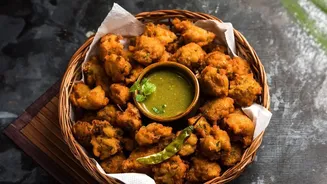
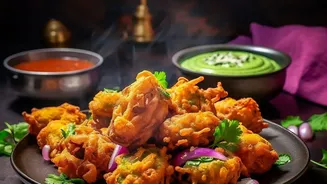
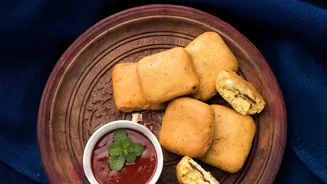
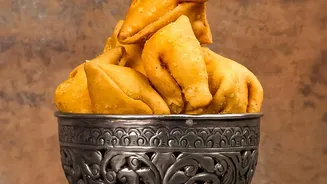
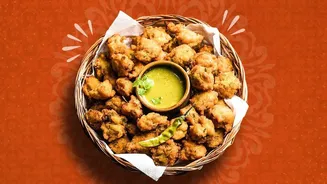
Many classic Indian snacks are wonderfully suited for the air fryer. Samosas, for instance, emerge with a flaky, non-greasy crust when brushed with a little oil and cooked until golden. To adapt pakoras, it's best to use a slightly thicker batter with less water, which helps prevent it from dripping through the basket and allows the hot air to crisp up the besan coating. Dry snacks like roasted moong dal, masala peanuts, and makhana are also excellent candidates, becoming incredibly crunchy as they cool. The key to success with any snack is to arrange items in a single layer without overcrowding the basket. This ensures the hot air can circulate freely, giving you an even, crispy result all around. Shaking the basket halfway through cooking also promotes even browning.
The Verdict: Is It Really the Same?
While air-frying is a fantastic method for achieving a crispy texture with significantly less fat, it's important to have realistic expectations. The final texture is often slightly different from deep-fried food; some describe it as a 'drier' crisp. For snacks with very wet batters, like traditional medu vada, an air fryer may not work well as the batter can drip before it sets. However, for a huge range of snacks, from aloo tikki and veg cutlets to bread rolls and paneer tikka, the air fryer delivers a remarkably satisfying crunch. It provides a convenient and healthier way to enjoy beloved traditional flavours at home, reducing fat content by up to 80% compared to deep-frying.