





Know Your Moon and What to Look For
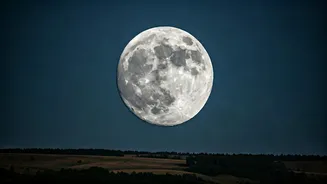
While a full moon is undeniably spectacular, it’s not the only time to look up. In fact, the intense brightness of a full moon can wash out many of its surface details. For a more textured view, try observing during its quarter or gibbous phases. The
most fascinating area to observe is the 'terminator'—the line separating the sunlit side from the dark side. Along this line, the low-angled sunlight casts long shadows from craters and mountains, making them stand out in sharp relief. The full moon on July 29, 2026, coinciding with Guru Purnima, is a major upcoming event. But don't forget the quieter phases, which often offer a more detailed and dramatic viewing experience.
Find Your Spot: Escaping the City Glow
The biggest challenge for any urban astronomer in India is light pollution. The bright glare of city lights can obscure all but the brightest celestial objects. To get the best view, you need to find a location with a clear, unobstructed view of the horizon, especially towards the east for moonrise. Your building's rooftop might be a good start. For an even better experience, consider heading to a large park on the outskirts of your city, a nearby beach, or a lakeside. For the truly dedicated, planning a trip to a designated dark sky location can be a revelation. Places like the Rann of Kutch in Gujarat, Lamayuru in Ladakh, or high-altitude spots in Uttarakhand and Himachal Pradesh offer breathtakingly clear skies.
Gear Up (Or Keep It Simple)
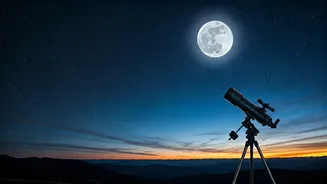
You don't need expensive equipment to become a moonwatcher. Your journey can begin with the most powerful tool you already own: your eyes. Allow them about 15-20 minutes to adjust to the darkness, and you'll be surprised by how much you can see. The next step up isn't a telescope, but a good pair of binoculars. A standard 7x50 or 10x50 pair is perfect for getting a closer look at lunar craters and seas (the dark patches on the moon's surface). They are portable, easy to use, and more affordable than a telescope. If you decide to buy a telescope later, start with a simple, user-friendly model rather than a complex, computerised one. Many amateur astronomy clubs offer guidance on purchasing the right first telescope.
Let Your Smartphone Be Your Guide
Your smartphone can be an invaluable assistant for navigating the night sky. There is a wide range of astronomy apps that can help you identify not just the moon, but also planets, constellations, and even satellites in real time. Popular apps like Stellarium Mobile, SkyView, Star Walk 2, and the open-source Google Sky Map are excellent for beginners. Simply point your phone at the sky, and the app will show you what you're looking at. For those interested in Indian celestial mapping, the 'Indian Sky Map' app includes information on nakshatras and rashis. These apps can also provide moonrise and moonset times for your specific location, ensuring you never miss the show.
Timing, Weather, and July's Highlights
In India, especially during the monsoon, timing is everything. Always check the local weather forecast before you head out. A break in the clouds is all you need. The best time to view the moon is often just after it rises, when an optical effect known as the 'moon illusion' makes it appear much larger and more colourful against the horizon. July 2026 is packed with events. Watch for the moon's close approach to Saturn on July 7-8 and a beautiful grouping with Mars and the Pleiades star cluster before sunrise on July 11. The main event is the full 'Buck Moon' on the evening of July 29, which falls on Guru Purnima, adding cultural significance to the celestial spectacle.
Join a Community of Skywatchers
Moonwatching can be a solitary pleasure, but it’s often more rewarding when shared. India has a vibrant community of amateur astronomers. Joining a local club is a fantastic way to learn from experienced observers, get hands-on experience with different telescopes, and participate in organised 'star parties'. Prominent groups like the Association of Bangalore Amateur Astronomers (ABAA), Jyotirvidya Parisanstha (JVP) in Pune, and the Amateur Astronomers Association of Delhi hold regular meetings, workshops, and public viewing events. These communities are welcoming to newcomers and provide a supportive environment to grow your passion for the cosmos.