





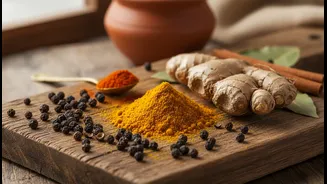

Ginger: The All-Rounder Root
A staple in Indian kitchens, ginger becomes even more crucial during the rainy months. Its active compounds have powerful anti-inflammatory, antiviral, and antibacterial properties. A warm cup of ginger tea is not just comforting on a rainy day; it also
helps soothe a sore throat, fight off cold and flu viruses, and ease the aches and pains that often accompany seasonal illnesses. Ginger is also excellent for digestion, which tends to be weaker during the monsoon. It can help reduce bloating and indigestion, which are common complaints.
Turmeric: The Golden Healer
Known for its vibrant colour and potent health benefits, turmeric is a must-have spice for monsoon wellness. The key compound, curcumin, has strong anti-inflammatory properties that help bolster the immune system. It functions as an antiviral and antibacterial agent, protecting the body from diseases that are prevalent in the rainy season. Traditionally consumed as 'haldi doodh' (turmeric milk), this simple remedy can help clear respiratory congestion and provide warmth. For maximum benefit, it is often recommended to pair turmeric with a pinch of black pepper to enhance the absorption of curcumin.
Jamun: The Seasonal Purple Gem
The short but glorious arrival of Jamun (Indian Blackberry) coincides perfectly with the monsoon. This deep purple fruit is packed with nutrients, including iron, potassium, and vitamins. Rich in Vitamin C and powerful antioxidants called anthocyanins, jamun helps strengthen the body's defences against infection and inflammation. It's also known to be beneficial for managing digestive issues that can flare up during this season. Its low-calorie nature makes it a healthy snack to enjoy guilt-free.
Garlic: The Pungent Protector
Like ginger, garlic is a culinary and medicinal powerhouse. Its active ingredient, allicin, gives it potent antibacterial and antiviral properties that stimulate the production of white blood cells, which are key to fighting infections. Regular consumption of garlic can help protect against common monsoon ailments like colds, flu, and other respiratory infections. You can easily add it to curries, soups, and chutneys to enhance flavour and reap its health benefits. For the bravest, consuming a crushed raw clove in the morning is a traditional way to maximise its immune-boosting power.
Bitter Gourd (Karela): The Immune Modulator
While its bitter taste may not appeal to everyone, bitter gourd is a vegetable worth adding to your monsoon diet. It is considered an immunomodulator, meaning it helps regulate and strengthen the immune system. It is particularly useful for guarding against the seasonal cold. Rich in Vitamin C and powerful antioxidants, it helps the body fight off infections and keeps the skin healthy. This vegetable is also known to help maintain blood sugar levels.
Pomegranate: The Antioxidant Powerhouse
Pomegranates are another excellent fruit to consume during the monsoon. They are loaded with essential nutrients and have notable anti-viral properties. Rich in antioxidants and Vitamin C, they support overall health and help strengthen the immune system. This fruit is particularly good for improving digestion and is a good source of fibre. Eating fresh, seasonal fruits like pomegranate is a delicious way to ensure your body gets the nutrients it needs to fight off illnesses common during the rainy season.