






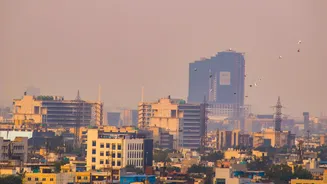
The Monsoon's Cleansing Effect Ends
Throughout the monsoon season, rainfall acts as a natural scrubber for the atmosphere. Raindrops capture and wash away particulate matter, while stronger winds help disperse pollutants, leading to the relatively clean air and blue skies many cities enjoy
from July to September. However, this atmospheric cleaning service is temporary. As the monsoon retreats, typically around late September and early October, these conditions reverse. The air becomes stagnant, rainfall ceases, and the stage is set for pollution to build up rapidly. Recent data from early October 2026 already shows a worrying trend, with air quality in Delhi deteriorating for five consecutive days as soon as the rains stopped, signaling an early start to the pollution season.
A Perfect Storm of Pollution Triggers
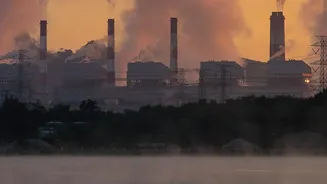
The post-monsoon decline in air quality is driven by a convergence of factors. First, the agricultural practice of stubble burning begins in earnest in states like Punjab and Haryana. Farmers burn crop residue to quickly clear fields, releasing massive plumes of smoke containing PM2.5, carbon monoxide, and other harmful pollutants. These emissions are then carried by north-westerly winds towards the Indo-Gangetic Plain, blanketing cities like Delhi. Second, meteorological conditions change. Lower temperatures in October and November lead to a phenomenon called temperature inversion, where a layer of warm air traps cooler, denser, polluted air near the ground. This acts like a lid, preventing pollutants from dispersing. Compounding this is a drop in wind speed, which means emissions from vehicles, industry, and construction just linger.
Delhi-NCR: The Epicentre of the Crisis
While many cities feel the impact, Delhi and the National Capital Region (NCR) are notoriously the worst affected. The region's geography, coupled with its high density of local pollution sources—including immense traffic, industrial emissions, and construction dust—makes it particularly vulnerable. When smoke from farm fires drifts in, it mixes with this already potent cocktail of local pollutants, pushing the Air Quality Index (AQI) into the 'Very Poor' and 'Severe' categories. Last winter, Delhi experienced 66 'Very Poor' and 10 'Severe' air quality days after the monsoon. It's a crisis so predictable that authorities now announce anti-pollution measures weeks in advance, such as planned construction bans and restrictions on vehicles.
What the Air Quality Index (AQI) Tells You
As pollution levels rise, you'll hear a lot about the AQI. This index translates complex pollution data into a single number and colour-coded category, making it easy to understand the health risk. 'Good' (0-50) and 'Satisfactory' (51-100) are generally safe. 'Moderate' (101-150) may cause issues for highly sensitive people. The danger begins with 'Poor' (201-300), 'Very Poor' (301-400), and 'Severe' (401-500) ratings. Exposure to 'Very Poor' air can lead to respiratory illness, while 'Severe' air quality affects even healthy people and seriously impacts those with existing conditions. Short-term effects include coughing, chest tightness, and eye irritation, while long-term exposure is linked to chronic diseases like asthma, heart disease, and COPD.
Beyond the Capital: A Widening Problem
Delhi's pollution crisis often dominates headlines, but it is not an isolated problem. Cities across the northern plains, including Lucknow, Kanpur, and Patna, regularly feature among the world's most polluted during this season. Furthermore, other major metropolitan areas are also seeing worsening post-monsoon air. Mumbai, for instance, has been grappling with a noticeable decline in winter air quality over the past five years, prompting local authorities to prepare their own action plans. The combination of dry weather and suspended dust particles means that even cities traditionally considered to have better air are now facing significant challenges once the cleansing monsoon rains depart.