





A New Policy, A New Galaxy of Startups
The single biggest catalyst for this change has been a fundamental policy shift. The establishment of the Indian National Space Promotion and Authorisation Centre (IN-SPACe) in 2020 created a single-window agency to nurture and authorise private companies
to participate in space activities. This has unlocked a wave of innovation, with the number of space-tech startups soaring from a handful to over 400. This policy momentum has been matched by significant investment, signalling that both the government and global investors see a bright future. Projections estimate India's space economy, currently valued around $8.4 billion, could surge to over $40 billion by 2033, moving from 2% of the global share to a far more significant portion.
Meet the Trailblazers
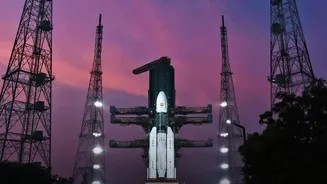
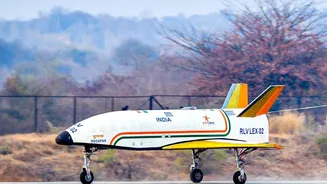
Several startups are already making headlines and, more importantly, hiring. Hyderabad-based Skyroot Aerospace became a household name after launching Vikram-S, India's first privately developed rocket. Chennai's Agnikul Cosmos is pioneering 3D-printed rocket engines and has established its own private launchpad. Meanwhile, Bengaluru-based Pixxel is deploying a constellation of advanced hyperspectral imaging satellites, and Dhruva Space is focusing on satellite platforms and deployers. These companies aren't just concepts on a slide deck; they are launching rockets, deploying satellites, and securing major clients, building a robust foundation for a new industrial ecosystem.
Beyond Rocket Science: A Universe of Roles
The popular image of a space career is often limited to astronauts and rocket scientists, but the reality is far broader. The new private space economy needs a diverse range of talent. Yes, there is high demand for aerospace, mechanical, and avionics engineers who design and build the hardware. But there is an equally critical need for software developers to write the code for guidance, navigation, and mission control systems. Satellite data analysts are needed to process the vast amounts of information beamed back to Earth, turning it into actionable insights for agriculture, climate monitoring, and urban planning. As these startups grow, they are also building out teams of business development managers, marketing experts, finance professionals, and even lawyers specialising in the complexities of space regulations.
The Skills That Will Launch Your Career
For those aspiring to join this sector, a strong foundation in a STEM field remains crucial. Degrees in engineering, physics, and mathematics are highly valued. However, private startups often prioritise practical skills and hands-on experience over just academic grades. Aspiring candidates can stand out by participating in projects like building CubeSats or model rocketry. Proficiency in software like Python or MATLAB for simulation and data analysis is becoming increasingly important, even for hardware-focused roles. Furthermore, the downstream applications of space technology create opportunities for those with expertise in Geographic Information Systems (GIS), remote sensing, and AI/machine learning. The industry needs people who can not only build space technology but also apply its benefits to solve problems on Earth.