

Bengal's Festive Khichuri
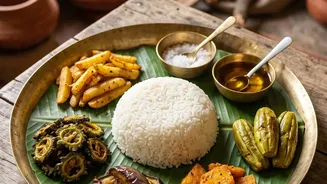
In Bengal, especially during festivals like Durga Puja, Khichdi becomes 'Khichuri'. The star here is the fragrant, short-grained Gobindobhog rice, paired with moong dal that's been roasted until golden and aromatic. This imparts a nutty depth unmatched
by other versions. Often called 'Bhog'er Khichuri' when prepared as a divine offering, it's typically made without onion or garlic. It has a slightly sweet and spicy flavour profile, thanks to ginger, green chillies, and a medley of vegetables like cauliflower and peas. The final flourish is a generous drizzle of ghee and a tempering of whole spices like cinnamon, cloves, and bay leaves, creating a dish that is both celebratory and deeply comforting.
Gujarat's Wholesome Vaghareli Khichdi
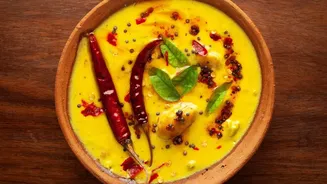
The Gujarati take is often a more wholesome, everyday affair. 'Vaghareli Khichdi' translates to 'tempered Khichdi', and the tempering (vaghar) is key. A mix of rice and various dals, most commonly toor dal (pigeon peas) or moong dal, is cooked until soft and porridge-like. It's frequently loaded with vegetables like potatoes, carrots, and green peas. The magic happens in the 'vaghar', where ghee is infused with mustard seeds, cumin seeds, cloves, and asafoetida before being poured over the cooked khichdi. This version is typically served with a side of kadhi, a tangy yogurt-based soup, creating a perfectly balanced meal.
Karnataka's Spicy Bisi Bele Bath
While not called Khichdi, Karnataka's Bisi Bele Bath is its rich and complex cousin. The name translates to 'hot lentil rice dish', and it delivers on that promise with a riot of flavours. It’s a complete meal in a pot, combining rice, toor dal, a host of vegetables, and a special, aromatic spice powder known as Bisi Bele Bath powder. The flavour profile is distinctively tangy from tamarind pulp, with a subtle sweetness and a deep, spicy warmth from the unique masala blend which can contain over two dozen spices, including nutmeg and cinnamon. Said to have originated in the royal kitchens of the Mysore Palace, this dish is a true celebration of the state's culinary heritage.
Tamil Nadu's Comforting Pongal
Travel further south to Tamil Nadu, and you'll find Pongal, a dish revered as both a breakfast staple and a festive offering during the harvest festival of the same name. The savoury version, Ven Pongal, is made with newly harvested rice and moong dal, cooked to a creamy, luscious consistency with generous amounts of ghee. Its flavour is defined by the simple but potent combination of black peppercorns, cumin, and ginger, which are tempered in ghee and stirred through the dish. There is also a sweet version, Sakkarai Pongal, which is sweetened with jaggery and studded with cashews and raisins, often prepared as a prasad or offering in temples.
Rajasthan's Rustic Bajra Khichdi
Reflecting the arid landscape of the state, Rajasthani Khichdi often forgoes rice in favour of heartier local grains. Bajra (pearl millet) Khichdi is a quintessential winter dish, prized for its warming properties. The bajra is often coarsely ground and cooked slowly with split moong dal until it forms a thick, wholesome porridge. It's a simple, rustic dish, typically seasoned with just salt and perhaps some ginger. The real flavour comes from serving it with a large dollop of ghee, which adds richness and a creamy texture, often accompanied by jaggery or a simple yogurt side.
Hyderabad's Savoury Keema Khichdi
In Hyderabad, Khichdi sheds its purely vegetarian identity. The Hyderabadi Khichdi is a popular breakfast dish, often prepared with masoor dal (red lentils) and rice, cooked with whole spices like cinnamon and cloves, giving it a fragrant, pulao-like character. What makes it truly unique is that it's traditionally served with 'kheema' (spiced minced meat) and a tangy chutney called 'khatta'. This combination, known as 'Khichdi-Kheema-Khatta', is a beloved part of Hyderabadi cuisine, offering a complete and flavour-packed meal that traces its origins to the kitchens of the Nizams.