






The Challenge: India's Need for Speed
In the world of online shopping, speed is everything. Indian consumers, particularly in bustling urban centres, now expect their orders to arrive not in days, but in hours or even minutes. This demand for instant gratification has put immense pressure
on retailers. The final step of the delivery process, known as the "last mile," is notoriously complex and expensive, often accounting for over half of the total shipping cost. Challenges like traffic congestion, inaccurate addresses, and poor road infrastructure in both dense cities and smaller towns make timely deliveries a logistical nightmare. As e-commerce giants and quick-commerce startups like Blinkit, Zepto, and Swiggy Instamart promise ever-faster delivery times, traditional retail models are struggling to keep up.
Enter the Micro-Fulfilment Centre (MFC)
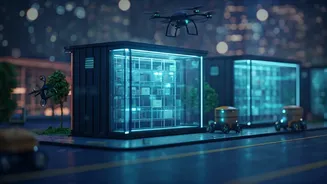
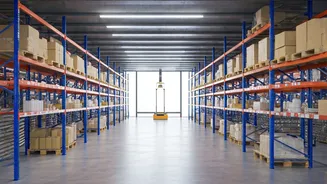
A micro-fulfilment centre is a small-scale, highly automated warehouse strategically placed within cities, close to the end consumer. Unlike massive distribution centres located on the outskirts of town, MFCs can be as small as 3,000 to 20,000 sq. ft. and are often tucked into the back of existing stores, repurposed commercial spaces, or standalone urban units. Their purpose is simple: to store a curated selection of high-demand products closer to where people live, drastically cutting down the time and distance for delivery. This proximity is the key to unlocking the rapid delivery promises of modern e-commerce.
How They Work: Small Spaces, Smart Tech
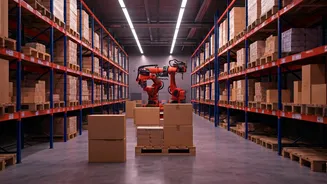
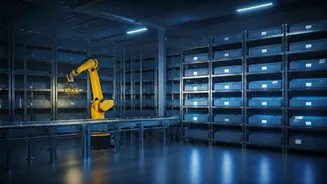
The magic of an MFC lies in its combination of a compact footprint and powerful technology. Inside, these facilities are hives of activity, often powered by sophisticated robotics and AI. Automated storage and retrieval systems (AS/RS) and goods-to-person (GTP) robots can navigate the small space, pick items from shelves, and bring them to human packers with incredible speed and accuracy. This high level of automation reduces human error and can slash order picking costs by as much as 40-80% compared to manual methods. Smart software manages inventory in real-time, processes incoming online orders, and optimises the entire workflow from pick to pack to dispatch, making same-day or even one-hour delivery a feasible reality.
Fuelling India's Quick Commerce Boom
Nowhere is the impact of MFCs more visible than in India's booming quick-commerce sector. Players are in an intense race to expand their networks. Just recently, in June 2026, Flipkart announced its quick-commerce arm, Flipkart Minutes, had scaled to 1,000 MFCs across 130 cities in under two years. This expansion has fuelled a 5X growth in order volumes, with significant traction seen in Tier 2 and Tier 3 cities, which recorded a 42X increase in scale. Not to be outdone, Amazon is planning to expand its Amazon Now service to over 300 cities, supported by its own growing network of MFCs. These facilities, often called "dark stores," are the backbone of 10-minute delivery services, enabling companies to meet rising consumer expectations for convenience.
The Benefits Beyond Speed
While faster delivery is the headline benefit, MFCs offer a host of other advantages. For businesses, they lead to lower last-mile delivery costs, reduced operational expenses, and a more efficient supply chain. By decentralising inventory, retailers can better manage stock and respond to local demand patterns, reducing the risk of stockouts. This allows smaller retailers to compete more effectively with e-commerce giants. For consumers, the benefits extend to quicker processing of returns and exchanges and more options like in-store pickup. Furthermore, by shortening delivery routes, MFCs can contribute to sustainability goals, with some estimates suggesting a potential reduction in CO₂ emissions per order.