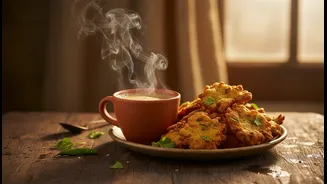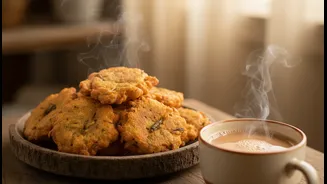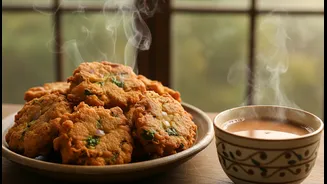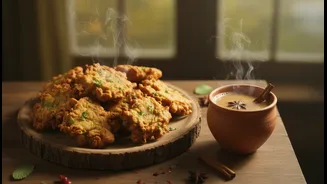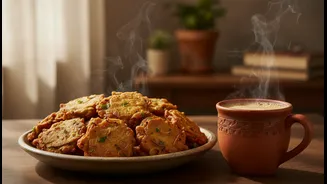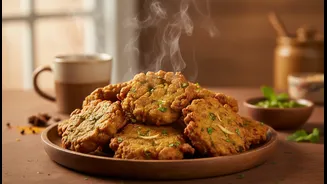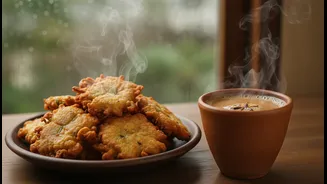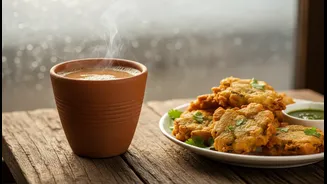





An Unofficial Monsoon Ritual
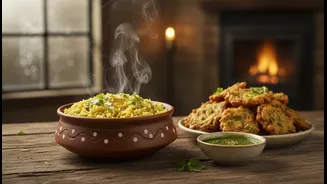
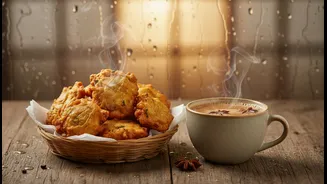
The connection between rain and this iconic food pairing is so deeply ingrained in the Indian psyche that it feels like an unwritten rule. As the temperature dips and the smell of wet earth fills the air, the craving becomes a near necessity. While pakoras
in some form have existed for centuries, with the word 'pakvavata' found in Sanskrit texts, the specific pairing with chai is a more recent cultural development. This ritual truly gained its cult status in the mid-20th century, especially in urban India, as tea became more accessible and street food culture blossomed. It became the unofficial cuisine of the Indian rains, a shared, collective response to the changing weather, passed down through generations not by decree, but by repeated, simple acts of comfort.
A Symphony of Sensation and Texture
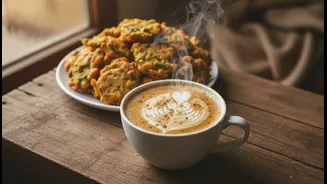
The magic of the chai-pakora combination lies in its delightful sensory contrast. It’s a masterclass in texture and temperature that our brains find incredibly rewarding. You have the pakora—salty, spicy, and satisfyingly crunchy on the outside, soft and savoury within. Then you have the chai—sweet, milky, fragrant, and liquid-hot. The crispness of the fried fritter against the smoothness of the tea creates a complex and deeply satisfying mouthfeel. This interplay is crucial; texture is not just a secondary feature but a key driver in how we experience and enjoy food. The physical warmth from both the tea and the freshly fried snack provides a comforting counterpoint to the cool, damp weather, making us feel cozy from the inside out.
The Power of Sensory Memory
That intense craving is also a powerful act of memory. Our brains are hardwired to link smells and tastes to emotions and past experiences. The hippocampus, a key region of the brain for memory, logs the sensory and emotional details of pleasurable, calorie-rich foods. The aroma of ginger and cardamom brewing in the chai, or the distinct smell of besan (gram flour) hitting hot oil, can instantly transport us back to happy, comfortable moments. These sensory cues—the smells, the sounds of sizzling and rain, the specific tastes—trigger a deep-seated memory of comfort and joy, making the craving feel urgent and profound. It’s a form of memory-driven hunger, where the brain isn't just recalling a food, but actively pushing you to seek the comfort it represents.
The Psychology of Comfort and Connection
On a psychological level, chai and pakoras are the ultimate comfort food. The combination of carbohydrates in the pakoras and the warmth of the tea can help trigger the release of mood-regulating neurotransmitters like serotonin and dopamine, which create feelings of happiness and reward. This is particularly effective on gloomy, rainy days when our mood might dip. Furthermore, holding a warm cup of tea can subconsciously make us feel more connected and relaxed, possibly due to the release of oxytocin, the “cuddle hormone”. This links physical warmth with emotional warmth, a connection we may form as early as infancy, associating warmth with safety and care. Therefore, indulging in chai and pakoras is not just about eating; it’s about self-soothing and tapping into a deep sense of well-being.
More Than Food: A Social Glue
Beyond the personal craving, the act of preparing and sharing chai and pakoras is a powerful social ritual. Across India, evening tea or 'shaam ki chai' is an established tradition where family and friends come together to unwind and connect. The monsoon amplifies this. The process—crushing ginger, mixing the batter, frying the pakoras—often becomes a shared household activity. It transforms a simple snack into a social event, a reason to gather, talk, and share a moment of collective joy. This ritual transcends class boundaries, happening in homes, office canteens, and at roadside stalls ('tapris'). It reinforces social bonds and creates a sense of stability and belonging, turning a simple beverage and snack into the very fabric of community and family life.