



The Landmark Deal
Eka Robotics, a startup focused on creating intelligent and dexterous robots, has officially announced a massive $150 million Series A funding round. This substantial investment was co-led by Andreessen Horowitz, one of the world's most influential venture
capital firms, and F-Prime Capital, a global VC firm with deep roots in Fidelity Investments. The round, which values the company at an impressive $1.45 billion, also saw participation from existing investors like Obvious Ventures and the E14 Fund, who backed Eka's initial seed round. This deal stands out not just for its size but for the calibre of its investors, marking one of the most significant validations for a physical AI and robotics company in recent memory.
What is Eka Robotics?
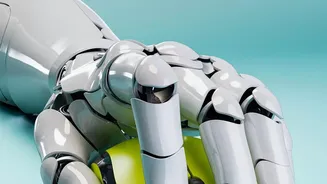
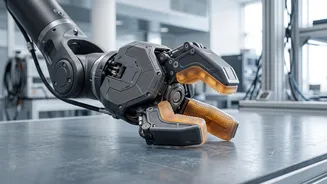
Founded by MIT professor Pulkit Agrawal and former Google DeepMind researcher Tuomas Haarnoja, Eka Robotics is on a mission to solve one of the toughest challenges in automation: dexterous manipulation. While industrial robots have been great at repetitive tasks in structured environments, they struggle with variability. Eka is building robots that can 'feel' and adapt. Their proprietary 'Vision-Force-Action' model combines visual data with tactile force feedback from its robotic hands. This allows the robots to handle delicate or unfamiliar objects with superhuman speed and precision, from picking berries without crushing them to inserting complex wiring. The company claims its systems can perform around 1,500 picks per hour, more than double the rate of a human worker. Instead of just mimicking human actions, Eka trains its AI in advanced physics simulations, allowing it to master the physical world in a scalable way.
The Silicon Valley Stamp of Approval
For those outside the startup world, the names Andreessen Horowitz (a16z) and F-Prime Capital may not be household names, but in technology, they are kingmakers. a16z is famous for its early bets on giants like Facebook, Airbnb, and Asana. Their backing is a powerful signal that a company is not just promising but has the potential to define a new category. F-Prime Capital brings a global network and a legacy of turning bold ideas into public companies. The investment in Eka comes from a16z's new 'Machine Age Fund', a $1.1 billion war chest specifically targeting physical AI, robotics, and the hardware needed to power the next wave of artificial intelligence. According to a16z partner Raghu Raghuram, Eka’s approach is the first he has seen that 'truly solves manipulation with the generality and throughput needed for deployments'.
Why This Matters for India
While Eka Robotics is based in Cambridge, Massachusetts, the significance of this deal reverberates strongly within the Indian technology ecosystem. The involvement of founders and investors with ties to the global Indian diaspora highlights a growing trend: world-class deep-tech companies with Indian roots are attracting premier global capital. This move by a16z and F-Prime is a crucial validation for India's engineering talent and its potential to build not just software-as-a-service (SaaS) or fintech companies, but also complex, hardware-based 'deep-tech' solutions. For years, Indian startups in robotics and advanced manufacturing have sought this level of global validation. The Eka funding round serves as a powerful proof point that can inspire a new generation of entrepreneurs and encourage other international VCs to look beyond software and into India's burgeoning hardware and physical AI space.
The Future of Physical Work
Eka plans to use the $150 million to scale its technology, expand the range of tasks its robots can perform, and accelerate customer deployments. The focus is on turning lab breakthroughs into reliable performance in real-world industrial operations, from logistics and warehousing to electronics assembly. The problem they are solving is enormous. Trillions of dollars in the global economy still depend on human hands for complex physical work. By creating robots that are not just strong but also smart and adaptable, Eka is positioning itself at the forefront of a fundamental shift in how physical work gets done. This investment suggests that the era of truly general-purpose, intelligent robots is moving from science fiction to commercial reality, with major implications for supply chains, manufacturing, and labour markets worldwide.