



The Foundation: Gaganyaan's Crucial Role
Before India can build a house in space, it first needs to master the ability to send people there and bring them back safely. This is the fundamental purpose of the Gaganyaan programme. By developing a human-rated launch vehicle (HLVM3), a life-support-equipped
crew module, and robust emergency escape systems, Gaganyaan is the essential first step. Successfully launching a crew of astronauts into a 400 km orbit and returning them to Earth will provide the critical experience, technology, and confidence needed for more complex, long-duration missions. Every technology tested in Gaganyaan, from life support to re-entry shielding, is a building block for the future space station, making the success of this initial human spaceflight mission a non-negotiable prerequisite.
Vision for the Bharatiya Antariksh Station
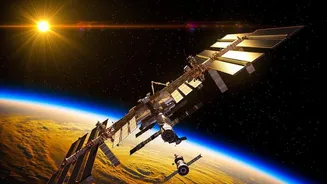
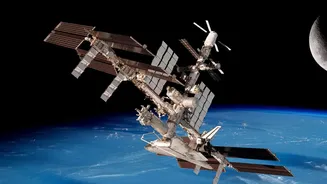
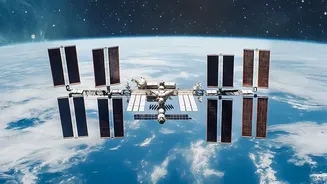
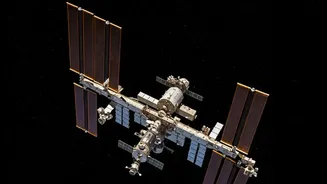
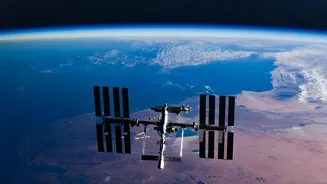
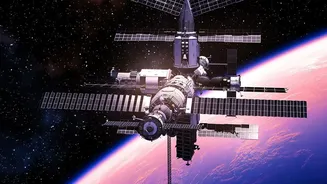
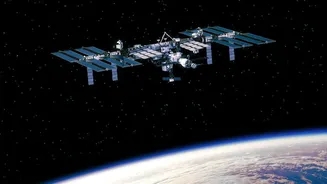
The Bharatiya Antariksh Station (BAS) is envisioned as a modular, 52-tonne orbital outpost. The plan involves launching the first, smaller module, BAS-01, by 2028 aboard an LVM3 rocket. This initial phase will likely be robotic, allowing ISRO to test systems in orbit before astronauts arrive. Over the following years, larger modules will be added, culminating in a five-module station by 2035 that can host three to four astronauts for months at a time. This orbital platform, orbiting at an altitude of about 400-450 km, will serve as a microgravity laboratory for scientific research in fields like biology, material science, and medicine.
The Next-Generation Rocket
Assembling a large space station requires a powerful and cost-effective launch vehicle. While the trusty LVM3 can launch the first module, subsequent, heavier modules will need a new ride to space. This is where the Next Generation Launch Vehicle (NGLV) comes in. The NGLV is being developed as a heavy-lift rocket with a partially reusable first stage, designed to significantly lower the cost of launching payloads. With a planned capacity of up to 30 tonnes to Low Earth Orbit, the NGLV is critical not only for constructing the space station but also for achieving India's broader ambitions, including the crewed lunar mission slated for 2040.
Strategic and Geopolitical Significance
Owning and operating a space station is about more than just science; it's a powerful statement of a nation's technological prowess and strategic autonomy. As the International Space Station (ISS) approaches its planned retirement around 2030, a new geopolitical landscape is emerging in orbit. China already operates its own Tiangong space station. By establishing the BAS, India would join an elite club of nations with a continuous human presence in space, enhancing its global standing. It would give India control over its research priorities, astronaut access, and technology development, transforming it from a participant in other nations' programmes to a leader with its own platform for international collaboration.
A Stepping Stone to the Moon
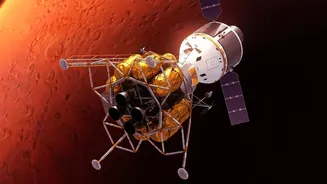
The Bharatiya Antariksh Station is not the final frontier but a crucial base camp for even bolder explorations. The long-term vision for India's space programme, outlined as part of its 2047 roadmap, includes sending an Indian astronaut to the Moon by 2040. A space station is vital for this goal. It provides a platform to study the long-term effects of space on the human body, test technologies for deep-space travel, and master complex orbital operations like docking—all essential skills for a lunar mission. The station represents a sustained programme, building capabilities incrementally rather than pursuing one-off missions, ensuring a durable and expansive future for India in space.