





Why Sitting Is a Spinal Menace
Our bodies are designed for movement, not for remaining still for long durations. When you sit for extended periods, several things happen that compromise spinal health. The pressure on your spinal discs increases significantly, especially in the lumbar
(lower back) region. This can compress the discs and reduce fluid circulation, accelerating wear and tear. Over time, this consistent pressure can lead to chronic stiffness, muscle imbalances, and pain. Slouching makes it worse, putting strain on spinal ligaments and potentially leading to issues like disc herniation.
The Sedentary Cascade Effect
The negative impact doesn't stop at your back. Prolonged sitting deactivates your core and gluteal muscles, which are crucial for supporting the spine. Your hip flexors, the muscles at the front of your hips, can become short and tight, pulling your pelvis forward into a position known as an anterior pelvic tilt. This tilt further strains your lower back and can weaken your abdominal muscles. Reduced blood flow to these critical muscle groups compounds the problem, leading to weakness and fatigue. This entire cascade makes it harder to maintain good posture even when you are standing or moving.
What Is Active Recovery?
The term 'active recovery' might sound like something reserved for elite athletes, but it's a simple concept that's incredibly beneficial for everyone. It involves performing low-intensity movements to help your body recover and counteract the effects of inactivity or stress. For desk workers, this means using gentle, targeted exercises to restore blood flow, release muscle tension, and improve spinal mobility after long periods of sitting. Think of it not as a workout, but as a way to gently wake up your spine and supporting muscles throughout the day.
The Cat-Cow Stretch
This fundamental yoga pose is one of the best for spinal mobility. Start on your hands and knees, with your wrists under your shoulders and knees under your hips. As you inhale, drop your belly towards the floor and look up, arching your back gently (Cow Pose). As you exhale, round your spine toward the ceiling, tucking your chin to your chest (Cat Pose). This movement sequence massages the spine, improves flexibility, and relieves tension from your neck to your lower back. Repeat this fluid motion 10-15 times.
Pelvic Tilts for Core Awareness
Pelvic tilts are a subtle but powerful exercise for re-engaging your core and releasing lower back tension. Lie on your back with your knees bent and feet flat on the floor. Gently flatten your lower back against the floor by tightening your abdominal muscles. This is a posterior tilt. Hold for a few seconds, then relax and allow a small arch to form in your lower back. This movement helps create awareness and control in the pelvis, counteracting the forward tilt caused by tight hip flexors. Repeat this 10-15 times.
Glute Bridges to Reactivate Support
Because sitting deactivates your glutes, it's essential to wake them up. Glute bridges strengthen your buttocks, hamstrings, and lower back. Lie on your back with your knees bent, feet flat on the floor, and arms by your sides. Squeeze your glutes and lift your hips off the floor until your body forms a straight line from your shoulders to your knees. Hold for a few seconds at the top before slowly lowering back down. This exercise not only strengthens key support muscles but also helps open up the hips.
Seated Spinal Twists
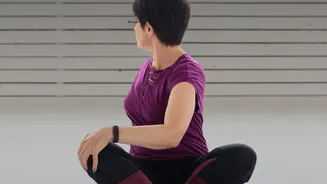
You can do this one without even leaving your chair. Sit tall at the edge of your seat with your feet flat on the floor. Gently twist your upper body to the right, using your hands on the armrest or side of the chair to deepen the stretch. Keep your hips facing forward. Hold for 15-30 seconds, breathing deeply, and then repeat on the left side. This movement improves rotational mobility in the thoracic (mid) spine, which often becomes stiff from slouching over a keyboard.