





Ladakh’s Water Paradox
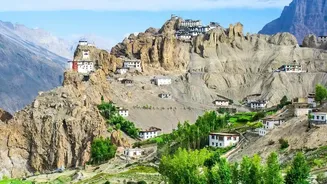
Ladakh, a cold desert in the Indian Himalayas, receives very little rainfall, with annual precipitation often less than 100mm. For centuries, its communities have depended almost entirely on the seasonal meltwater from glaciers to irrigate their barley
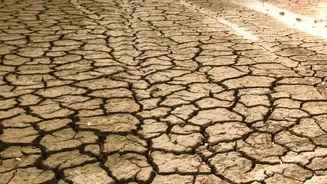
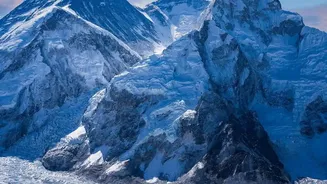
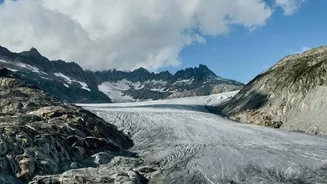
and apple crops. However, climate change is disrupting this ancient rhythm. Glaciers are receding at an alarming rate, and snowfall patterns have become erratic. This creates a critical paradox: water from snowmelt often arrives too early in the season, long before crops are sown, while the larger glaciers, now situated at higher altitudes, melt much later in the summer. The result is a severe water shortage during the crucial spring planting months of April and May, threatening the livelihoods of farmers who make up a vast majority of the population.
An Ingenious Solution: The Ice Stupa
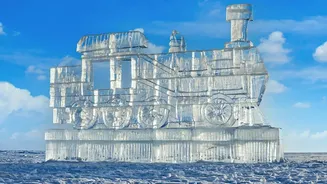
In response to this growing crisis, a remarkable solution has emerged: the ice stupa. These are essentially artificial glaciers, conical mounds of ice built during the winter to store water that would otherwise flow away unused. Named for their resemblance to traditional Buddhist stupas, these ice towers are designed to melt slowly in the spring, releasing water precisely when farmers need it most. The idea was pioneered and popularised by Ladakhi engineer and innovator Sonam Wangchuk in 2013. His first prototype, a six-metre-high cone, was built using 150,000 litres of water and lasted well into May, long after the surrounding ice had melted, proving the concept's viability.
How an Artificial Glacier Works
The science behind the ice stupa is elegantly simple and requires no electricity or pumps. A pipeline is laid from a stream at a higher altitude, running down to the village. Due to gravity and the basic principle that water maintains its level, the water from upstream is forced up through a vertical pipe at the lower end. This water is then sprayed out from a sprinkler in the sub-zero winter air. As it falls, it freezes almost instantly, gradually forming a massive cone of ice around a basic frame. The conical shape is the key to its longevity. Compared to a flat field of ice, the cone exposes the minimum possible surface area to the direct rays of the sun, significantly slowing the melting process. A single large stupa can store millions of litres of water.
The Mind Behind the Ice
The ice stupa project is the brainchild of Sonam Wangchuk, a mechanical engineer and education reformer. Through his NGO, the Students' Educational and Cultural Movement of Ladakh (SECMOL), Wangchuk has been at the forefront of finding sustainable solutions to local problems. The inspiration for the ice stupa came from observing a chunk of ice that had survived under a bridge well into the summer, protected from the sun. This led him to conceptualise a vertical structure that could shade itself. For his work, Wangchuk has received global recognition, including a Rolex Award for Enterprise, which helped fund the expansion of the project. His work blends modern engineering with deep respect for local culture and ecology.
More Than Just Water
The impact of ice stupas extends beyond irrigation. They have become a powerful symbol of community-led climate action and resilience. The project has mobilised entire villages, with annual competitions encouraging the construction of more and larger stupas. This collective effort is helping to revive agriculture in areas that were on the verge of being abandoned due to water shortages. The meltwater from the very first large-scale stupa helped villagers plant over 5,000 saplings, turning a patch of barren desert green. While not a permanent solution to climate change itself, the ice stupas represent a powerful coping mechanism, an adaptation that allows Ladakhi communities to buy precious time and secure their future in a rapidly changing world.