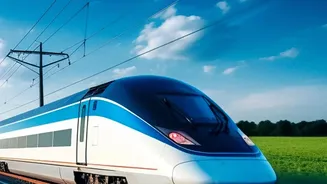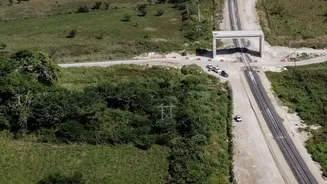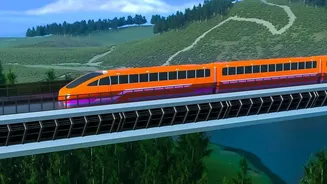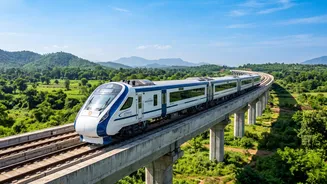





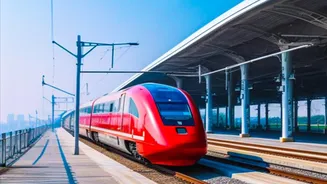
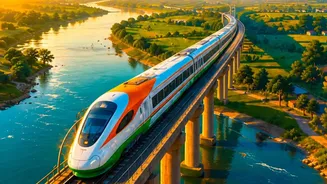
India's ambitious bullet train project is shifting from blueprint to reality. The government has confirmed that the first high-speed service will commence in late 2027, prioritising the crucial industrial corridor between Surat and Vapi in Gujarat.
A Landmark Decision for Gujarat
The
National High Speed Rail Corporation Limited (NHSRCL), the body executing the project, has officially slated the Surat-Vapi stretch for the inaugural run. According to Railway Minister Ashwini Vaishnaw, this first service is expected to commence in the last quarter of 2027. This marks a significant milestone for the 508-kilometre Mumbai-Ahmedabad High-Speed Rail (MAHSR) corridor, representing a strategic decision to operationalise the project in phases. By focusing on a high-potential section first, the project aims to demonstrate its capabilities and benefits sooner. Progress on the ground is tangible; the 50-km Surat-Bilimora section, part of the initial launch corridor, was successfully electrified on November 20, 2026, a critical step towards trial runs. This phased approach allows the authorities to open completed sections while work continues on more complex portions of the line, particularly in Maharashtra.
Why This Section First?
The choice of the Surat-Vapi corridor is rooted in logistical and economic strategy. This region of South Gujarat is one of India's most industrialised belts, home to thriving textile, diamond, and chemical industries. Connecting these two commercial powerhouses with high-speed rail is expected to supercharge business activity, enabling faster movement of people and catalysing economic integration. From a construction standpoint, progress in Gujarat has been faster and more streamlined, with land acquisition largely completed early on, in contrast to the significant delays faced in Maharashtra. This allowed for the rapid erection of piers, viaducts, and stations. As of late 2026, substantial work on the elevated corridors, track installation, and station building in Gujarat is complete, making it the most logical starting point for operations.
The Bigger Picture: Connecting Economic Hubs
While the Surat-Vapi opening is a major event, it is just the first step in a much larger plan. The full 508-km MAHSR corridor will eventually feature 12 stations across Gujarat, Maharashtra, and Dadra and Nagar Haveli. Once fully operational, the bullet train will slash the travel time between Mumbai and Ahmedabad from around eight hours by road or conventional rail to just under two hours for the fastest services. The project utilises Japan's renowned Shinkansen technology, with trains designed to operate at speeds of up to 320 km/h. A key engineering marvel of the project is the 21-km underground tunnel in Maharashtra, which includes India's first 7-km undersea rail tunnel beneath Thane Creek. Though facing delays, work on this section is also progressing, with massive tunnel boring machines at work.
What Passengers and the Region Can Expect
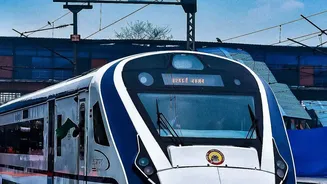
For travellers in Gujarat, the first phase will be transformative. The initial service will operate with an indigenous B28 trainset, manufactured by BEML and the Integral Coach Factory (ICF), designed for speeds of 280 km/h. Track trials for this 'Made in India' train are expected to begin by mid-2027, paving the way for the scheduled public launch. Beyond reduced travel times, the project is a massive economic accelerator. The construction phase alone has generated thousands of jobs, and the operational corridor is expected to create further employment. For the real estate market in cities like Surat and Vapi, the enhanced connectivity is predicted to boost demand for both commercial and residential properties. The high-speed link will make these cities more attractive for businesses seeking to tap into the talent pools of both Gujarat and the Mumbai Metropolitan Region.