






The Old Orbit: ISRO's Enduring Legacy
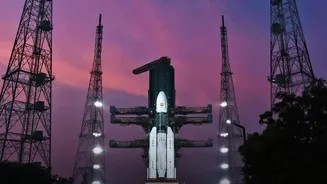
For over half a century, the Indian Space Research Organisation (ISRO) was the sole custodian of India's space ambitions. From launching its first sounding rocket to landing on the Moon's south pole, ISRO built a world-class reputation and, in the process,
became the primary employer for the nation's brightest aerospace talent. Getting a job at ISRO has long been a national aspiration, with hundreds of thousands of applicants vying for just a few hundred positions annually. The organisation not only achieved remarkable technical feats but also created a deep talent pool of engineers, scientists, and technicians—a foundation upon which the next chapter of India's space story is now being built.
A Policy Shift Opens the Skies
The major catalyst for change has been a fundamental shift in government policy. The Indian Space Policy of 2023, along with the establishment of the Indian National Space Promotion and Authorisation Centre (IN-SPACe), officially ended the government's monopoly and invited private companies to become co-travelers in the journey. IN-SPACe acts as a single-window agency to promote, authorise, and regulate private space activities. This new framework allows private firms to do everything from building their own rockets and satellites to operating ground stations and providing space-based data services. ISRO's role has been redefined: it will now focus on advanced research, national security missions like the Gaganyaan human spaceflight programme, and enabling the private sector by sharing its facilities and expertise.
Meet the New Constellation of Companies
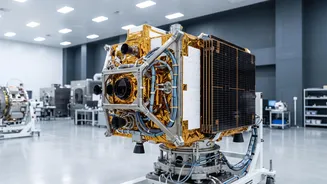
The policy changes have led to a boom in private space startups, with the number growing from a handful in 2020 to over 400 today. These companies are not just concepts; they are building, launching, and hiring. Hyderabad-based Skyroot Aerospace, founded by former ISRO engineers, became the first Indian private company to launch a sub-orbital rocket, the Vikram-S, in 2022. Chennai-based Agnikul Cosmos has developed the world's first single-piece 3D-printed rocket engine and has its own launchpad. Meanwhile, Bengaluru-based Pixxel is deploying a constellation of the world's most advanced hyperspectral imaging satellites, which it launched using foreign rockets. Other key players include Dhruva Space, which builds satellites, and Bellatrix Aerospace, which specialises in spacecraft propulsion.
Beyond Rocket Science: The Jobs of Tomorrow
The most exciting aspect of this private space boom is the sheer diversity of jobs being created, many of which extend far beyond traditional aerospace engineering. While companies are aggressively hiring propulsion, avionics, and structural engineers, the demand for software is exploding. Aerospace software engineers who can write code for flight systems, mission planning, and autonomous navigation are highly sought after. Furthermore, companies like Pixxel and SatSure are built around data, creating a massive need for geospatial data analysts, remote sensing specialists, and data scientists who can turn satellite imagery into actionable insights for agriculture, insurance, and urban planning. This expansion also creates opportunities in business development, space law, marketing, and finance, making the sector accessible to professionals from a wide range of backgrounds.
Fueling the Future: Skills in Demand
This burgeoning industry is expected to require tens of thousands of technically skilled professionals in the coming years. Core engineering fundamentals remain crucial, but the new space economy places a premium on interdisciplinary skills. Proficiency in programming languages like Python and C++ is becoming as important as understanding orbital mechanics. Experience with data analysis, machine learning, and geographic information systems (GIS) is a direct pathway into the fast-growing satellite data segment. Unlike the structured, long-term projects at a government agency, startups offer a faster-paced environment where young engineers can get hands-on experience and significant responsibility early in their careers. This shift is creating a dynamic job market where practical skills, demonstrated through projects or internships, are often valued as much as academic credentials.