

What Am I Looking For?
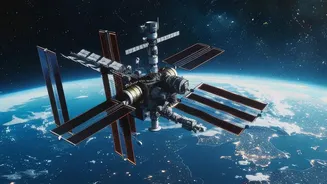
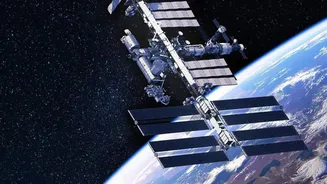
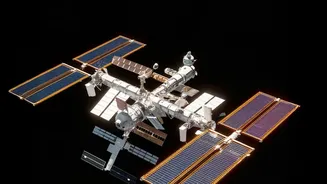
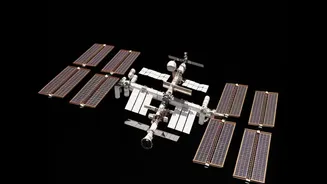
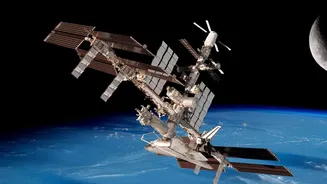
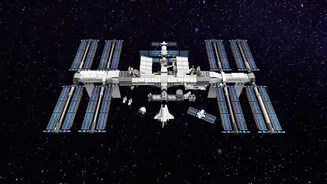
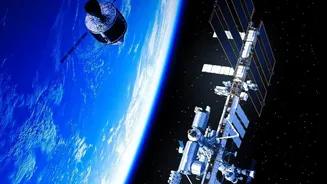
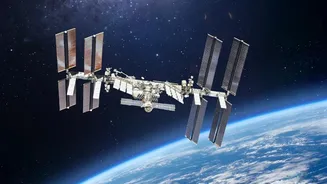
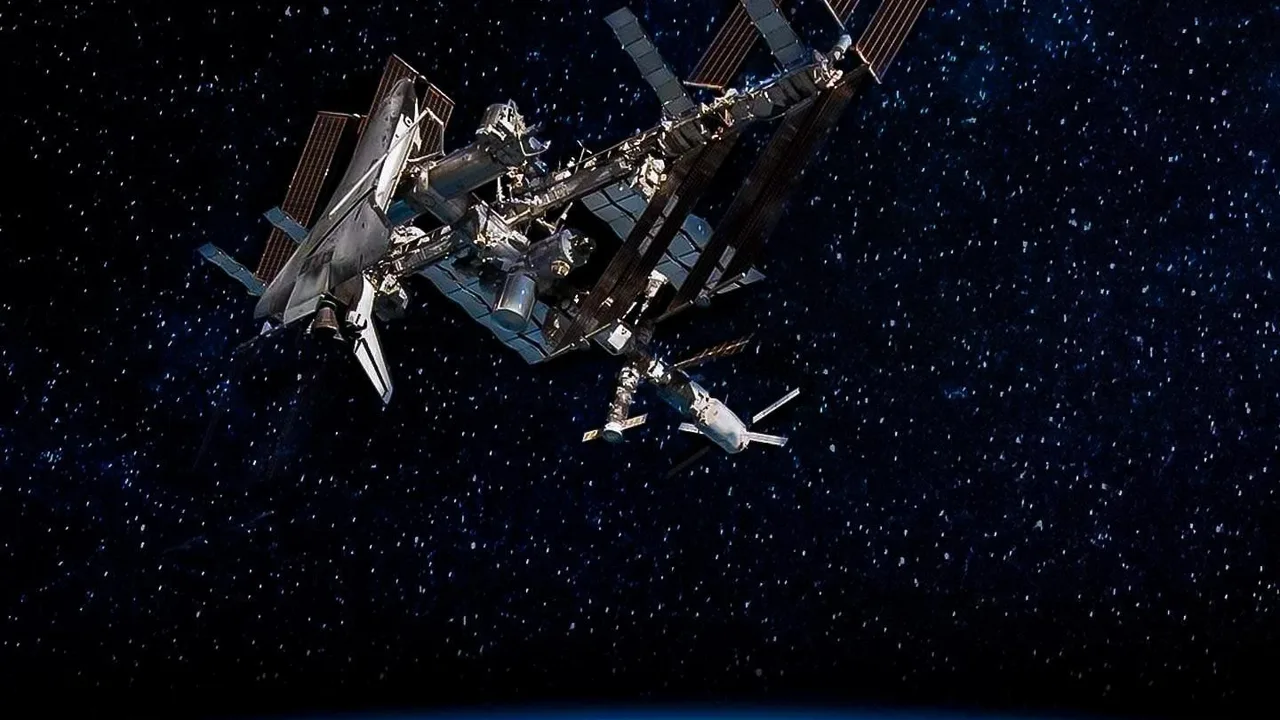
Forget what you think a satellite looks like. The ISS appears as a very bright, steady, white point of light moving quickly across the sky. It looks like a fast-moving airplane but without any flashing or red and green lights. Because of its large solar
panels reflecting sunlight, it can be the third brightest object in the night sky after the Sun and Moon. A typical pass lasts for only a few minutes, so being ready is key. You don't need any special equipment like a telescope; the station is easily visible to the naked eye.
The Perfect Time to Watch
Timing is everything when it comes to spotting the ISS. The best viewing opportunities occur during twilight hours, specifically the first couple of hours after sunset or before sunrise. This is the sweet spot when the sky is dark enough at your location on the ground, but the station, at its high altitude, is still bathed in sunlight. The ISS orbits the Earth about every 90 minutes, but it's only visible when these specific lighting conditions align. Fortunately for observers in India, the country's location means it gets some of the best and most frequent viewing opportunities in the world.
Find Sighting Times for Your City
The most crucial step is knowing exactly when and where to look. Thankfully, several free and reliable tools do the work for you. NASA’s official “Spot The Station” service is a great starting point. You can visit their website and select your city from a list to get precise timings, the duration of the pass, the direction it will appear from, and how high it will get in the sky. For even more convenience, you can sign up for email or text alerts that notify you a few hours before a good sighting opportunity. People in major hubs like Delhi, Mumbai, Bengaluru, and Kolkata can all find specific pass times.
Essential Apps for ISS Tracking
For real-time tracking on the go, a smartphone app is your best friend. Apps like 'ISS Detector', 'Heavens-Above', and 'Satellite Tracker' provide detailed pass predictions, live maps of the station's location, and push notifications for upcoming flyovers. Many of these apps also feature an augmented reality (AR) view. You can simply point your phone at the sky, and the app will show you the exact trajectory the ISS will follow, making it incredibly easy to find.
Tips for the Best Viewing Experience
Once you have your viewing time, a few simple preparations can make a big difference. First, try to find a spot with a clear view of the horizon, away from tall buildings and bright city lights if possible, although the ISS is often bright enough to be seen from urban areas. Give your eyes about five to ten minutes to adjust to the darkness before the pass is scheduled to begin. Know the direction from which the station will appear (e.g., west-southwest) and where it will disappear. While not necessary, a pair of binoculars can enhance the view, helping you see the bright dot more clearly, even if you can't make out its shape.