



The Hunt for Chemical Fingerprints
When astronomers scan the skies for signs of life, they aren't looking for little green men. Instead, they’re hunting for biosignatures: gases or molecules in a planet's atmosphere that are likely produced by living organisms. Life, as we know it, fundamentally
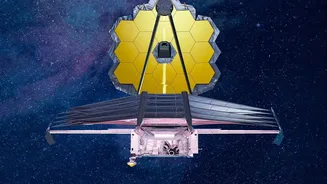
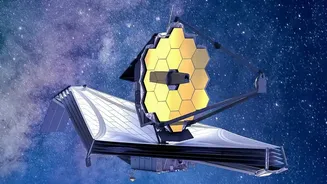
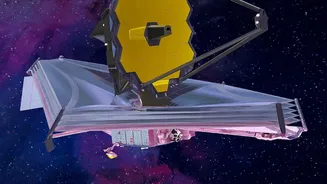
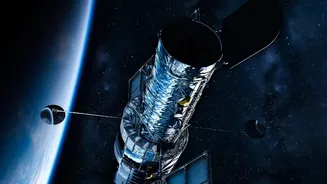
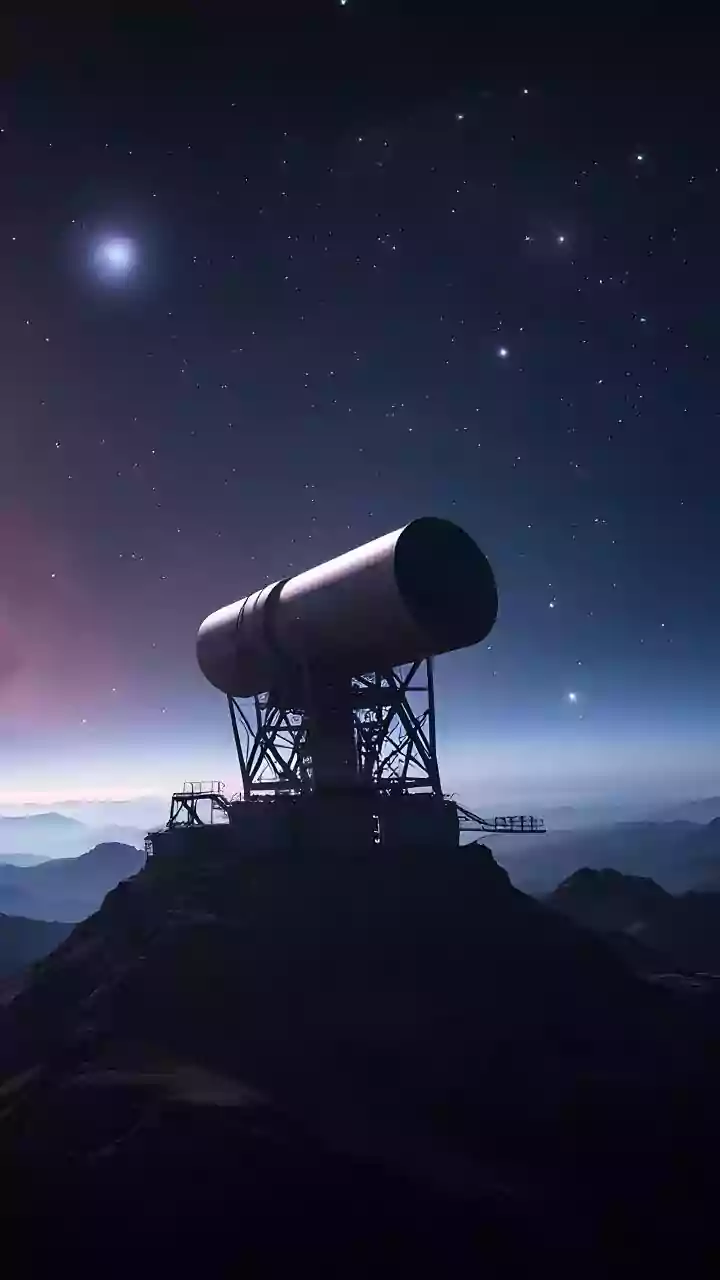
alters its environment. On Earth, for instance, nearly all the oxygen in our atmosphere is a waste product of photosynthesis. For distant exoplanets, which we can only study from light-years away, analyzing the chemical makeup of their atmospheres is our best method for detecting these tell-tale signs of biology. Using powerful tools like the James Webb Space Telescope (JWST), scientists can see what kinds of gases are present, offering a remote fingerprint of a world we can never visit.
An Unlikely Atmospheric Pair
On their own, neither carbon dioxide (CO2) nor methane (CH4) is a definitive sign of life. CO2 is common on rocky planets like Mars and Venus, often produced by volcanic activity. Methane can also be created by geological processes like serpentinization or released during volcanic outgassing. So, finding one or the other doesn't necessarily mean anything biological is happening. The real excitement comes when scientists find them together in large quantities, especially in an atmosphere that lacks a significant amount of carbon monoxide (CO). This specific combination is chemically strange and hints that something is actively maintaining a profound imbalance.
The Disequilibrium Dilemma
The key concept is 'chemical disequilibrium'. Think of it like a leaky bucket that is somehow always full. In a typical planetary atmosphere, methane and carbon dioxide don't peacefully coexist. Methane is chemically unstable and, over geological time, should be destroyed by photochemical reactions fueled by starlight. Those same reactions should naturally produce carbon monoxide. Therefore, an atmosphere rich in both methane and CO2, but low in CO, is in a state of imbalance. Something must be constantly replenishing the methane to keep its levels high, much like a hidden tap refilling that leaky bucket. While volcanoes can be a source, they typically release carbon monoxide along with methane. A thriving biosphere, however, is a perfect candidate for this continuous production. On Earth, biological processes constantly pump out enormous amounts of methane while other life forms consume carbon monoxide.
Ruling Out a False Positive
Of course, scientists must be cautious. Before declaring the presence of a biosignature, they have to rule out all plausible non-biological explanations. A planet's context is crucial. Is it a rocky world in the habitable zone, where liquid water could exist? Or is it a gas giant where strange, high-pressure chemistry might occur? For example, a planet's interior could theoretically produce both gases without life, but researchers argue this is unlikely to happen without also producing a lot of carbon monoxide. By carefully analyzing the ratios of these gases and the overall planetary environment—including the type of star it orbits—scientists can build a stronger case that the disequilibrium is truly a product of life.
A Glimmer of Hope from K2-18 b
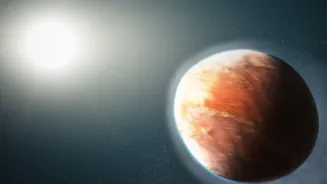
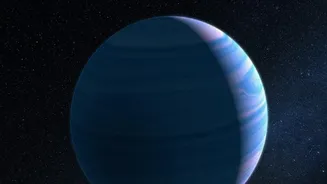
This theory isn't just a thought experiment. The James Webb Space Telescope has already put it into practice. Observations of the exoplanet K2-18 b, a 'Hycean' world 120 light-years away, revealed an atmosphere containing both methane and carbon dioxide. The planet is larger than Earth and believed to have a water ocean under a hydrogen-rich atmosphere. The detection of these carbon-bearing molecules, along with a shortage of ammonia, supports the idea that such an ocean may exist. While the data from K2-18 b is still being analyzed and requires more observation to confirm, it represents a monumental step. For the first time, we have the technology to detect this specific, promising chemical pairing on a world in its star's habitable zone, turning a theoretical biosignature into an observable reality.