





Know Your Indoor Enemies
Before you can fight indoor pollution, it helps to know what you're up against. The air inside Indian homes often contains a cocktail of pollutants. These include PM2.5, tiny particles from outdoor smog that seep inside, and Volatile Organic Compounds
(VOCs) released from paints, cleaning products, and even furniture. Everyday activities also contribute. Cooking, especially frying and tadka, releases smoke and fine particles. Burning incense sticks (agarbatti) and mosquito coils adds to the load, releasing particulate matter that can linger in poorly ventilated rooms. In winter, these pollutants get trapped. We keep windows and doors shut to stay warm, reducing the natural flow of air that would normally disperse them.
Ventilate, But Do It Wisely
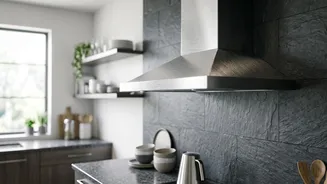
While it seems counterintuitive to open windows when outdoor air is bad, ventilation is crucial. Stagnant air allows pollutants to build up to dangerous levels. The key is strategic ventilation. Monitor the outdoor Air Quality Index (AQI). In many Indian cities, air quality is often slightly better in the early afternoon, when the sun is at its strongest and helps dissipate some of the smog. Use this window to open doors and windows for 15-20 minutes to allow fresh air in and push stale, polluted indoor air out. For kitchens and bathrooms, always use an exhaust fan to pull cooking fumes and moisture-laden air directly outside. This simple step prevents pollutants from spreading throughout the house.
Control Pollution at the Source
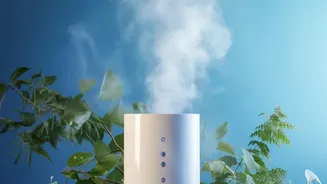
The most effective way to clean your air is to stop pollution from being created in the first place. Make simple swaps in your daily routine. When cooking, use a chimney or exhaust fan every time. Reduce the use of incense, dhoop, and scented candles that release fine particles; consider using essential oil diffusers instead. When buying new furniture, paint, or cleaning supplies, look for products labelled 'low-VOC' or 'zero-VOC' to minimise chemical off-gassing. And it goes without saying: never allow smoking inside the home. The smoke contains thousands of chemicals and significantly degrades indoor air quality.
Commit to a Cleaning Routine
Dust is not just dirt; it’s a collection of skin cells, pet dander, dust mites, and outdoor pollutants that have settled on surfaces. A regular and thorough cleaning routine can make a huge difference. Instead of dry dusting, which can just push particles back into the air, use a damp cloth to wipe down surfaces. Vacuum carpets, rugs, and upholstery frequently, preferably with a machine that has a HEPA (High-Efficiency Particulate Air) filter, as this traps the finest particles instead of recirculating them. Don't forget to wash curtains and bed linen regularly in hot water to get rid of dust mites and other allergens.
Bring in the Green (with a Caveat)
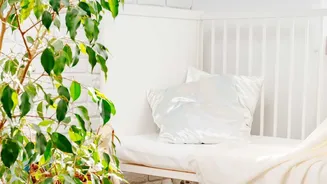
Air-purifying plants are a popular choice for improving indoor air quality. Plants like the Snake Plant, Money Plant, Areca Palm, and Peace Lily are often recommended. Research, including a famous 1989 NASA study, has shown they can absorb certain toxins like formaldehyde and benzene from the air in sealed laboratory conditions. The Snake Plant is particularly great for bedrooms as it releases oxygen at night. However, it's important to have realistic expectations. In a typical home with constant air exchange, you would need a very large number of plants to significantly impact PM2.5 levels. Think of them as a helpful supplement to other measures, not a replacement for ventilation or an air purifier.
Consider an Air Purifier
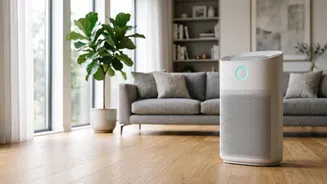
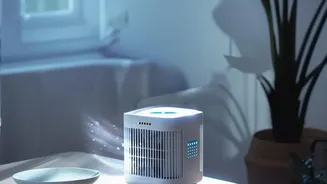
For those living in highly polluted cities, an air purifier is becoming less of a luxury and more of a necessity. These devices work by pulling in air and passing it through a series of filters to trap pollutants. When choosing one, the most important feature to look for is a true HEPA filter, which is certified to capture 99.97% of particles as small as 0.3 microns, including PM2.5. Also, pay attention to the CADR (Clean Air Delivery Rate), which tells you how quickly the purifier can clean a room of a certain size. An activated carbon filter is a useful addition, as it helps remove odours, gases, and some VOCs that HEPA filters can't catch. While a purifier is an investment, it can provide a crucial layer of protection, especially for children, the elderly, and those with respiratory conditions.