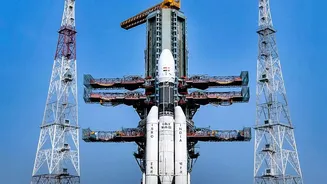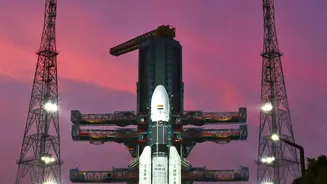

Meet 'Pushpak', India's Space Shuttle
ISRO's Reusable Launch Vehicle (RLV) is a winged craft that looks more like a space plane than a traditional rocket. Named 'Pushpak', this Technology Demonstrator (RLV-TD) is designed to test the crucial technologies needed for a fully reusable launch
vehicle. The concept is to develop a two-stage-to-orbit (TSTO) launch system where the first stage, after boosting the second stage and payload to a certain altitude, would fly back to Earth and land on a runway, ready for its next mission. This approach, combining aircraft and rocket technologies, is a key part of India's long-term vision for sustainable and low-cost access to space.
A Hat-Trick of Landing Success
The RLV program has moved through a series of carefully planned experiments. The most recent set of trials, the Landing Experiment (LEX) series, has been a resounding success. In these tests, conducted at the Aeronautical Test Range in Chitradurga, Karnataka, the Pushpak vehicle was lifted to an altitude of 4.5 km by an Indian Air Force Chinook helicopter and released. From there, it had to autonomously navigate, correct its course, and perform a precise, high-speed landing on the runway. The third and final test in the LEX series successfully demonstrated the vehicle's ability to land under more challenging conditions, including severe crosswinds and a greater release distance from the runway. This confirmed the robustness of its autonomous navigation, guidance, and control systems.
Why Reusability is the Game-Changer
The single biggest driver behind the RLV program is cost. Expendable rockets, where the entire vehicle is discarded after one use, are incredibly expensive. The most valuable parts, like the complex engines and avionics, are lost with every launch. By developing a vehicle that can be reused, ISRO aims to slash launch costs significantly. The stated goal is to bring the cost down by a factor of ten, potentially from around $20,000 per kilogram to a much more competitive price point. This strategy mirrors the success seen by global players like SpaceX, whose reusable Falcon 9 rockets have fundamentally disrupted the commercial launch market. Making launch vehicles reusable is the key to unlocking more frequent and affordable space missions.
ISRO's Broader Commercial Strategy
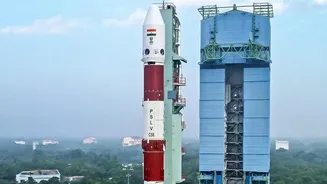
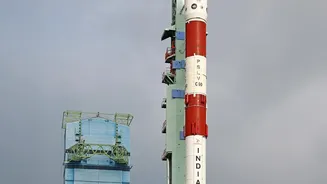
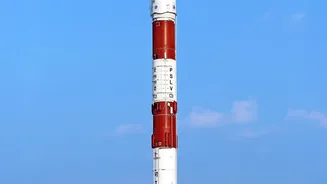
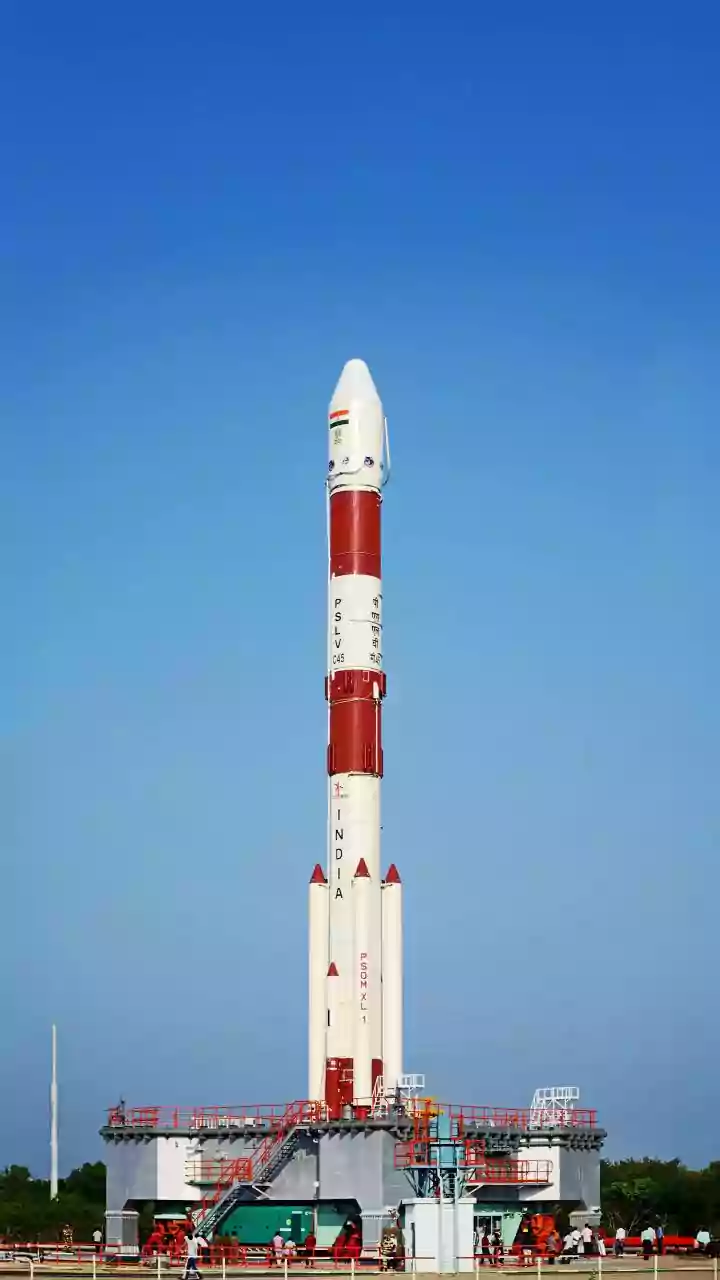
The Pushpak RLV is a critical piece of ISRO's larger strategy to capture a bigger share of the burgeoning global satellite launch market. For years, ISRO's workhorse PSLV has been a reliable and cost-effective option for launching smaller satellites, earning significant foreign exchange for the country. However, with the satellite market growing exponentially, the demand for low-cost, high-frequency launches is soaring. By mastering reusable technology, ISRO is positioning itself not just as a provider of reliable launches, but as a leader in affordable space access. This aligns with the Indian government's push to open the space sector to private players, creating an ecosystem where commercial viability is paramount.
The Road Ahead: From Demonstrator to Orbit
While the landing experiments have been a major triumph, Pushpak is still in its demonstration phase. The successful completion of the LEX series paves the way for the next critical step: the Orbital Re-entry Experiment (OREX). In this future mission, a scaled-up version of the vehicle will be launched into orbit, spend some time there, and then de-orbit to perform an autonomous re-entry and landing. This will test the vehicle's thermal protection systems against the extreme heat of re-entry and validate the entire mission cycle. There is still a long road of development and testing ahead before India has a fully operational two-stage reusable rocket, but the recent successes show that the foundational technologies are firmly in place.