


The Royal Thali: A Kingdom on a Platter
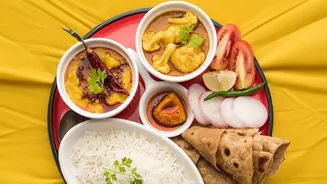
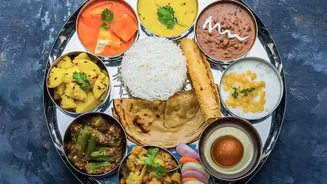
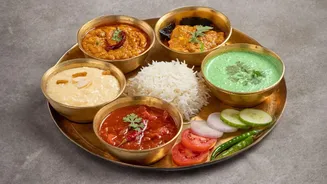
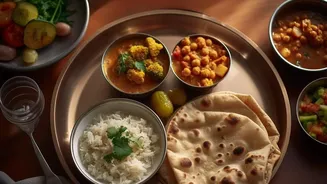
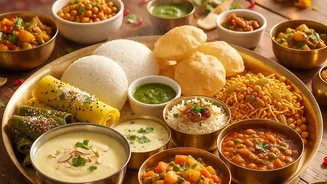
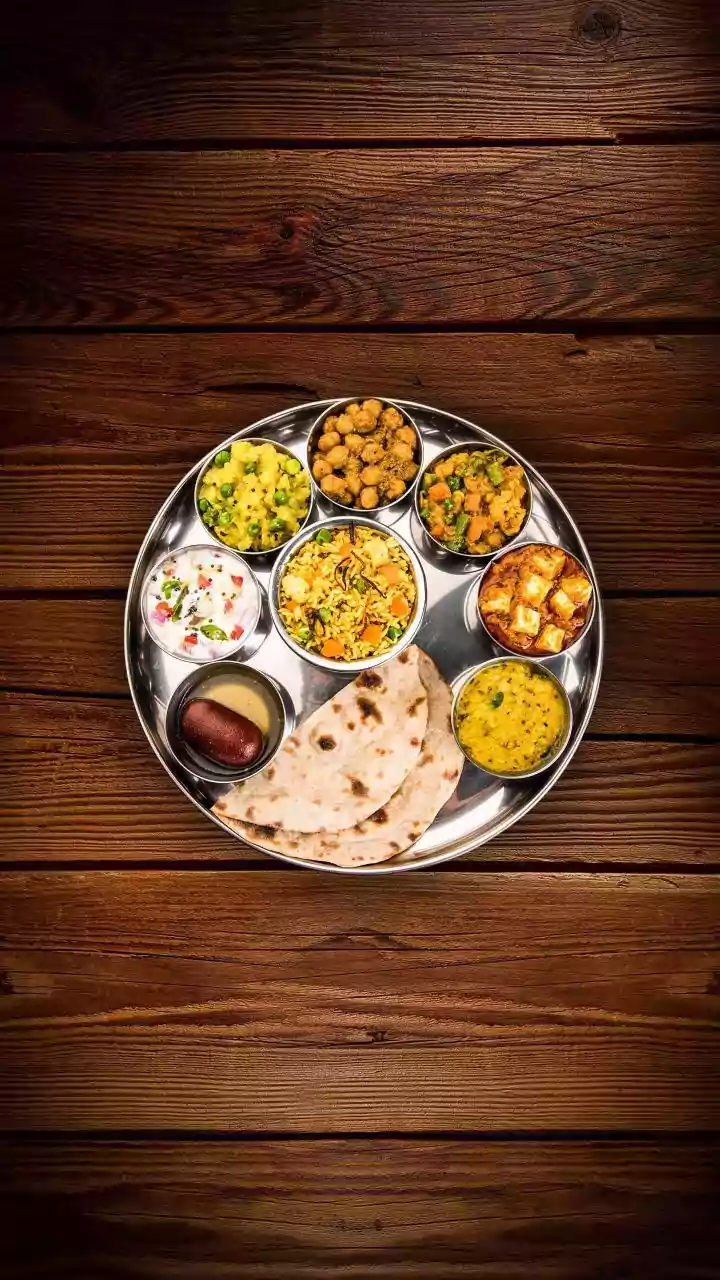
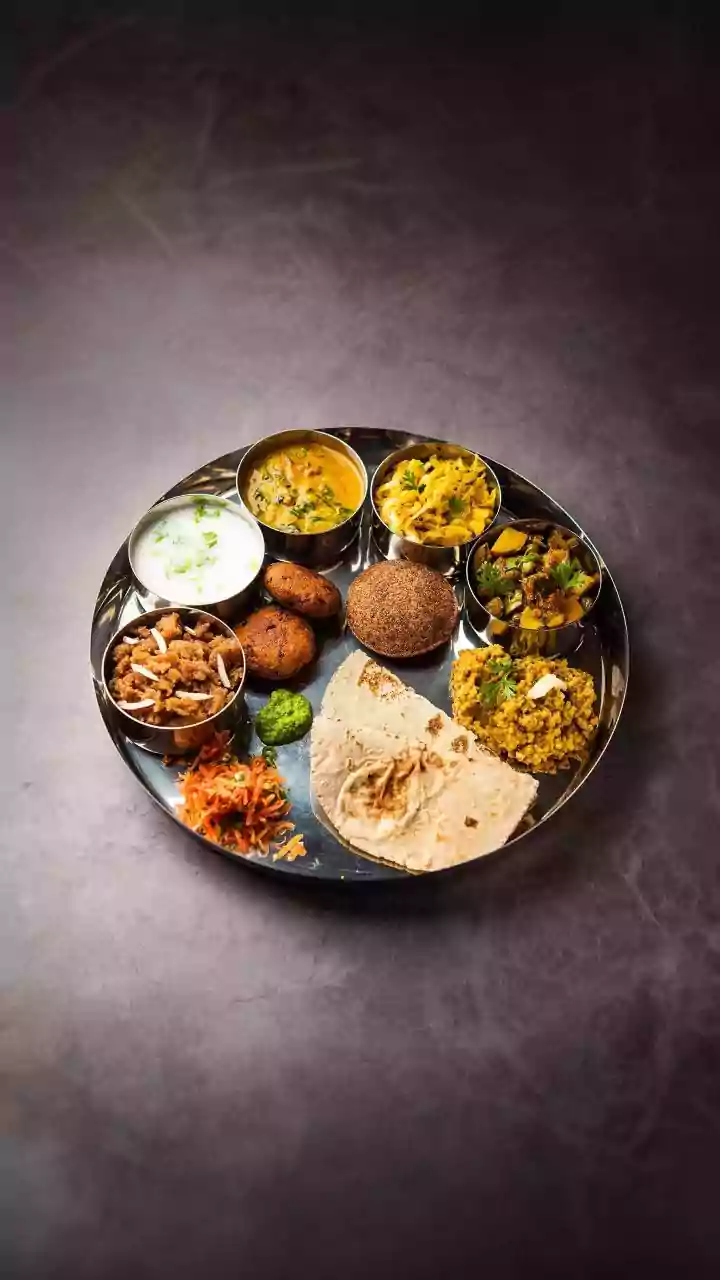
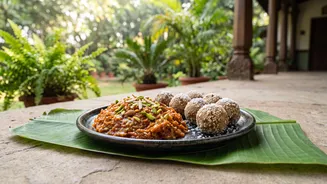
The Rajasthani thali is not just a meal; it is a grand, edible welcome. A large platter arrives, a kaleidoscope of colours and aromas from dozens of small bowls, or 'katoris'. At its heart is the state's most famous trio: Dal, Baati, and Churma. This
isn't just food, but a reflection of the region's history. The baati, a hard, unleavened wheat roll, was originally war food. Soldiers would bury balls of dough in the hot desert sand in the morning and return from battle to find them perfectly baked. These dense rolls are cracked open and dunked in ghee before being eaten with panchmel dal, a flavourful mix of five different lentils. The churma, a coarsely ground wheat dessert sweetened with jaggery and laden with ghee, is believed to have been an accidental, happy discovery when sugarcane juice spilled on baatis, making them soft and sweet.
Essential Curries and Breads
Surrounding the dal and baati are other vegetarian masterpieces. Gatte ki Sabzi is a testament to Rajasthani ingenuity in a land with scarce fresh vegetables. It features steamed and pan-fried dumplings made from gram flour (besan), simmered in a tangy yogurt-based curry. Then there is Ker Sangri, a dish born from extreme scarcity. Ker, a tangy desert berry, and Sangri, a long bean from the native Khejri tree, are two of the few plants that can withstand the harsh desert climate. Once foraged during a famine, this dish of dried berries and beans, rehydrated and cooked with an intense blend of spices, has become a delicacy often served at weddings. These curries are scooped up with breads like the healthy Bajre ki Roti (millet flatbread), often paired with a fiery Lahsun ki Chutney, a garlic paste that adds a powerful kick.
Mirchi Bada: The Spicy Heart of Jodhpur
Move over, samosa. In Jodhpur, the king of snacks is the Mirchi Bada. This popular street food consists of a large, relatively mild green chilli, which is slit open and filled with a spicy and tangy mashed potato stuffing. The entire creation is then dipped in a thick batter of gram flour (besan) and deep-fried to a perfect golden-brown crispness. The result is a delightful contrast of textures and flavours: the soft, spiced potato filling, the slight crunch of the chilli, and the crispy, savoury outer layer. It’s typically served hot, often with a side of tamarind or mint chutney, and is the perfect companion to a cup of tea, especially on a rainy day. It's a taste of the city's bustling, flavour-forward street food culture in every single bite.
Ghevar: The Intricate Web of Sweetness
Ghevar is more than just a dessert; it's a work of art. This disc-shaped sweet has a unique, porous, honeycomb-like texture. It’s made by drizzling a thin batter of refined flour (maida) into a cauldron of hot ghee from a specific height, which creates its signature webbed structure. The fried disc is then dipped in sugar syrup, resulting in a treat that is simultaneously crisp and syrupy. While the plain version is a classic, you can also find variations topped with mawa (reduced milk solids) or malai (clotted cream) and garnished with nuts. Ghevar is traditionally associated with the monsoon season and festivals like Teej and Raksha Bandhan. It is said that the humid weather is necessary for the sweet to set perfectly, making it a special, seasonal indulgence.