


A New Era of Cosmic Cooperation
The foundation of this enhanced partnership rests on key strategic pillars. India’s decision to join the U.S.-led Artemis Accords, a set of principles for peaceful and transparent lunar exploration, marked a significant policy shift. This move ensures
India is not isolated from global space governance and aligns its technology with international standards. This was further solidified by the Initiative on Critical and Emerging Technology (iCET), which fast-tracked collaboration across civil, commercial, and security-focused space sectors. Recent high-level meetings, like the U.S.-India Civil Space Joint Working Group session in Bengaluru, have advanced these discussions, with NASA formally inviting ISRO to participate in its ambitious Moon Base program. This isn't just about planting a flag; it's about building a sustainable human presence on the Moon, and India is being invited to be a core partner.
Fueling India's Private Space Boom
Perhaps the most immediate impact of deeper U.S. ties is the booster shot it provides to India's burgeoning private space industry. With government reforms like the Indian Space Policy 2023 opening the doors for non-governmental players, the timing is perfect. The collaboration creates pathways for Indian startups to integrate into the global space supply chain, a market projected to be worth over a trillion dollars by 2035. The U.S. has shown clear intent to facilitate commercial partnerships between the two nations' private sectors. Initiatives like a proposed space innovation bridge aim to directly connect U.S. and Indian startups working on satellite technology and space situational awareness. With liberalised FDI norms allowing greater foreign investment, Indian firms like Skyroot Aerospace and Agnikul Cosmos are better positioned to attract capital and technology, moving from the drawing board to the launchpad.
Science and Strategy in a Single Orbit
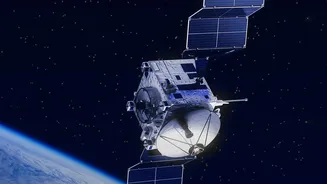
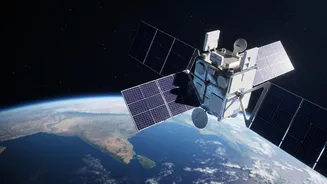
The partnership yields significant scientific and strategic dividends. The NASA-ISRO Synthetic Aperture Radar (NISAR) mission is a prime example. This joint satellite, the first hardware collaboration between the agencies on an Earth-observing mission, will map our planet’s surface with unprecedented detail every 12 days. The data will be invaluable for managing climate change impacts, monitoring agriculture, and predicting natural disasters. Beyond science, space cooperation has a clear security dimension. Sharing data and enhancing space domain awareness are crucial in an era of growing orbital congestion and competition. The partnership helps both nations monitor assets in space and ensures the sustainability of outer space activities, aligning with UN guidelines.
The Human Element: Training and Lunar Ambitions
A major milestone in the relationship is the collaboration in human spaceflight. As part of recent agreements, ISRO astronauts are set to train at NASA's Johnson Space Center for a joint mission to the International Space Station (ISS). This provides invaluable experience and exposure to global best practices that will directly benefit India’s own ambitious Gaganyaan program, which aims to send Indian astronauts into orbit. Looking further, NASA’s invitation for India to join its Moon Base program aligns perfectly with India's long-term goal of establishing its own lunar presence by 2040. This collaborative approach could accelerate India's timeline, providing access to tested technologies for life support, mission planning, and astronaut safety, critical for long-duration stays beyond Earth.