





What Exactly is a Workout Split?
A workout split is simply a way of organising your training week. Instead of training your whole body every session, you divide your workouts to focus on specific muscle groups or movement patterns on different days. This approach provides structure,
ensuring that you give adequate attention to every major muscle group while also allowing for crucial recovery time. Many popular splits exist, including the 'body-part' or 'bro' split (e.g., chest day, back day) and the 'upper/lower' split, but one of the most efficient and logical methods is based on movement patterns. This ensures balanced muscle development and helps you avoid overtraining, a common mistake that can lead to injury and burnout.
The Most Efficient Approach: Push/Pull/Legs
One of the most popular and enduring training structures is the Push/Pull/Legs (PPL) split. It’s beloved by everyone from beginners to seasoned bodybuilders because it’s both simple and incredibly effective. The logic is straightforward: you group muscles that naturally work together. This creates synergy in your workouts, allowing for maximum overlap between exercises and hitting multiple muscles at once through compound movements. For example, when you perform a bench press on 'push' day, you're not just training your chest; your shoulders and triceps are heavily involved too. It makes sense to train them together.
Your 'Push' Day Workout
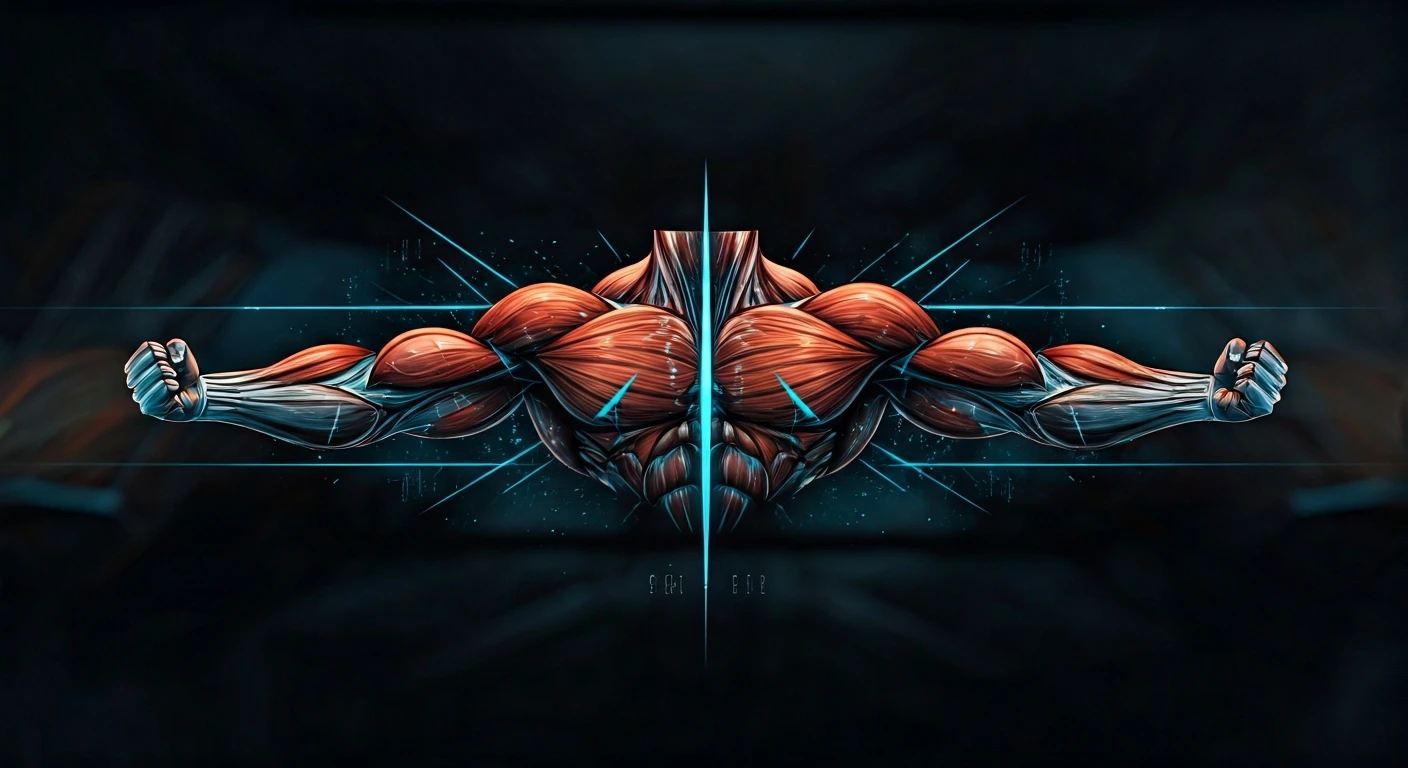
A 'push' day focuses on all the upper body muscles you use to push weight away from your body. This primarily includes your chest, shoulders, and triceps. By training these synergistic muscles together, you can effectively stimulate them in one session. A sample push workout might include foundational compound exercises like the bench press and overhead press, followed by more targeted accessory movements like incline dumbbell presses, lateral raises for shoulder width, and tricep pushdowns to finish.
Your 'Pull' Day Workout
A 'pull' day is the opposite, focusing on muscles that pull weight towards your body. This means you'll be training your back (lats, rhomboids, traps) and your biceps. Just as with push day, there's a natural overlap; your biceps are heavily engaged during most back-rowing and pull-up movements, so it's efficient to train them in the same session. Key exercises for a pull day often start with a heavy compound lift like deadlifts or barbell rows, followed by pull-ups or lat pulldowns, and finishing with bicep curls.
Your 'Legs' Day Workout
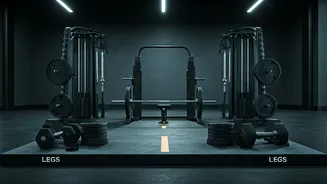
Finally, leg day is dedicated to your entire lower body: quadriceps, hamstrings, glutes, and calves. These are some of the largest muscles in your body, and training them effectively is crucial for building a strong foundation, boosting your metabolism, and developing overall athletic ability. A comprehensive leg day should include a primary squat movement (like barbell squats), a hinge movement (like Romanian deadlifts), and accessory exercises like leg presses and lunges to ensure all parts of the leg are stimulated.
Why This Split is Smarter and More Flexible
The PPL split is 'smarter' for several reasons. Firstly, it optimises recovery. After a push day, your chest, shoulders, and triceps have plenty of time to repair while you train pull and legs. Secondly, it allows for higher training frequency. A common way to structure PPL is to train six days a week (Push, Pull, Legs, Push, Pull, Legs, Rest), meaning each muscle group is trained twice a week. This increased frequency can be highly effective for muscle growth. However, it’s also incredibly flexible. If you can only train three days a week, a simple Push, Pull, Legs schedule is perfect for building a solid foundation. By working smarter, not just harder, this split removes the guesswork and sets you on a clear path to progress.